Manufacturers often struggle with plastic parts that fail under high thermal stress or mechanical friction, leading to brittle failures and operational downtime. These failures aren’t just technical setbacks; they result in expensive product recalls, damaged brand reputations, and significant waste in the production cycle. nylon injection molding offers a robust solution, providing a versatile, high-strength polyamide material that bridges the gap between standard plastics and high-performance metals.
What is Nylon Injection Molding?
Nylon injection molding is a manufacturing process where molten polyamide resin is injected into a precision-engineered mold to create durable, high-performance components. This technique leverages the unique properties of nylon, a semi-crystalline thermoplastic known for its exceptional toughness and thermal stability.
Think about this: why is nylon so prevalent in engineering?
- It maintains integrity at high temperatures.
- It provides excellent resistance to wear.
- It offers high tensile strength.
The Chemistry of Polyamides (PA)
Polyamides are polymers containing repeating amide linkages that define their mechanical behavior. You will find that the molecular structure dictates how the material responds to heat and stress during the molding phase.
Standard Processing Equipment
To achieve success, you must use high-pressure injection molding machines equipped with specialized screws. These machines ensure the resin reaches the correct viscosity for a consistent fill.
Molecular Behavior During Melting
As the nylon pellets heat up, the semi-crystalline structure transitions into a fluid state. This molecular shift allows the material to flow into complex geometries before rapidly solidifying.
Key Takeaway: Nylon is a semi-crystalline thermoplastic known for its toughness and thermal stability.
| Process Component | Role in Production | Impact on Quality | |
|---|---|---|---|
| Polyamide Resin | Raw material substrate | Determines final strength | |
| Injection Screw | Melting and shearing | Influences melt homogeneity | |
| Mold Cavity | Shaping the final part | Defines dimensional accuracy |
Choosing the right equipment and understanding polymer chemistry are the fundamental pillars of achieving a high-quality molded part.
Which Nylon Grades Are Best for Molding?
Selecting the ideal grade for nylon injection molding depends entirely on the mechanical demands and environmental exposure of your final product. You can explore a wide variety of high-performance options in our materials library to find the perfect match.
Here is the deal: not all nylons are created equal.
- Nylon 6 is great for surface finish.
- Nylon 66 excels in high-heat zones.
- Nylon 12 offers superior chemical resistance.
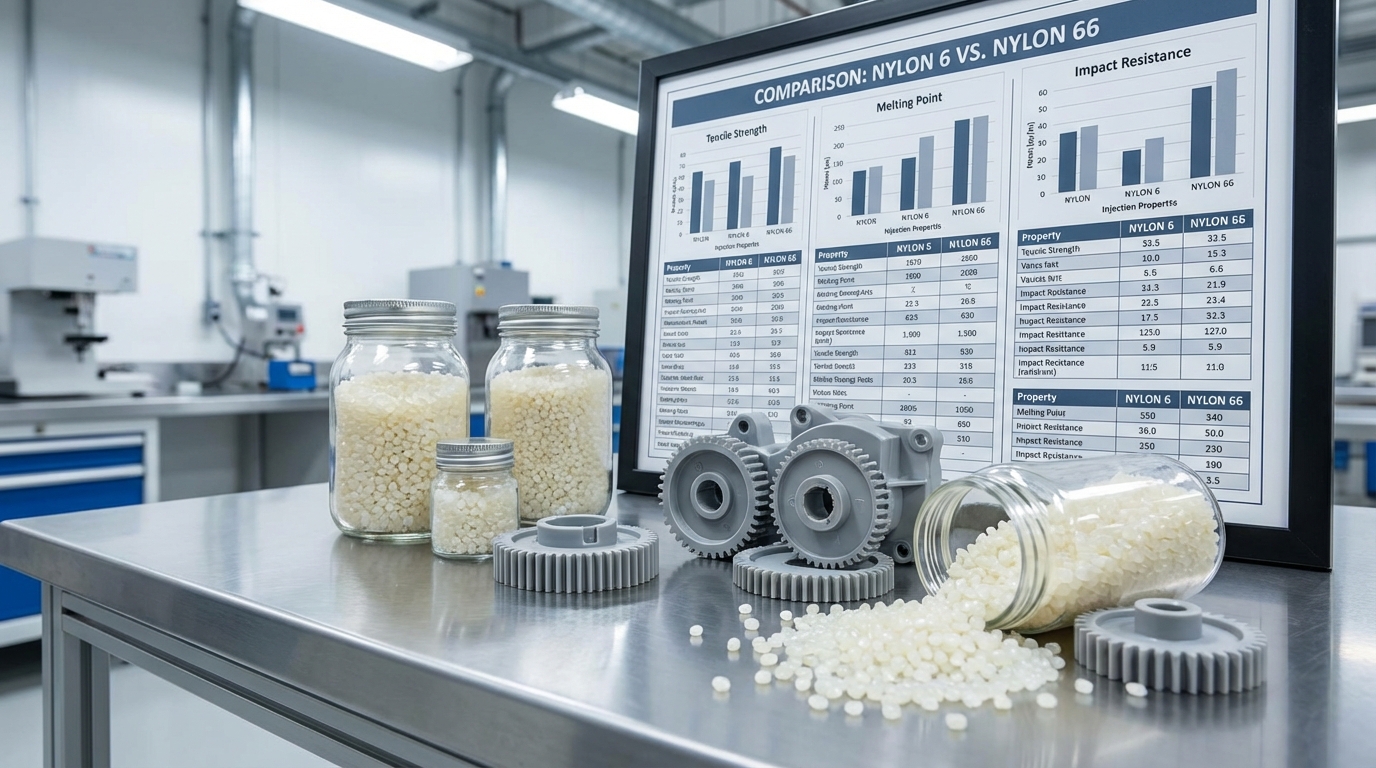
Nylon 6 vs. Nylon 66
Nylon 6 provides excellent impact resistance and aesthetic appeal for consumer goods. In contrast, Nylon 66 is the preferred choice for structural parts that must withstand intense heat.
Specialty Grades: Nylon 11 and 12
These grades are unique because they absorb significantly less moisture than standard varieties. You should use them for precision tubing or fuel lines where dimensional stability is non-negotiable.
Impact-Modified Variations
When your application involves heavy vibration or shock, impact-modified grades are essential. These materials are chemically toughened to prevent cracking under sudden loads.
Key Takeaway: Grade 66 offers higher temperature resistance, while Grade 6 provides better aesthetics and impact strength.
| Nylon Grade | Melting Point | Primary Advantage | Typical Application | |
|---|---|---|---|---|
| Nylon 6 | 220°C | Better surface finish | Decorative housings | |
| Nylon 66 | 265°C | Thermal stability | Engine components | |
| Nylon 12 | 178°C | Low moisture intake | Chemical hoses |
Understanding the specific melting points and environmental resistances of each grade ensures you select a material that won’t fail in the field.
What Are the Key Benefits of Using Nylon?
The primary benefits of nylon injection molding include an exceptional strength-to-weight ratio, high abrasion resistance, and natural self-lubricating properties. Engineers frequently specify this material for moving parts that require longevity without the need for external oils.
You might be wondering: what makes it so versatile?
- It resists most industrial chemicals.
- It acts as an excellent thermal insulator.
- It remains durable even in cold environments.
High Abrasion and Wear Resistance
Nylon is incredibly resilient against friction, making it the industry standard for gears and rollers. You can rely on its ability to withstand constant movement without degrading.
Chemical Resistance to Hydrocarbons
This material is virtually immune to the effects of oils, greases, and fuels. This makes it an indispensable choice for automotive and industrial machinery components.
Thermal Insulation Properties
Nylon naturally resists the transfer of heat, protecting sensitive internal electronics from external temperature spikes. It provides a safer housing for high-voltage connectors.
Key Takeaway: Nylon’s self-lubricating properties make it ideal for high-friction applications like gears and bearings.
| Benefit | Practical Impact | Industry Relevance | |
|---|---|---|---|
| Low Friction | Reduced part wear | Mechanical assemblies | |
| Oil Resistance | Long-term durability | Automotive systems | |
| Tensile Strength | Structural integrity | Aerospace brackets |
The combination of chemical immunity and mechanical toughness positions nylon as one of the most cost-effective engineering resins available.
How Do You Design Parts for Nylon Molding?
Designing for nylon injection molding requires strict adherence to wall thickness uniformity and the strategic use of draft angles to ensure easy part ejection. You can optimize these geometries through our professional injection molding services to reduce manufacturing defects.
Best of all: smart design reduces costs.
- Use 1-degree draft angles at minimum.
- Maintain a wall thickness of 0.75mm to 3mm.
- Keep ribs at 40-60% of the main wall thickness.
Wall Thickness Uniformity
Variable wall thickness causes uneven cooling, which leads to internal stresses. You must keep dimensions consistent to prevent the part from warping or developing sink marks.
Draft Angles for Part Ejection
Nylon shrinks as it cools, gripping the mold cores tightly. Adding a slight taper to your design allows the ejector pins to push the part out without surface damage.
Rib Design and Boss Geometry
Ribs should be used to provide structural stiffness without adding excessive mass. Proper boss design prevents thick sections that could cause aesthetic “sinks” on the visible surface.
Key Takeaway: Maintaining consistent wall thickness is vital to prevent internal voids and sink marks in nylon parts.
| Design Feature | Recommended Value | Purpose | |
|---|---|---|---|
| Wall Thickness | 1.5mm – 3.0mm | Optimal flow and cooling | |
| Draft Angle | 1.0° – 2.0° | Ease of ejection | |
| Rib Height | < 3x Wall thickness | Prevents structural failure |
Following these geometric guidelines ensures that your nylon components are both functional and easy to manufacture at scale.
How Does Moisture Affect the Molding Process?
Moisture significantly impacts nylon injection molding because the material is hygroscopic and naturally absorbs water from the surrounding air. If the resin is not properly dried before processing, the water turns into steam, causing structural and aesthetic defects.
In simple terms: moisture is your enemy.
- Wet resin causes surface “splay.”
- It reduces the part’s mechanical strength.
- It leads to inconsistent part dimensions.
Pre-Molding Drying Requirements
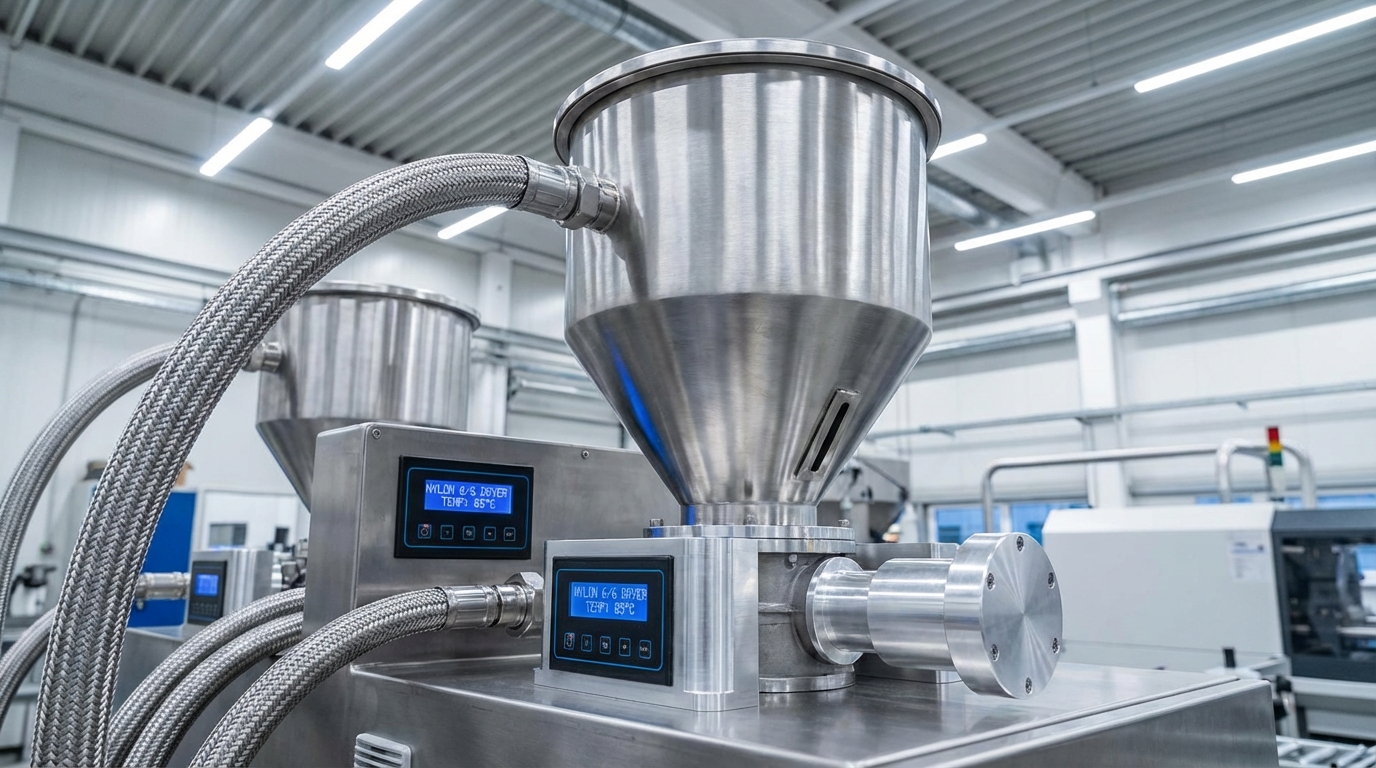
You must use a desiccant dryer to reduce the moisture content to below 0.2%. Standard ovens are often insufficient because they do not remove the humidity from the air effectively.
The Effect of Moisture on Dimensional Stability
Once molded, nylon will continue to absorb moisture until it reaches equilibrium. This process can cause the part to expand slightly, which you must account for during the design phase.
Post-Molding Conditioning Techniques
Some manufacturers dip parts in warm water to reach equilibrium faster. This technique ensures that the dimensions remain stable before the parts are shipped or assembled.
Key Takeaway: Excess moisture during molding leads to splay, bubbles, and reduced mechanical integrity.
| Moisture Level | Impact on Resin | Final Result | |
|---|---|---|---|
| < 0.2% | Optimal state | High-quality, strong parts | |
| 0.2% – 0.5% | Partial degradation | Minor splay and bubbles | |
| > 0.5% | Severe degradation | Structural failure and brittleness |
Controlling moisture is the most critical process variable when working with polyamides to ensure long-term part reliability.
What Are Common Challenges in Nylon Molding?
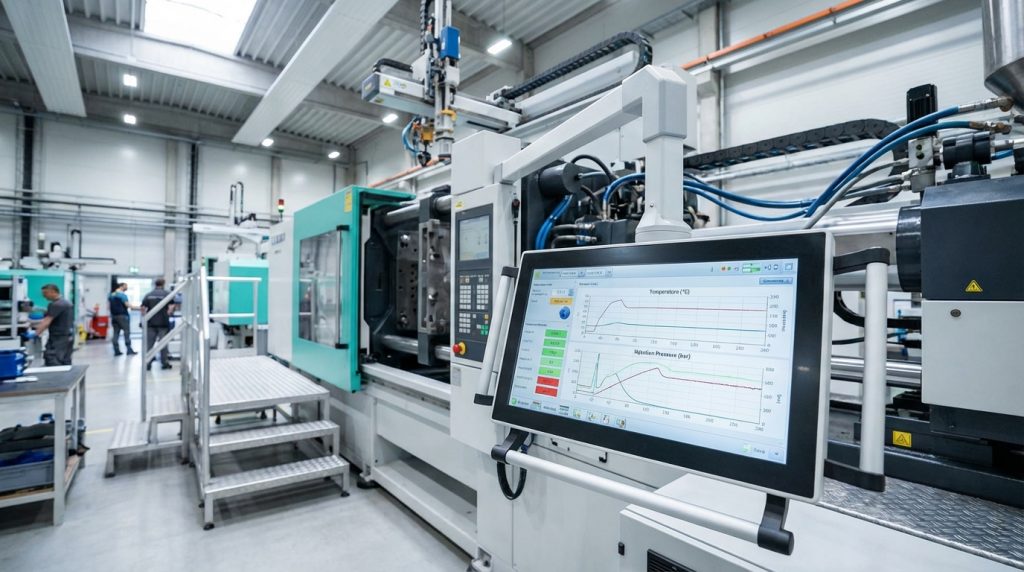
The most common challenges include managing high shrinkage rates and preventing flash due to the material’s low viscosity. Utilizing advanced manufacturing capabilities allows you to monitor these variables in real-time to maintain tight tolerances.
What’s more: the process requires precision.
- Shrinkage can be as high as 2%.
- Low viscosity increases the risk of flash.
- Cooling rates must be carefully controlled.
Controlling High Shrinkage Rates
Nylon shrinks significantly as it transitions from a liquid to a solid state. You need to oversize the mold cavity correctly to ensure the final part meets the required dimensions.
Preventing Flash and Burrs
Because molten nylon flows like water, it can easily leak into the parting lines of the mold. You must maintain high clamping force and perfect tool alignment to avoid flash.
Managing Warpage in Large Parts
Warpage occurs when different sections of the part cool at different rates. You can minimize this by using balanced cooling channels and optimized gate locations within the mold.
Key Takeaway: High mold temperatures and controlled cooling rates are necessary to manage nylon’s significant shrinkage.
| Challenge | Root Cause | Solution | |
|---|---|---|---|
| Flash | Low melt viscosity | Increase clamping force | |
| Warpage | Uneven cooling | Optimize gate placement | |
| Voids | Improper packing | Adjust hold pressure |
Addressing these technical hurdles through superior tooling and process control is the key to producing flawless nylon components.
Which Industries Rely on Nylon Injection Molding?
Industries ranging from automotive to consumer electronics rely on nylon injection molding for high-stress applications. Its ability to replace metal parts makes it a favorite for companies looking to reduce weight and overall production costs.
Make no mistake: it is everywhere.
- Automotive engine covers.
- Electrical switchgear.
- High-end sporting equipment.
Automotive Under-the-Hood Components
You will find nylon in manifolds, valve covers, and cooling fans because of its resistance to heat and oil. It withstands the harsh environment of a vehicle engine better than most plastics.
Electrical Connectors and Enclosures
Nylon provides excellent dielectric strength, making it perfect for insulating electrical components. It is frequently used in terminal blocks and circuit breaker housings.
Consumer Goods and Sporting Equipment
From zip ties to ski bindings, nylon’s toughness is legendary in the consumer market. It provides the durability needed for products that face daily physical abuse.
Key Takeaway: Automotive and electrical industries are the largest consumers of molded nylon due to its heat and oil resistance.
| Industry | Specific Component | Why Nylon? | |
|---|---|---|---|
| Automotive | Intake Manifolds | Heat and chemical resistance | |
| Electronics | Wire Connectors | Flame retardancy and insulation | |
| Industrial | Gears and Bushings | Self-lubricating properties |
The broad adoption of nylon across diverse sectors proves its reliability as a high-performance engineering material.
How Do You Optimize Molding Parameters?
Optimizing parameters involves balancing melt temperature, injection speed, and hold pressure to achieve a perfect fill. To discuss the specific settings for your project, you should contact us for a technical consultation.
To put it simply: the settings make the part.
- Maintain melt temperatures between 260°C and 300°C.
- Use high injection speeds for thin walls.
- Set mold temperatures above 80°C.
Melt and Mold Temperature Settings
Higher mold temperatures improve the crystallinity and surface finish of the part. You must ensure the temperature is uniform across the entire tool surface to avoid stress.
Injection Pressure and Speed
Nylon requires a fast injection speed to fill the mold before it begins to freeze. Proper pressure management ensures the cavity is fully packed without causing flash.
Screw Back-Pressure Optimization
Low back-pressure prevents the degradation of the polymer chains during the melting process. You should adjust this setting to ensure the resin is mixed thoroughly without overheating.
Key Takeaway: Nylon requires high injection speeds and moderate-to-high pressures to fill thin-walled sections effectively.
| Parameter | Recommended Range | Critical Effect | |
|---|---|---|---|
| Melt Temp | 260°C – 300°C | Controls flowability | |
| Mold Temp | 80°C – 100°C | Determines surface finish | |
| Hold Pressure | 50% – 70% of Inj. | Prevents sink marks |
Fine-tuning these machine settings is the only way to achieve consistent quality across thousands of production cycles.
Are Fillers and Additives Useful for Nylon?
Fillers and additives are essential for enhancing the mechanical properties of nylon injection molding , often doubling or tripling its strength. By adding reinforcements, you can tailor the material to meet even the most demanding aerospace or industrial specifications.
On top of that: additives extend part life.
- Glass fibers increase rigidity.
- Carbon fibers add conductivity.
- UV stabilizers prevent sun damage.
Glass Fiber Reinforcement (GFR)
Adding 30% glass fiber significantly increases the heat deflection temperature and tensile strength. This makes the nylon stiff enough to replace heavy die-cast metal parts.
Carbon Fiber for Conductivity
For applications requiring EMI shielding or anti-static properties, carbon fiber is the ideal additive. It provides structural reinforcement while making the plastic electrically conductive.
UV Stabilizers and Flame Retardants
Outdoor parts require UV stabilizers to prevent them from becoming brittle in the sun. Flame retardants are equally important for meeting safety standards in the electronics industry.
Key Takeaway: Adding 30% glass fiber can triple the tensile strength and significantly increase the heat deflection temperature.
| Additive Type | Benefit | Best Use Case | |
|---|---|---|---|
| Glass Fiber | 200% Increase in stiffness | Structural brackets | |
| MoS2 | Enhanced lubricity | High-speed gears | |
| UV Stabilizer | Weather resistance | Outdoor enclosures |
The use of additives transforms standard nylon from a versatile plastic into a specialized high-performance composite.
How Do You Choose a Molding Partner?
Choosing the right partner involves evaluating their experience with hygroscopic materials and their ability to maintain precision tooling. You can learn more about our commitment to engineering excellence by reviewing our company history and expertise .
The bottom line: experience matters.
- Check for ISO 9001 certification.
- Verify their resin drying protocols.
- Ask about their tool maintenance schedule.
Equipment Precision and Maintenance
Your partner must use modern injection molding machines with closed-loop controls. These systems ensure that every shot is identical to the last, reducing scrap rates.
Quality Control and ISO Certification
A reliable molder will have a dedicated quality department using CMM and moisture analyzers. This ensures that every part shipped meets your exact dimensional and material requirements.
Material Sourcing and Traceability
High-quality nylon should come with a Certificate of Analysis (COA) from the manufacturer. You must ensure your partner tracks batch numbers to maintain full material traceability.
Key Takeaway: A reliable partner must have specific experience managing nylon’s drying and shrinkage requirements.
| Selection Criteria | What to Look For | Why it Matters | |
|---|---|---|---|
| Drying Equipment | Desiccant systems | Prevents structural defects | |
| Tooling Experience | Hardened steel molds | Handles glass-filled resins | |
| Quality Testing | Moisture analysis | Confirms material integrity |
A dedicated manufacturing partner provides the technical oversight needed to turn complex designs into reliable, high-performance nylon products.
Conclusion
Mastering nylon injection molding allows you to overcome the challenges of part failure and material degradation. Whether you need the thermal resistance of PA66 or the toughness of glass-filled PA6, our team provides the precision and material expertise required to bring your vision to life. We solve complex engineering problems through advanced process control and dedicated customer service, striving to be the world’s most reliable manufacturing resource. To start your next project with an expert team, please contact us today.
Frequently Asked Questions (FAQ)
Can I use food-grade nylon for my product? Yes, specific grades of nylon are FDA-compliant for food contact, but you must verify the certification of the specific resin batch before production begins.
What’s the best way to prevent nylon parts from warping? The best way is to maintain uniform wall thickness and use glass-fiber reinforcements, which significantly reduce the material’s natural shrinkage during cooling.
Can I recycle nylon scrap from the molding process? Yes, nylon is a thermoplastic and can be reground and reused, though you should limit the percentage of regrind to maintain the part’s original mechanical properties.
What is the best way to dry nylon resin? You should use a desiccant hopper dryer for 4-6 hours at 80°C to ensure the moisture level is below 0.2% before the resin enters the injection barrel.
Can I replace metal components with molded nylon? Yes, glass-filled nylon grades offer high enough strength and stiffness to replace many aluminum or zinc die-cast parts while significantly reducing overall weight.