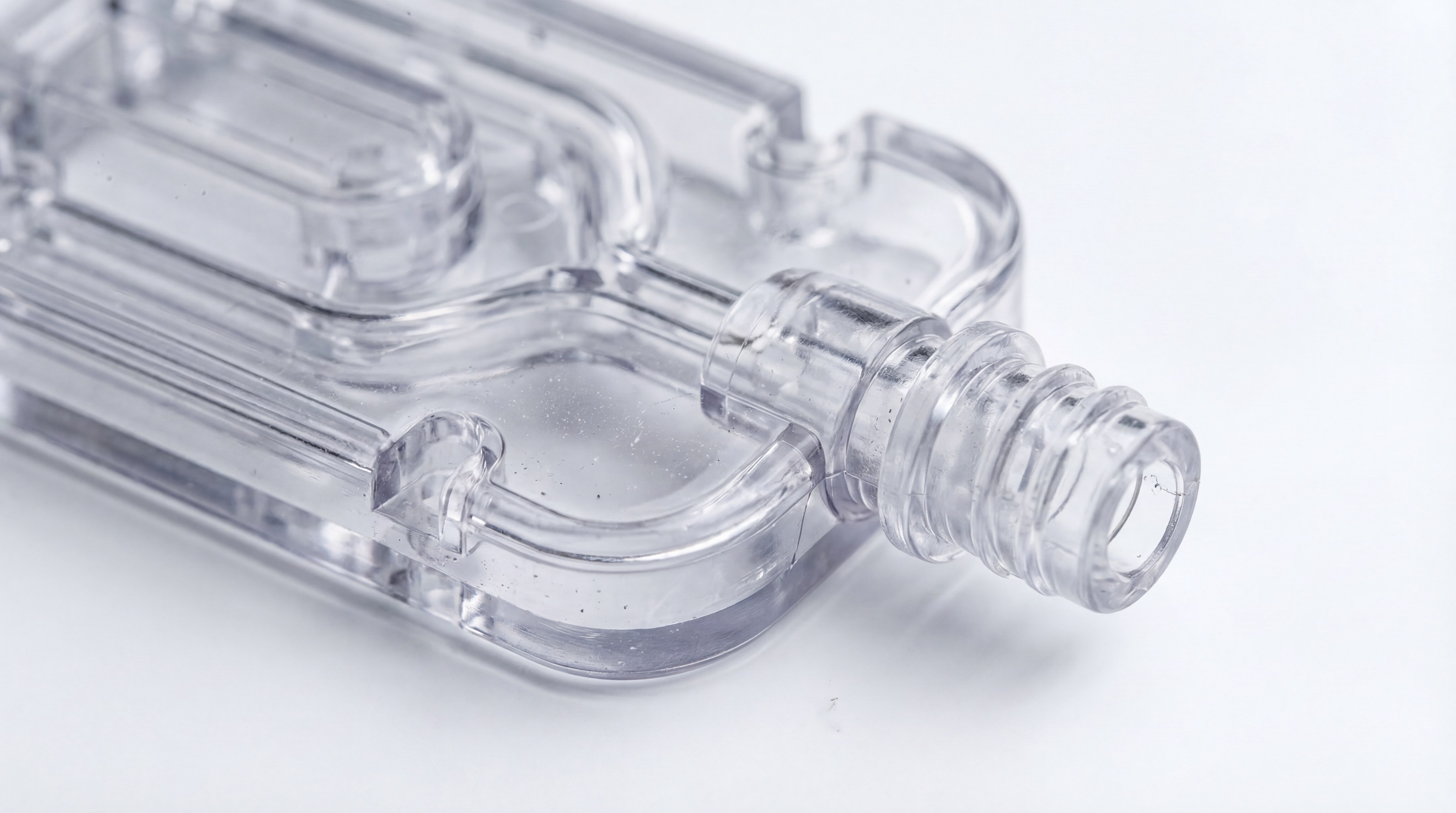
You often face the challenge of finding a material that combines glass-like transparency with the impact strength of metal, and choosing the wrong manufacturing process leads to brittle, cloudy parts that fail under pressure. This frustration is amplified when high-volume production demands precise repeatability without compromising on structural integrity or aesthetic quality. polycarbonate injection molding is the definitive manufacturing solution for producing high-strength, optically clear thermoplastic components at scale.
What is polycarbonate injection molding?
Polycarbonate injection molding is a high-pressure manufacturing process that transforms amorphous polycarbonate resin into precise, durable components. It utilizes specialized machinery to melt plastic pellets and inject them into custom-designed steel molds.
The success of polycarbonate injection molding depends on managing the material’s high viscosity and sensitivity to moisture. You must ensure the environment is tightly controlled to maintain the polymer’s structural integrity.
Defining the Amorphous Polymer
Polycarbonate is an engineering thermoplastic known for its disordered molecular structure, which allows light to pass through with minimal interference. Unlike semi-crystalline plastics, it does not have a defined melting point but rather softens gradually as temperature increases.
Consider this:
- It offers high glass transition temperatures (~147°C).
- The material remains stable across a wide thermal range.
- It provides exceptional dimensional stability during cooling.
Essential Material Characteristics
This material is prized for being virtually unbreakable while maintaining the clarity of glass. It serves as a superior alternative to acrylic when durability is a primary concern for the end-user.
Here is the kicker: while it is incredibly tough, it is also highly hygroscopic, meaning it absorbs water from the air. If you do not dry the material properly before processing, the final parts will suffer from internal bubbling and reduced mechanical strength.
Key Takeaway: Polycarbonate injection molding is the standard for producing high-impact, transparent parts by injecting molten resin into precision tools.
| Feature | Description | |
|---|---|---|
| Material State | Amorphous Thermoplastic | |
| Primary Benefit | Impact Resistance & Clarity | |
| Key Challenge | High Melt Viscosity | |
| Common Use | Lenses, Housings, Shields |
Understanding these fundamental properties allows you to optimize the production cycle for maximum yield and quality.
Why use polycarbonate injection molding?
Engineers choose this process when they require a unique combination of optical clarity and extreme impact resistance in their parts. Utilizing polycarbonate injection molding allows you to create complex geometries that would be impossible or too expensive to achieve via machining.
This process excels in high-volume production where unit costs must remain low without sacrificing performance. It provides a level of repeatability that ensures every part meets stringent safety and functional standards.
Unrivaled Impact Strength
Polycarbonate is often referred to as “plastic steel” because of its ability to withstand significant physical trauma without shattering. It can absorb energy that would cause other transparent materials to fail instantly.
Consider this:
- It is significantly tougher than standard glass.
- The material resists cracking under high-velocity impacts.
- It maintains toughness even in cold environments.
Superior Optical Performance
In applications where visibility is critical, this material offers light transmission levels comparable to glass. It is the preferred choice for safety equipment and high-end consumer electronics.
But wait, there is more: it also offers excellent UV resistance when proper stabilizers are added. This ensures that your parts remain clear and do not yellow or become brittle when exposed to sunlight over long periods.
Key Takeaway: This process is chosen for its ability to deliver nearly indestructible, transparent components at a low cost per unit during mass production.
| Advantage | Practical Benefit | |
|---|---|---|
| Toughness | Reduced breakage in the field | |
| Transparency | Crystal clear visibility for lenses | |
| Scalability | Low unit cost at high volumes | |
| Versatility | Supports overmolding and inserts |
These advantages make it a cornerstone of modern industrial design across multiple high-stakes sectors.
How does polycarbonate injection molding work?
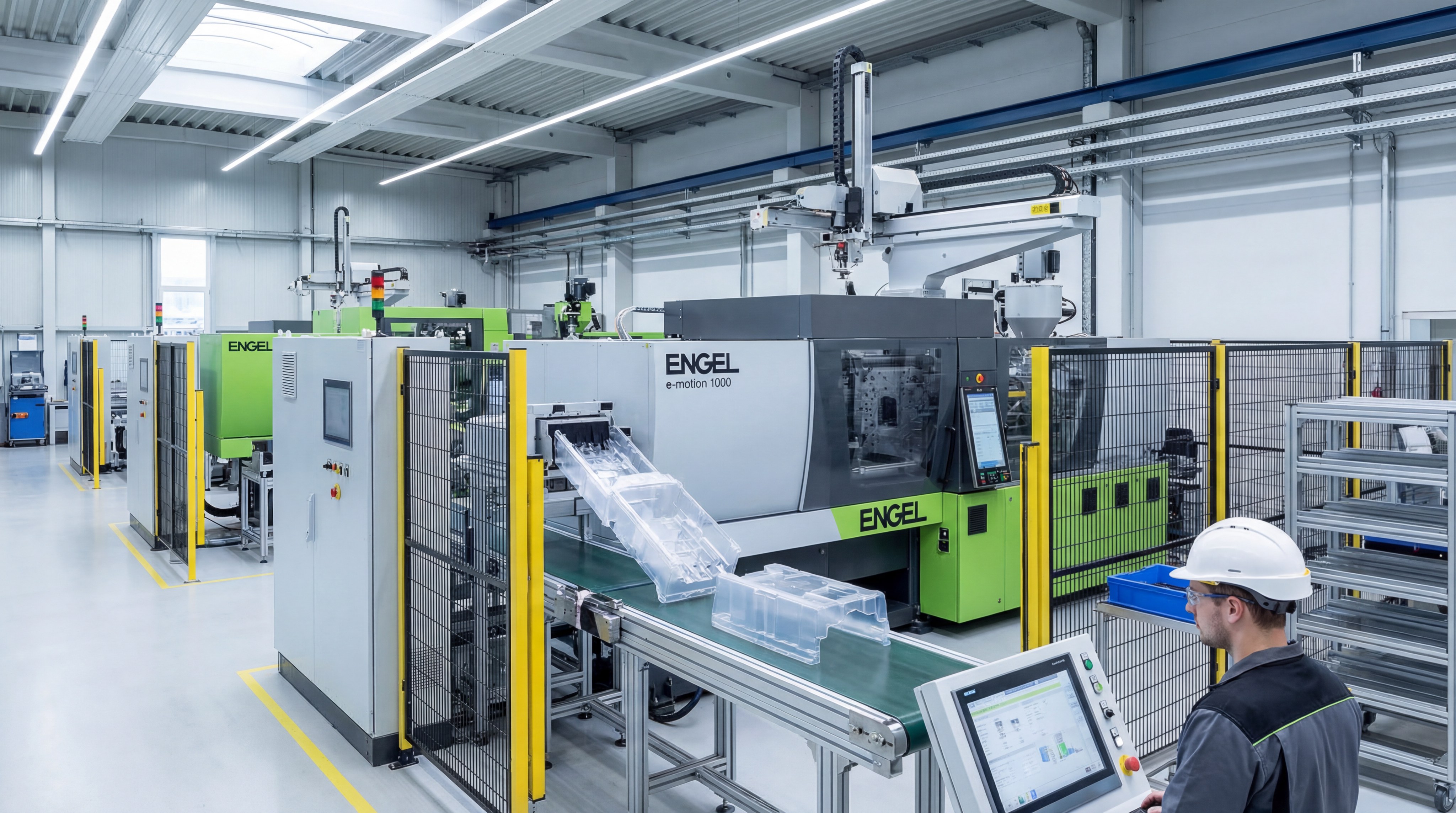
The process involves heating resin pellets to a molten state and forcing them into a precision-machined mold at high velocity. During polycarbonate injection molding, the machine’s screw provides the necessary shear and pressure to move the viscous material.
Once the cavity is filled, the material is held under pressure to compensate for shrinkage as it cools. The mold then opens, and ejector pins push the solidified part out so the cycle can restart.
The Heating and Plasticizing Stage
Pellets are fed from a hopper into a heated barrel where a rotating screw grinds and melts them. This stage is critical because polycarbonate requires higher temperatures than most common plastics to flow correctly.
Here is the kicker: the residence time in the barrel must be minimized. If the material stays hot for too long, it begins to degrade chemically, leading to brittle parts and surface discoloration.
Injection and Cooling Cycles
High pressure is required to force the thick, molten polycarbonate into the thin sections of the mold. The cooling phase is often the longest part of the cycle, as the part must reach a specific temperature to maintain its shape.
Consider this:
- Injection speeds must be carefully profiled.
- Holding pressure prevents “sink marks” in thick sections.
- Controlled cooling ensures minimal internal stress.
Key Takeaway: The process relies on high-heat plasticization and high-pressure injection to overcome material viscosity and achieve precise dimensions.
| Process Step | Critical Factor | |
|---|---|---|
| Pre-Drying | Must be < 0.02% moisture | |
| Melting | High temperature (280°C – 320°C) | |
| Injection | High pressure and velocity | |
| Ejection | Clean release to avoid marring |
Precise control over these variables is what separates a functional part from a failed production run.
Where is polycarbonate injection molding applied?
This versatile process is essential for industries ranging from automotive and aerospace to medical device manufacturing. By leveraging polycarbonate injection molding , manufacturers can produce safety-critical parts that are both lightweight and durable.
From the phone in your pocket to the safety goggles on a construction site, this technology is everywhere. Its ability to be sterilized and colored makes it adaptable to almost any commercial environment.
Automotive and Transportation
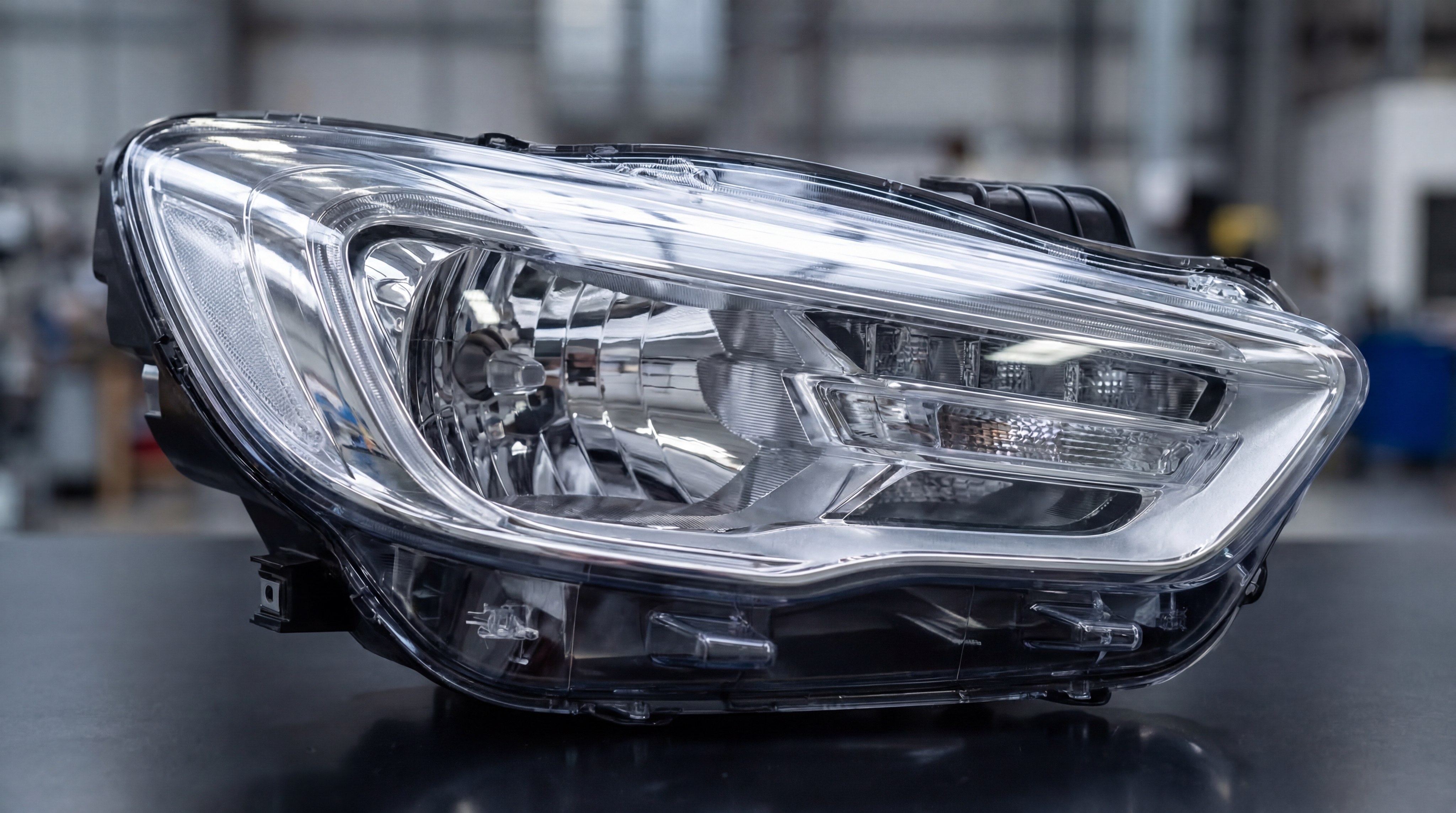
In the automotive sector, this process is used for lightweighting components while maintaining crash safety standards. It is the standard material for exterior lighting and interior decorative trim.
But wait, there is more:
- Headlight lenses provide impact protection from road debris.
- Sunroof panels reduce vehicle weight compared to glass.
- Interior touchscreens benefit from its scratch resistance.
Medical and Laboratory Gear
The medical industry relies on polycarbonate because it can withstand various sterilization methods, including steam autoclaving. Its transparency allows doctors to monitor fluid levels in real-time.
Consider this: It is used in surgical instruments, blood oxygenators, and IV connectors. Because it is biocompatible, it is safe for short-term contact with human tissue and fluids without causing adverse reactions.
Key Takeaway: Polycarbonate applications span across industries that prioritize safety, transparency, and the ability to withstand harsh environmental conditions.
| Industry | Specific Application | |
|---|---|---|
| Automotive | Headlights and tail light lenses | |
| Medical | Syringes and oxygenator housings | |
| Consumer | Laptop shells and phone cases | |
| Industrial | Safety shields and machine guards |
The diversity of these applications proves the material’s unique status as a high-performance engineering plastic.
What techniques improve polycarbonate injection molding?
Specialized methods like Rapid Heating and Cooling (RH&C) and water-assisted molding enhance the final part’s surface quality and structural complexity. In the world of polycarbonate injection molding, these techniques allow you to push the boundaries of traditional part design.
Advanced cooling systems and multi-material molding are also common. These upgrades solve issues like internal stress and the need for secondary assembly operations.
Rapid Heating and Cooling (RH&C)
This technique involves heating the mold surface quickly before injection and cooling it rapidly after the cavity is filled. It is particularly effective for eliminating weld lines and achieving a high-gloss finish.
Here is the kicker:
- It improves the flow of resin into micro-features.
- It significantly reduces visible surface blemishes.
- It helps in achieving “piano black” or mirror finishes.
Multi-Material Overmolding
You can combine polycarbonate with soft-touch materials like TPE to create ergonomic grips or integrated seals. This is achieved through two-shot molding or secondary overmolding processes.
Consider this: By molding a soft grip directly onto a hard polycarbonate housing, you eliminate the need for adhesives or mechanical fasteners. This results in a more durable and aesthetically pleasing final product.
Key Takeaway: Advanced techniques like RH&C and overmolding allow for superior surface finishes and the integration of multiple material properties into one part.
| Technique | Primary Outcome | |
|---|---|---|
| RH&C | Elimination of surface weld lines | |
| Overmolding | Integrated grips and seals | |
| Gas-Assist | Hollow sections and reduced weight | |
| Insert Molding | Threaded metal attachments |
Implementing these specialized methods can significantly reduce your total assembly time and improve end-user satisfaction.
What are polycarbonate injection molding benefits?
The primary advantages include high-speed production cycles, exceptional dimensional stability, and the ability to achieve mirror-like surface finishes. When you utilize polycarbonate injection molding , you are investing in a process that balances high performance with economic efficiency.
Furthermore, the material’s inherent properties reduce the need for secondary coatings or reinforcements. This streamlines your supply chain and reduces the potential for quality issues during downstream processing.
Precision and Repeatability
Injection molding is an incredibly accurate process, often achieving tolerances within ±0.1mm. This precision is vital for parts that must fit into complex assemblies without manual adjustment.
Here is the kicker:
- Molds can produce millions of identical parts.
- Automated sensors monitor every shot for consistency.
- Dimensions remain stable even after the part leaves the tool.
Material Efficiency and Sustainability
Unlike subtractive manufacturing, this process creates very little waste because you only use the exact amount of material needed. Any leftover runners can often be reground and recycled back into the production loop.
Consider this: Modern molding facilities use closed-loop systems to minimize environmental impact. By optimizing wall thickness through DFM, you can reduce material consumption by up to 20% while maintaining part strength.
Key Takeaway: The benefits of this process center on its high-speed output, extreme precision, and efficient use of expensive engineering resins.
| Benefit | Impact on Business | |
|---|---|---|
| High Speed | Faster time-to-market for products | |
| Tight Tolerances | Seamless assembly of complex kits | |
| Waste Reduction | Lower material costs per project | |
| Finish Quality | Reduced need for painting or buffing |
These factors make injection molding the most logical choice for scaling up production of engineering-grade plastic parts.
How to design for polycarbonate injection molding?
Successful design requires careful consideration of wall thickness uniformity, draft angles, and material shrinkage to avoid internal stresses. Because polycarbonate is sensitive to flow disruptions, your geometry must encourage a smooth, continuous path for the molten resin during polycarbonate injection molding.
Neglecting these principles often leads to “sink,” warping, or premature part failure. A proactive approach to design ensures that the mold can be filled and cooled efficiently.
Managing Wall Thickness
Uniform walls are the most important rule in plastic design. If one section of your part is significantly thicker than another, it will cool at a different rate, causing the part to warp or develop internal voids.
But wait, there is more:
- Keep walls between 1.5mm and 3.5mm for best results.
- Use ribs to provide strength instead of thickening walls.
- Incorporate gradual transitions between different thicknesses.
Draft Angles and Radii
To ensure the part can be removed from the mold without damage, you must include a “draft” or slight taper on all vertical surfaces. Additionally, sharp corners should be avoided as they act as stress concentrators.
Consider this:
- Minimum draft of 1 to 2 degrees is standard.
- Textured surfaces require additional draft (up to 5 degrees).
- Generous radii improve material flow and part toughness.
Key Takeaway: Strategic design focused on uniform walls and proper draft angles is essential to prevent warping and ensure easy part ejection.
| Design Element | Recommended Standard | |
|---|---|---|
| Wall Thickness | 1.5mm – 3.5mm (Uniform) | |
| Draft Angle | 1° – 2° minimum | |
| Corner Radii | 0.5 x wall thickness | |
| Rib Height | Max 3x wall thickness |
By following these guidelines, you reduce the risk of costly mold modifications after the first production samples are tested.
What limits polycarbonate injection molding?
Key constraints include high initial tooling costs for low-volume runs and the material’s high viscosity, which requires robust machinery. When planning for polycarbonate injection molding , you must account for the substantial upfront investment in hardened steel molds.
Furthermore, the process demands high energy consumption to maintain the necessary melt temperatures. These factors mean that the technology is rarely the right choice for rapid prototyping or small-batch production.
High Initial Tooling Investment
Because polycarbonate requires high injection pressures, the molds must be made from high-grade, hardened tool steel. These molds are expensive to design and machine, often costing tens of thousands of dollars.
Here is the kicker:
- Tooling can take 4 to 8 weeks to manufacture.
- Modifications to the mold are difficult and costly.
- The ROI is only realized at high production volumes.
Processing Complexity
Polycarbonate is not a “plug-and-play” material like polypropylene. It requires precise temperature control and specialized equipment to prevent it from sticking to the mold or degrading.
Consider this: The machines used must have high clamping forces and wear-resistant screws. If your molder does not have experience with high-viscosity resins, they may struggle to produce parts without aesthetic or structural defects.
Key Takeaway: High tooling costs and processing complexity make this method less suitable for low-volume projects or simple prototypes.
| Limitation | Practical Consequence | |
|---|---|---|
| Tooling Cost | High entry barrier for startups | |
| Lead Time | Slower initial project kickoff | |
| Viscosity | Requires powerful, expensive machines | |
| Energy Use | Higher operational costs per shot |
Understanding these hurdles allows you to better evaluate whether injection molding is the right fit for your specific project timeline and budget.
Can polycarbonate injection molding cause defects?
Potential issues like splay, weld lines, and stress cracking can occur if process parameters like moisture and temperature are not strictly controlled. In polycarbonate injection molding, even a tiny amount of moisture can ruin an entire batch of parts.
Most defects are rooted in the physics of how the material flows and cools. Identifying these early through simulation software can save you weeks of troubleshooting during the production phase.
Why is moisture control critical?
Polycarbonate is hygroscopic, meaning it pulls water from the surrounding air. If this moisture is not removed, it turns into steam during the heating process, creating silver streaks known as “splay.”
Consider this:
- Resin must be dried for 3-4 hours at ~120°C.
- Moisture content must be below 0.02%.
- Standard ovens are often insufficient; desiccant dryers are required.
Preventing Stress Cracking
Internal stresses are “frozen” into the part if it cools too quickly or if the injection pressure is too high. These stresses can lead to spontaneous cracking weeks or months after the part has been manufactured.
But wait, there is more: Using “annealing” (slowly reheating the part) can help relieve these internal stresses. Additionally, ensuring your gate locations are optimized helps the material flow naturally, reducing the pressure needed to fill the cavity.
Key Takeaway: Defects like splay and stress cracking are common but preventable through rigorous material drying and optimized process settings.
| Defect | Likely Cause | Solution | |
|---|---|---|---|
| Splay | Moisture in the resin | Better desiccant drying | |
| Weld Lines | Cold flow fronts meeting | Increase mold temperature | |
| Sink Marks | Thick sections cooling slowly | Reduce wall thickness | |
| Black Specks | Material degradation | Clean barrel and reduce heat |
A disciplined approach to quality control ensures that these issues are caught before parts ever reach your customers.
Is polycarbonate injection molding quality high?
Quality remains exceptionally high when manufacturers utilize IATF 16949 standards and advanced coordinate measuring machine (CMM) inspections. To maintain the prestige of polycarbonate injection molding , a multi-layered quality management system must be in place.
Consistency is the hallmark of high-quality molding. By tracking every variable—from resin lot numbers to ambient humidity—manufacturers can guarantee that part number 1,000,000 is identical to part number 1.
Utilizing CMM Dimensional Inspection
Coordinate Measuring Machines (CMM) use a high-precision probe to measure the exact geometry of a part and compare it to the original 3D CAD model. This ensures that critical dimensions are within the specified tolerance.
Here is the kicker:
- CMM can measure features to within 0.001mm.
- It identifies subtle warping that the human eye cannot see.
- Automated reporting provides a “birth certificate” for each batch.
Adhering to IATF 16949 Standards
This is a rigorous quality standard specifically for the automotive industry, but it is applied by top-tier molders for all high-performance projects. It focuses on defect prevention and the reduction of variation in the supply chain.
Consider this:
- It requires documented processes for every machine.
- Regular audits ensure the facility maintains high standards.
- It emphasizes continuous improvement through data analysis.
Key Takeaway: High quality is maintained through a combination of strict industrial standards like IATF 16949 and high-precision inspection tools like CMM.
| Quality Tool | Function | |
|---|---|---|
| CMM | Verifies micron-level accuracy | |
| Spectrophotometer | Ensures color and clarity consistency | |
| Tensile Testing | Confirms material strength and toughness | |
| ERP Tracking | Monitors raw material and batch history |
By choosing a partner with these certifications, you ensure your project is handled with the highest level of professional oversight.
Conclusion
Navigating the complexities of high-performance manufacturing requires a partner who understands the delicate balance between material science and mechanical engineering. If you are struggling with part failures, inconsistent quality, or design challenges, our team is ready to provide the technical expertise you need to succeed. We solve the problem of manufacturing uncertainty by providing data-driven DFM analysis and ISO-certified production processes that guarantee your parts perform as designed. Whether you need a thousand complex medical components or a million automotive lenses, we have the advanced machinery and engineering depth to bring your vision to life.
Please contact us today to schedule a free DFM review and receive a competitive quote for your next project. At CN Precision, we don’t just mold plastic; we forge the high-precision future of global manufacturing through unwavering quality and technical innovation.
Frequently Asked Questions
Can I use polycarbonate for food-contact applications?Yes. Specific FDA-approved grades of polycarbonate are food-safe and widely used in kitchenware and food processing equipment because they can withstand the high temperatures of commercial dishwashers and sterilization cycles.
What’s the best way to prevent yellowing in clear molded parts?It depends. The best method is to select a polycarbonate grade with integrated UV stabilizers and ensure your molder maintains strict temperature control to prevent thermal degradation during the injection phase.
How do I know if my part is too complex for standard molding?It depends. Generally, if your part has deep undercuts or internal cavities that cannot be reached by a straight-pull mold, you may need to use “slides” or “lifters,” which will increase your tooling cost but allow for high complexity.
Can I overmold polycarbonate with other materials?Yes. Polycarbonate is frequently used in two-shot (2K) molding, often paired with TPE or TPU to create ergonomic, soft-touch grips or integrated waterproof seals directly onto a rigid housing.
What’s the best way to reduce my per-part cost?Yes, increasing your order volume is the most effective way, as it spreads the initial high cost of the steel mold across more units; additionally, optimizing your design for thinner walls can significantly reduce material expenses.