The five best UV-resistant plastics available today are Acrylic, High-Density Polyethylene (HDPE), Polycarbonate, Polyamide-Imide (PAI), and Polyvinylidene Fluoride (PVDF). Your outdoor components face a constant battle against the sun’s invisible rays which can silently destroy structural integrity. If you ignore this exposure, you risk expensive part failures and unsightly yellowing that ruins your brand’s reputation. Utilizing UV resistant plastics ensures your products maintain their strength and appearance in even the harshest environmental conditions.
Why use UV resistant plastics for outdoor parts?
Using UV resistant plastics is necessary to prevent photodegradation, a process where radiation breaks down the chemical bonds of a polymer. When these bonds rupture, parts lose their impact strength and become extremely brittle. Outdoor applications like greenhouse films and automotive components rely on these materials to function safely over long periods.
Without this resistance, you will see immediate signs of wear like “chalking” or surface erosion. This degradation doesn’t just look bad; it compromises the safety of load-bearing structures. Maintaining a product’s elongation properties is impossible without choosing a material specifically designed to handle sun exposure.
Protecting Structural Integrity
You need to understand the physical toll of radiation on standard resins. UV rays act as a catalyst for chemical reactions that turn flexible polymers into fragile objects.
- Prevents the loss of tensile strength over time.
- Reduces the risk of cracking under physical stress.
- Maintains original dimensions in high-heat environments.
- Extends the service life of critical safety equipment.
Preventing Visual Degradation
Think about this:
Visual appeal is often the first thing to go when a plastic isn’t protected. Yellowing or fading makes a premium product look cheap and poorly made within months.
Key TakeawayChoosing a material with inherent resistance is the most cost-effective way to avoid field failures and warranty claims.
| Damage Type | Result of UV Exposure | Prevention Method | |
|---|---|---|---|
| Physical | Brittleness and Cracking | Use UV-stable polymers | |
| Aesthetic | Yellowing and Chalking | Add light stabilizers | |
| Functional | Loss of Impact Strength | Proper material selection |
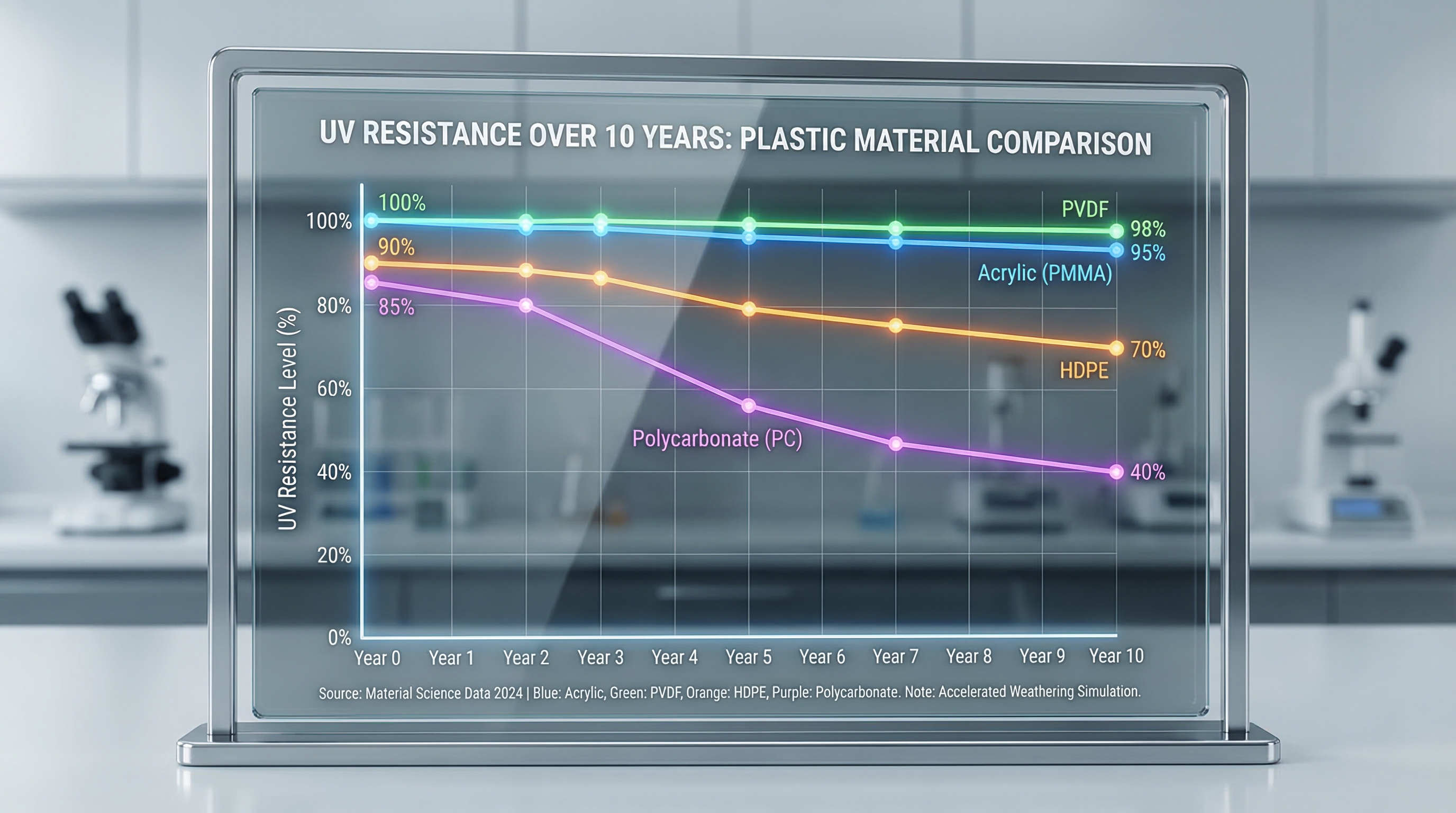
The following chart illustrates how different materials maintain their performance over a decade of exposure.
Is acrylic the best clear choice for UV resistant plastics?
Acrylic is widely considered the premier transparent choice among UV resistant plastics because it is inherently stable against solar radiation. Unlike many other clear resins, it does not require significant additives to remain transparent and functional over a decade of use. You can expect as little as 3% degradation in clarity even after ten years of direct sunlight.
This material is an excellent investment for optical applications where light transmission is the top priority. While it is quite rigid and can be brittle, its surface hardness provides great scratch resistance. You should use it for outdoor signs, lenses, and decorative panels that must stay crystal clear.
Maintaining Optical Clarity
The best part?
Acrylic maintains its original look without the need for expensive secondary coatings. It provides a glass-like finish while remaining lighter and more manageable for installation.
- Naturally resists the “yellowing” effect of the sun.
- Offers high light transmission for lenses.
- Maintains surface gloss in high-traffic areas.
- Can be polished to remove minor environmental wear.
Rigid Durability for Displays
It gets better:
While not suited for high-impact loads, acrylic’s stiffness makes it perfect for flat panels and displays. It holds its shape well even when exposed to fluctuating outdoor temperatures.
Key TakeawayAcrylic is the gold standard for long-term transparency and surface aesthetics in outdoor environments.
| Property | Acrylic Rating | Ideal Use | |
|---|---|---|---|
| Transparency | Very High | Lenses and Windows | |
| UV Stability | Excellent | Outdoor Displays | |
| Impact Strength | Low | Decorative Panels |
This analysis confirms that acrylic provides the best visual longevity for non-structural components.
How does HDPE rank among UV resistant plastics?
High-Density Polyethylene (HDPE) ranks as one of the most versatile and durable UV resistant plastics for consumer infrastructure. It is the preferred material for playground equipment because it is tough yet doesn’t form dangerous sharp edges if it happens to break. This soft failure mode provides an extra layer of safety for public use items.
HDPE is also exceptionally resistant to chemicals, acids, and moisture, making it a rugged choice for open-air environments. It melts and molds easily, which allows you to create complex shapes for outdoor furniture or containers. Its inherent resistance to photodegradation ensures that large structures remain stable for years.
Safety in Public Spaces
Look at this:
HDPE is often the first choice for items that children or the public interact with daily. Its ability to withstand both physical abuse and solar radiation is unmatched in its price bracket.
- Does not splinter or crack into sharp pieces.
- Repels graffiti and stains for easy maintenance.
- Remains flexible in freezing temperatures.
- Resistant to rot, mold, and environmental moisture.
Versatility in Manufacturing
Believe it or not:
This material is incredibly easy to process, which reduces the overall cost of your project. You can achieve high-volume production without sacrificing the protective qualities of the resin.
Key TakeawayHDPE is a safe, cost-effective, and rugged solution for outdoor infrastructure that faces heavy use.
| Feature | HDPE Benefit | Common Application | |
|---|---|---|---|
| Safety | No sharp breaks | Playground sets | |
| Maintenance | Stain resistant | Outdoor furniture | |
| Durability | Weatherproof | Industrial containers |
The data shows that HDPE is the most reliable material for large-scale outdoor consumer products.
Can polycarbonate provide impact strength for UV resistant plastics?
Polycarbonate provides the highest impact resistance among UV resistant plastics , making it essential for safety and security applications. It is roughly 250 times stronger than glass while offering comparable transparency to acrylic. When you need a component that can survive a heavy blow without shattering, this is your primary option.
You should always verify that your grade includes UV stabilizers, as standard polycarbonate can yellow over time if untreated. When properly stabilized, it handles extreme temperature swings and high-pressure environments with ease. It is the industry standard for helmets, riot shields, and heavy-duty equipment housings.
Extreme Impact Protection
Think about this:
Polycarbonate is the go-to material when failure could mean a safety hazard. It absorbs energy from impacts rather than cracking, protecting the delicate components inside.
- Virtually indestructible under normal operating conditions.
- Maintains transparency for high-visibility shields.
- Resistant to warping in high-heat environments.
- Ideal for protective housings for outdoor electronics.
Resilience in Harsh Climates
But wait, there’s more:
This material doesn’t just fight the sun; it survives hail, debris, and extreme storms. It is a true engineering plastic designed for the most demanding physical challenges.
Key TakeawayPolycarbonate is the best choice when you need a balance of optical clarity and life-saving impact strength.
| Performance Metric | Polycarbonate Rating | Best For | |
|---|---|---|---|
| Impact Resistance | Highest | Helmets and Guards | |
| Temperature Range | Very Wide | Industrial Housings | |
| Optical Quality | High | Safety Windows |
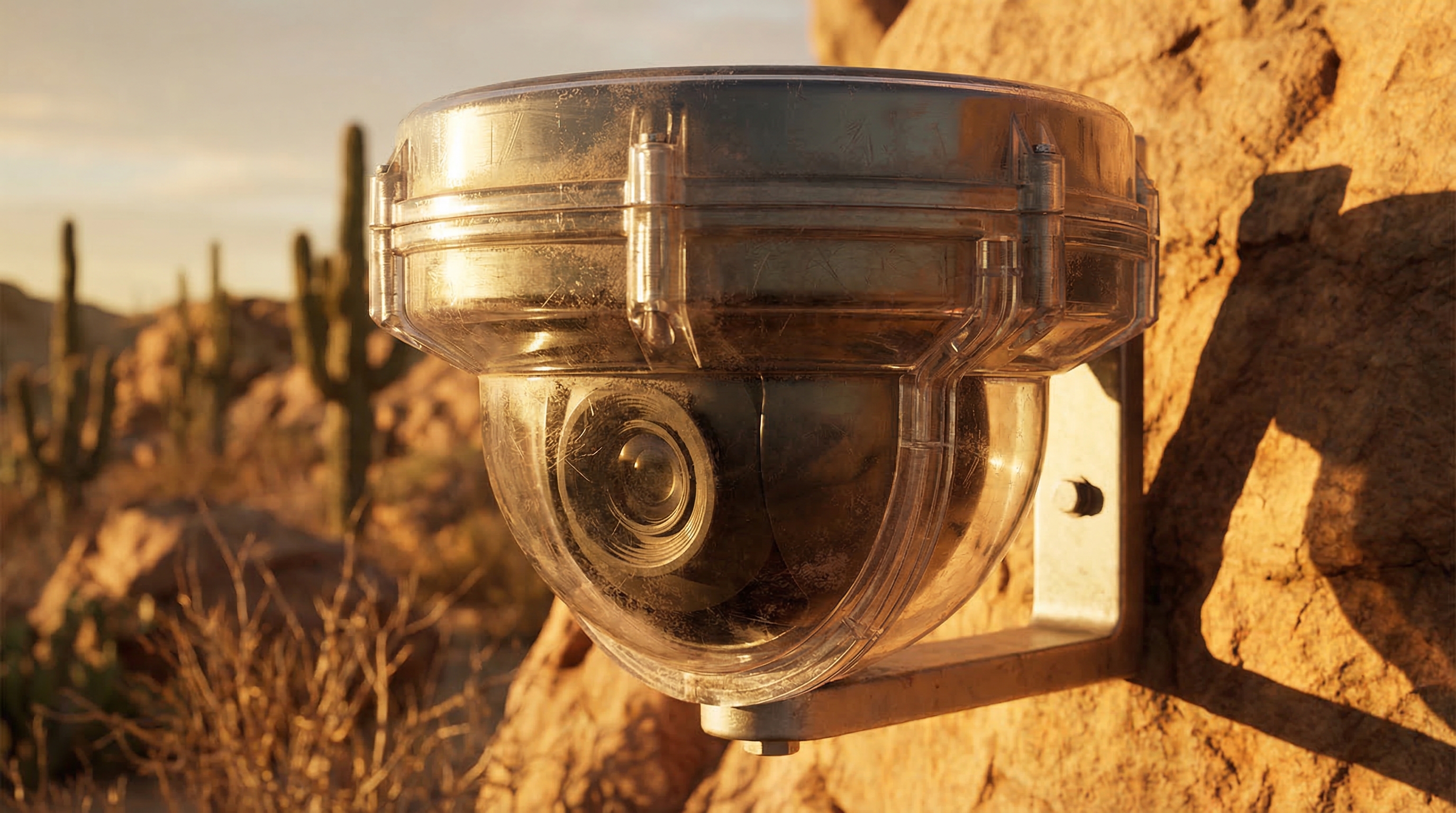
Security equipment in harsh climates relies on the toughness of polycarbonate to maintain operation.
Why is PAI a top tier option for UV resistant plastics?
Polyamide-Imide (PAI) is considered a top-tier choice for UV resistant plastics because it offers exceptional strength at very high temperatures. It is a high-performance thermoplastic that bridges the gap between standard polymers and metal components. You will frequently find it in the aerospace and medical sectors where dimensional stability is non-negotiable.
This material possesses incredible wear resistance and low friction, which makes it perfect for moving parts exposed to the elements. While it is more expensive than other resins on this list, its ability to maintain tight tolerances under solar load is unmatched. It represents the ultimate solution for precision engineering in outdoor environments.
Precision Engineering Strength
Check this out:
PAI allows you to design parts that would fail if made from traditional plastics. Its stiffness and mechanical strength remain constant even as temperatures rise.
- Exceptional dimensional stability for precision parts.
- Resistant to most industrial chemicals and fuels.
- Maintains mechanical properties up to 500°F.
- Provides superior wear resistance for gears and bearings.
Reliability for Critical Systems
It gets better:
In sectors like aerospace, there is no room for error. PAI ensures that your components won’t deform or degrade when exposed to high-altitude radiation.
Key TakeawayPAI is the specialized choice for high-end applications where precision and heat resistance are just as important as UV stability.
| Property | PAI Capability | Typical Industry | |
|---|---|---|---|
| Heat Resistance | Extremely High | Aerospace | |
| Wear Resistance | Excellent | Automotive Engines | |
| UV Stability | Top Tier | Medical Devices |
Detailed analysis proves that PAI is the most stable polymer for components requiring extreme precision.
What makes PVDF stand out in UV resistant plastics?
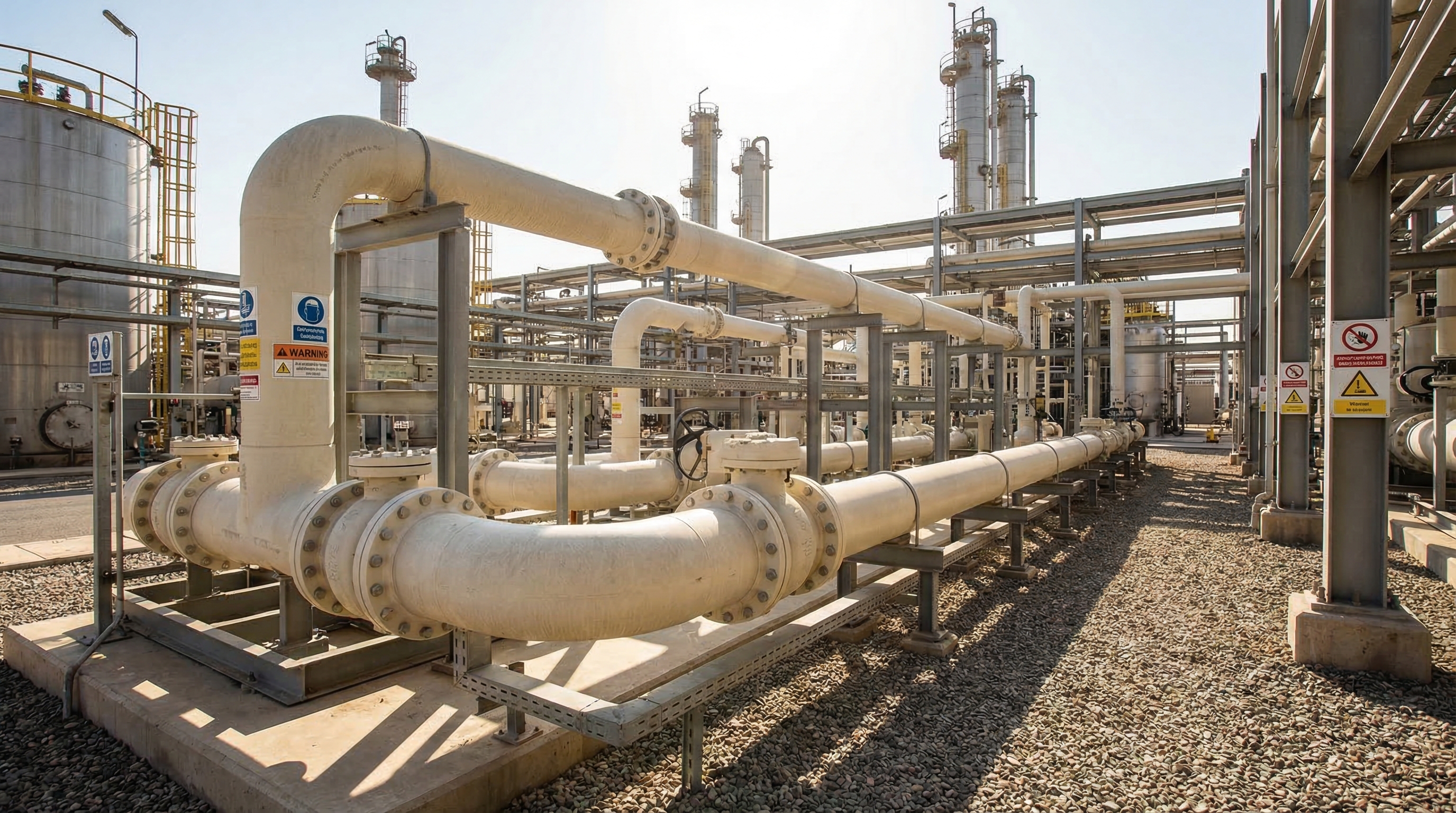
Polyvinylidene Fluoride (PVDF) stands out among UV resistant plastics due to its incredible chemical inertness and thermal shielding. It is widely used in chemical processing environments where parts must survive both aggressive solvents and constant sun exposure. You can rely on PVDF for piping, valves, and tank liners that require a long service life.
This material is also very easy to weld, which simplifies the assembly of large industrial systems. It provides excellent resistance to abrasion and fungal growth, ensuring that your infrastructure remains clean and functional. It is a robust material that serves as a protective barrier against the most punishing industrial conditions.
Industrial Chemical Shielding
Believe it or not:
PVDF acts as a permanent shield against environmental and chemical corrosion. It does not react with most acids or bases, making it a safe choice for hazardous material handling.
- High thermal stability for processing and end-use.
- Resistant to both UV radiation and nuclear radiation.
- Low smoke and flame spread for increased safety.
- Maintains high purity in semiconductor applications.
Long-Term Weathering Resilience
The best part?
PVDF is nearly immune to the effects of aging and weathering. Components installed decades ago often show almost no signs of degradation today.
Key TakeawayPVDF is the industrial standard for any component that must survive the dual threats of chemical attack and solar radiation.
| Factor | PVDF Performance | Best Use Case | |
|---|---|---|---|
| Chemical Resistance | Highest | Chemical Piping | |
| UV Lifespan | 20+ Years | Industrial Infrastructure | |
| Weldability | Excellent | Large Scale Fabrication |
Industrial systems benefit from the virtually indestructible nature of PVDF in outdoor settings.
How do additives enhance common UV resistant plastics?
Additives allow you to transform standard resins into UV resistant plastics by creating chemical or physical barriers. You can use blockers like carbon black to absorb radiation at the surface and dissipate it as heat. Alternatively, absorbers can be integrated throughout the part to catch UV rays before they damage the polymer chains.
Stabilizers, such as Hindered Amine Light Stabilizers (HALS), work by chemically trapping the free radicals that cause plastic to “unzip” and fail. These additives make it possible to use more affordable materials like polypropylene in sun-drenched environments. By customizing your additive package, you can reach the exact lifespan required for your specific geographic location.
Types of Protective Additives
You need to know:
Not all additives work the same way. Selecting the right combination is key to balancing the cost of the raw material with the necessary protection level.
- Blockers: Physically shield the plastic from radiation.
- Absorbers: Convert UV light into harmless heat energy.
- Stabilizers: Prevent chemical chain reactions from spreading.
- Quenchers: Neutralize excited states in the polymer molecules.
Customizing Material Lifespan
Think about this:
You can save significant money by using a standard resin with a high-performance additive package rather than a specialty polymer. This allows for a much wider range of mechanical properties.
Key TakeawayAdditives are the secret to making cost-effective plastics survive years of intense solar exposure.
| Additive Type | Function | Best For | |
|---|---|---|---|
| Carbon Black | Surface Shield | Opaque parts | |
| Benzotriazoles | UV Absorption | Transparent parts | |
| HALS | Free radical scavenging | Long-term stability |
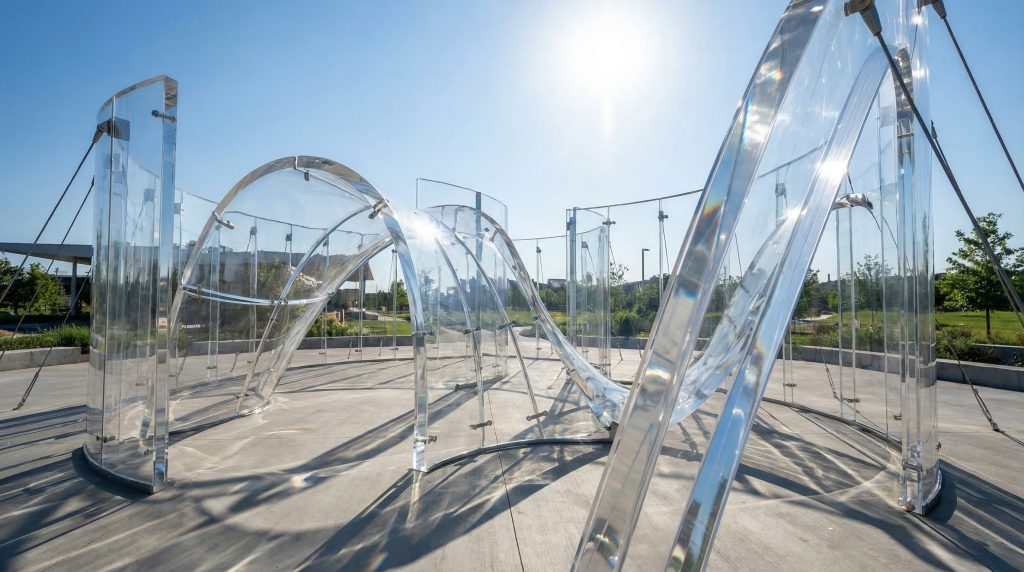
This technical approach allows for the architectural use of plastics in structures that would otherwise crumble.
What are the signs of damage in UV resistant plastics?
Detecting damage in UV resistant plastics early can prevent catastrophic structural failures in the field. The most obvious sign is “chalking,” which appears as a white, dusty film on the surface of the part. This indicates that the outer layer of the polymer has oxidized and is literally eroding away due to sun exposure.
You should also look for “crazing,” which is a network of fine cracks that appear in areas of high stress. If the part loses its original color or develops a yellow tint, the internal chemical bonds are likely shifting. Once the plastic feels brittle to the touch or snaps under light pressure, its structural integrity is already gone.
Identifying Surface Failure
Look at this:
Surface changes are the first warning signs that your material selection might be inadequate for the environment. Early detection allows you to replace components before they break.
- Development of a powdery residue on the surface.
- Loss of original gloss or surface finish quality.
- Fading or yellowing of bright or clear colors.
- Visible surface cracks in high-stress zones.
Recognizing Internal Degradation
It gets better:
While surface signs are easy to spot, internal damage is more dangerous. A part may look fine but lose 50% of its impact strength in a single season.
Key TakeawayRegular inspection for chalking and crazing is essential to maintain the safety of outdoor plastic installations.
| Symptom | Cause | Danger Level | |
|---|---|---|---|
| Chalking | Surface Oxidation | Moderate | |
| Yellowing | Chemical Bond Shifting | Low (Aesthetic) | |
| Crazing | Stress-Related Cracking | High |
Understanding these symptoms helps engineers select better grades for future production runs.
How to choose grades for UV resistant plastics?
Choosing the right grade of UV resistant plastics depends on the geographic intensity of the sun and the part’s mechanical requirements. You must determine if your product will be used in high-altitude environments where radiation is more intense. Not all “UV resistant” labels are the same; some only protect against occasional exposure while others are rated for constant direct sunlight.
You should also consider the cost-to-benefit ratio of inherently stable resins versus those with additives. For mission-critical parts, spending more on a material like PAI or PVDF is often cheaper than dealing with the fallout of a part failure. Always consult with a materials expert to match the resin’s mechanical properties with your specific outdoor environment.
Environmental Impact Assessment
You might be wondering:
Does a part in a tropical climate need the same protection as one in the arctic? The answer is no, as heat accelerates the degradation process significantly.
- Determine the average daily UV index for the end-use area.
- Assess the required structural lifespan (e.g., 5 vs 20 years).
- Evaluate if the part will be shaded or in direct sun.
- Consider the impact of humidity and salt spray on the material.
Balancing Performance and Budget
Believe it or not:
Sometimes the most expensive material is actually the most economical when you factor in the cost of replacement and labor. Long-term reliability is a key metric for ROI.
Key TakeawayEffective material selection balances immediate production costs with the long-term reliability of the component.
| Selection Factor | High Priority | Lower Priority | |
|---|---|---|---|
| Environment | Desert/High Altitude | Shaded/Indoors | |
| Load | High Structural | Decorative/Light | |
| Budget | Performance-Driven | Price-Sensitive |
Choosing the right grade ensures your product remains functional throughout its intended life cycle.
How does manufacturing affect UV resistant plastics?
The manufacturing process can significantly impact the final stability of UV resistant plastics if not handled correctly. High temperatures during injection molding can degrade the very additives meant to protect the part from the sun. If the resin is overheated, the UV stabilizers may lose their effectiveness before the part even leaves the factory.
Proper Design for Manufacturability (DFM) analysis is essential to ensure even distribution of protective chemicals. Uneven wall thicknesses or poor gate placement can create internal stresses that act as “magnets” for UV-related cracking. By optimizing the molding process, you preserve the inherent protective qualities of the material for maximum field performance.
Molding Temperature Controls
Look at this:
Precise control over the heat cycle is the only way to ensure the chemistry of the plastic remains intact. Overheating is the most common cause of early UV failure.
- Strict monitoring of melt temperatures in the machine.
- Optimization of cooling cycles to reduce molded-in stress.
- Proper drying of resin to prevent moisture-related degradation.
- Validation of additive concentrations in the final molded part.
Engineering for Structural Success
It gets better:
Expert engineering support helps you avoid common pitfalls that compromise the material’s strength. Good design protects the polymer at a molecular level.
Key TakeawayQuality manufacturing is just as important as material selection when creating durable outdoor parts.
| Manufacturing Step | Impact on UV Resistance | Result of Failure | |
|---|---|---|---|
| Temperature Control | Preserves additives | Early yellowing | |
| DFM Analysis | Reduces internal stress | Stress cracking | |
| Resin Drying | Prevents moisture damage | Brittle parts |
A well-executed manufacturing plan guarantees that the material’s protective properties are fully realized in the finished product.
Conclusion
Protecting your outdoor components from the relentless attack of ultraviolet radiation is a multi-layered challenge that requires the right materials and expert engineering. Whether you choose the optical clarity of Acrylic, the rugged safety of HDPE, the impact strength of Polycarbonate, or the industrial durability of PVDF and PAI, your selection determines the ultimate success of your product. By utilizing advanced additives and rigorous manufacturing standards, you can ensure that your parts remain strong and visually appealing for decades.
At CN Precision, we specialize in helping global brands navigate the complexities of material selection and high-precision manufacturing. Our team provides the technical guidance and IATF-certified quality systems needed to bring your most demanding projects to life with confidence. We are dedicated to delivering precision manufacturing solutions that solve your toughest environmental challenges and protect your brand’s reputation. To discover how our expertise can optimize your next project for maximum durability and performance, contact us today .
Frequently Asked Questions
1. Can I use any plastic for outdoor applications?
No, most standard plastics will degrade quickly without specific UV stabilizers or being inherently resistant like Acrylic or PVDF.
2. What’s the best way to prevent yellowing in clear parts?
Acrylic is the best choice for natural stability, though UV-stabilized grades of Polycarbonate also provide excellent resistance to yellowing.
3. How do I know if my plastic part is failing from sun damage?
Look for “chalking” (a white powdery residue) or small surface cracks known as “crazing” as primary indicators of failure.
4. Is it cheaper to use additives or high-performance plastics?
Additives are usually more cost-effective for standard applications, while high-performance plastics like PAI are reserved for extreme heat or precision needs.
5. How long do UV resistant plastics typically last?
High-quality grades can last anywhere from 10 to over 20 years depending on the material, the intensity of the environment, and the additive package used.