
The main types of plastics used in the automotive industry include Polypropylene, Polyurethane, Polyvinyl Chloride, and ABS, which collectively provide the lightweight durability and design flexibility modern vehicles require. You are likely facing the dual challenge of reducing vehicle weight to meet emission standards while maintaining structural safety and cost-efficiency. Transitioning to high-performance automotive plastic materials offers the ideal solution to replace heavy metal components without compromising long-term value.
Why are automotive plastic materials so essential today?
Automotive plastic materials are essential because they provide a high strength-to-weight ratio that directly enhances fuel efficiency and safety. These versatile polymers allow you to lower the vehicle’s center of gravity while maintaining the rigidity necessary for structural integrity.
Can plastics really replace metal components?
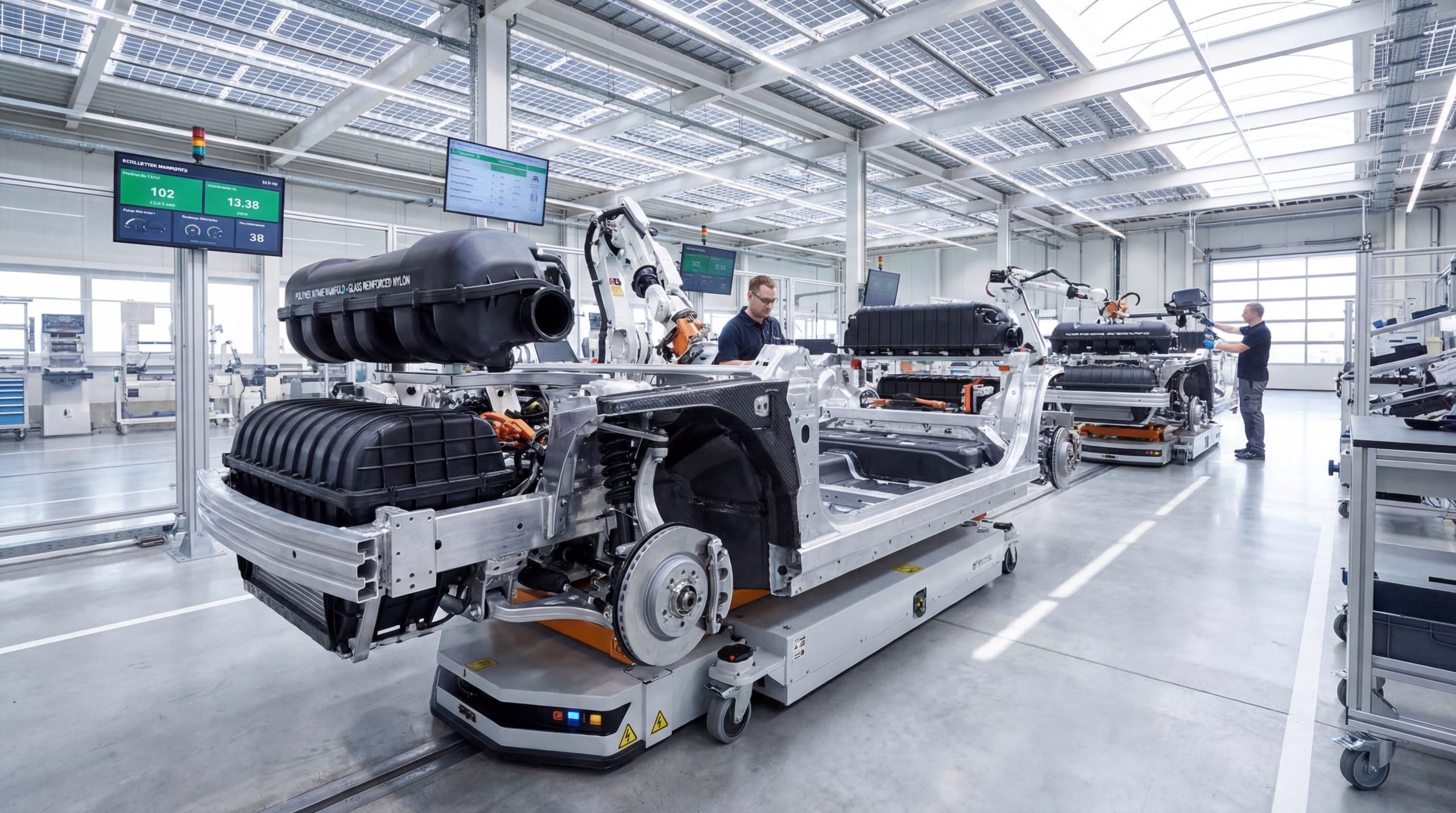
Many engineers wonder if polymers can truly handle the stress of structural applications traditionally reserved for steel or aluminum. High-performance resins like glass-filled Nylon offer rigidity comparable to metals while providing superior corrosion resistance.
Think about it. By replacing heavy steel brackets with reinforced plastics, you significantly reduce overall mass.
- Glass-filled Nylon provides extreme stiffness.
- Impact-resistant blends protect passengers during collisions.
- Corrosion-proof properties extend component lifespan.
Key Takeaway: Adopting advanced plastics is the most effective way to balance regulatory compliance with passenger protection in modern manufacturing.
| Benefit | Impact on Vehicle | |
|---|---|---|
| Weight Reduction | Increases MPG and EV battery range | |
| Energy Absorption | Enhances crash safety ratings | |
| Design Freedom | Allows for complex, aerodynamic shapes |
Analysis: The integration of polymers into safety systems proves that plastic is no longer just a “cheap” alternative but a functional necessity.
Which polymers dominate modern vehicle manufacturing?
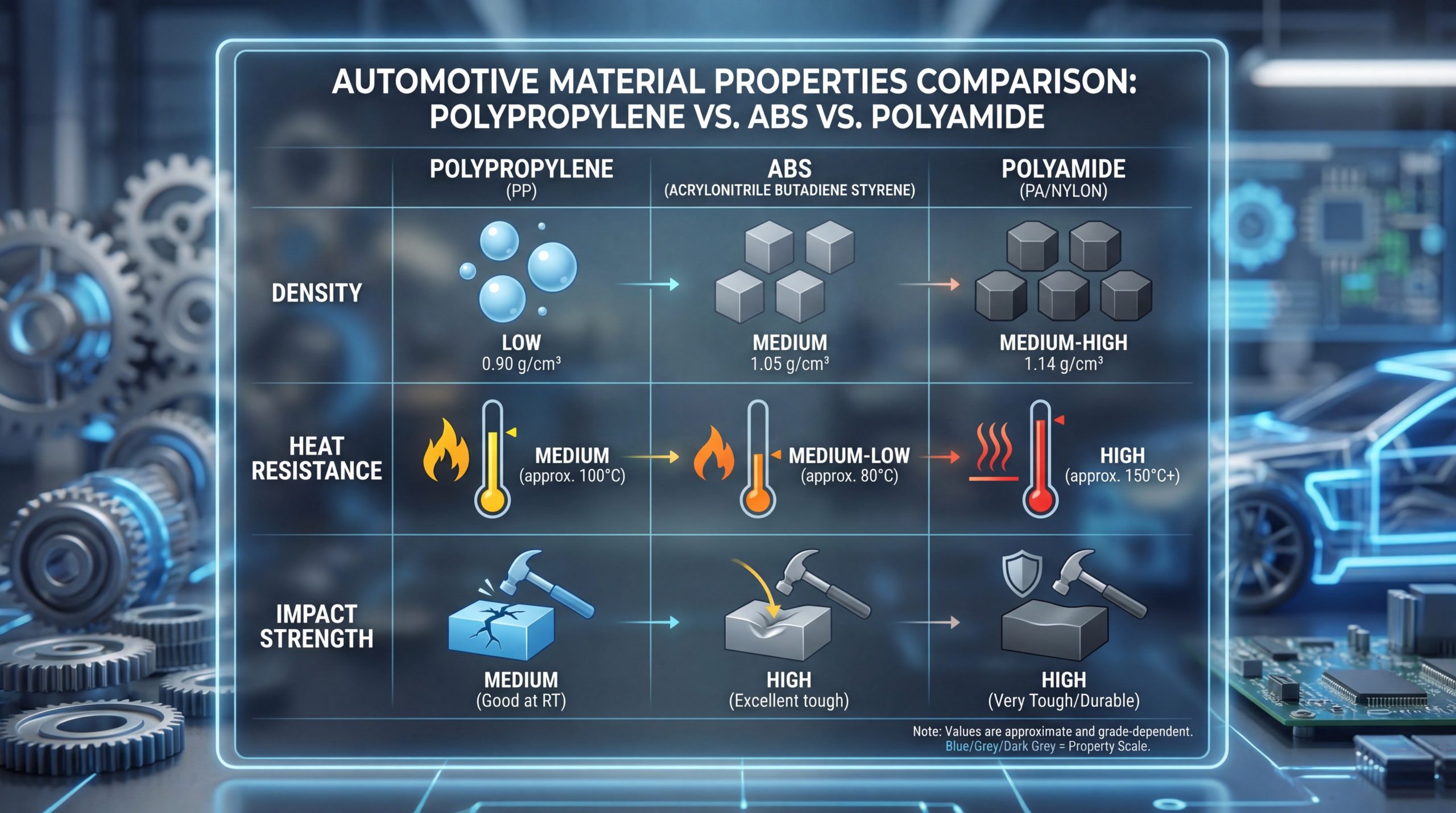
Polypropylene (PP), Polyurethane (PUR), and ABS are the primary resins used due to their unmatched versatility and high-speed moldability. These automotive plastic materials are selected based on their specific mechanical properties and cost-effectiveness for mass production.
Is Polypropylene the most versatile choice?
PP is a staple in the production of interior and exterior parts because it features excellent chemical resistance against oils and solvents. Its high melting point makes it suitable for engine covers and cable insulation.
Here is the deal: PP is one of the most cost-effective resins available for high-volume automotive production.
- 100% recyclable material supports sustainability.
- High melting point protects under-the-hood parts.
- Lightweight nature reduces fuel consumption.
Key Takeaway: Selecting the right base polymer like Polypropylene is the foundation of any successful, cost-efficient automotive component project.
| Polymer | Typical Application | |
|---|---|---|
| Polypropylene | Bumpers, gas cans, dashboards | |
| Polyurethane | Seats, suspension insulators, tires |
Analysis: The dominance of these polymers stems from their ability to be processed through various high-speed manufacturing techniques like injection molding.
How does Polyvinyl Chloride impact interior design?
PVC provides a cost-effective and durable solution for interior surfaces like door panels, dashboards, and upholstery. This specific grade of automotive plastic materials ensures the cabin stays pristine over years of heavy use through its natural resistance to water.
What makes PVC resistant to chemicals?
PVC is naturally resistant to many industrial chemicals and provides a soft-touch feel when used with specific additives. The material is also flame retardant, ensuring it meets strict international safety codes for vehicle interiors.
But that’s not all. PVC can be easily dyed to match any complex interior color palette.
- Superior water and chemical resistance.
- High durability against abrasions and scratches.
- Excellent flame retardancy for passenger safety.
Key Takeaway: Use PVC where chemical resistance and cost are your primary drivers for durable interior components.
| Property | PVC Rating | |
|---|---|---|
| Water Resistance | Excellent | |
| Cost Efficiency | Very High | |
| Heat Stability | Moderate (Requires additives) |
Analysis: PVC remains the go-to choice for protective underbody coatings and upholstery due to its unmatched price-to-performance ratio.
Why is ABS the preferred choice for trim and covers?
ABS is favored for its high impact resistance and its ability to achieve a premium “Class A” surface finish for visible parts. Manufacturing automotive plastic materials from ABS ensures that parts like wheel covers and dashboards remain aesthetically pleasing and structurally sound.
Can ABS withstand harsh road conditions?
ABS maintains its structural integrity even at low temperatures and possesses high tensile strength to survive debris impact. It is also incredibly easy to plate with chrome, making it ideal for high-end decorative trims.
The best part? ABS strike the perfect balance between mechanical toughness and aesthetic appeal.
- Superior dimensional stability for dashboards.
- High shock resistance for wheel covers.
- Excellent colorability for interior trim.
Key Takeaway: For components that require both mechanical strength and high-gloss beauty, ABS is the industry’s reliable workhorse.
| Application | Why ABS? | |
|---|---|---|
| Dashboards | Superior dimensional stability | |
| Wheel Covers | High impact and shock resistance | |
| Interior Trim | Excellent colorability and finish |
Analysis: ABS is frequently utilized for consumer-facing parts because it does not show stress marks or “ghosting” after long-term use.
Where is Polyamide utilized for heavy-duty performance?
Polyamide, commonly known as Nylon, is utilized in high-heat environments such as engine compartments and complex gear systems. These specialized automotive plastic materials maintain their mechanical properties even when exposed to extreme engine heat and volatile fluids.
Does Nylon 6/6 handle high temperatures?
Nylon 6/6 is a high-performance engineering plastic that offers exceptional wear and abrasion resistance in the engine bay. Low friction coefficients make it ideal for moving gears, reducing the need for external lubrication.
Let’s dig a little deeper. Nylon’s high melting point allows it to replace metal in the most demanding areas of the vehicle.
- Resistance to fuel, oil, and brake fluids.
- Exceptional wear resistance for moving parts.
- High load capacity for engine gears.
Key Takeaway: When your application involves high heat and constant friction, Polyamide is the superior engineering choice for longevity.
| Nylon Type | Best For | |
|---|---|---|
| Nylon 6 | General purpose housings and handles | |
| Nylon 6/6 | High-load gears and engine covers | |
| Glass-Filled | Structural components requiring stiffness |
Analysis: To combat moisture absorption, manufacturers often add glass fibers to the resin to increase rigidity for radiator tanks.
What role does Polycarbonate play in vehicle lighting?
Polycarbonate (PC) is the industry standard for headlamp lenses and bumpers due to its exceptional transparency and impact strength. These automotive plastic materials provide a lightweight alternative to glass that is virtually unbreakable under normal road conditions.
Is PC stronger than traditional glass?
PC is significantly stronger than glass while being nearly 50% lighter, making it perfect for modern aerodynamic lighting systems. Its optical clarity allows for high-intensity light transmission, which is critical for night-time driving safety.
Here is the deal: PC’s impact resistance is so high it is even used for specialized bullet-proof glass.
- Virtually unbreakable under road debris impact.
- Optical clarity maximizes night-time visibility.
- Moldable into complex, wrap-around designs.
Key Takeaway: For any application requiring optical transparency combined with extreme toughness, Polycarbonate is the only viable option.
| Feature | Polycarbonate Benefit | |
|---|---|---|
| Impact Strength | Resists stone chips and minor collisions | |
| Clarity | Maximizes visibility for night driving | |
| Heat Resistance | Withstands heat from LED/HID bulbs |
Analysis: The move from glass to Polycarbonate has revolutionized lighting design, enabling the sleek shapes seen on modern electric vehicles.
Can specialty resins like POM and PBT improve systems?
Specialty resins like POM and PBT are critical for high-precision systems including fuel pumps and electrical connectors. These technical automotive plastic materials handle the “hidden” but vital functions that keep the engine and electronics running smoothly.
Why is POM critical for fuel pumps?
Polyoxymethylene (POM), or Acetal, is highly resistant to fuels and chemicals, making it indispensable for precision fuel system inserts. Its naturally “slick” surface reduces the need for additional lubrication in moving valves.
It’s a game-changer. POM allows for the creation of high-precision gears that last for the vehicle’s entire lifespan.
- High stiffness and dimensional stability.
- Excellent “creep” resistance under pressure.
- Naturally low friction for precision valves.
Key Takeaway: Do not overlook specialty resins for small, high-precision components that require specific chemical or electrical insulation properties.
| Resin | Primary Use Case | |
|---|---|---|
| POM (Acetal) | Fuel pumps, window lift gears | |
| PBT | Electrical connectors, ignition coils |
Analysis: These plastics are specifically engineered to maintain their dimensions in several environmental conditions and temperatures.
How do plastics contribute to total weight reduction?
Plastics contribute to weight reduction by replacing heavy steel and iron components with lightweight, high-performance polymers. Using these automotive plastic materials is the most cost-effective way to increase the battery range of electric vehicles.
Will lighter cars save on fuel costs?
Weight is the enemy of efficiency; for every 10% reduction in vehicle weight, fuel economy improves by roughly 6% to 8%. Polymers are typically 50% lighter than aluminum, allowing you to use smaller and more efficient engines.
You might be wondering: Do plastics help electric vehicle range?
- Lighter chassis reduce energy consumption.
- Plastic battery enclosures save dozens of kilograms.
- Reduced mass improves overall braking performance.
Key Takeaway: Prioritizing lightweight plastics in your assembly is the fastest route to improving overall vehicle efficiency and performance.
| Material | Density (g/cm³) | Weight Impact | |
|---|---|---|---|
| Steel | 7.85 | Heavy / High energy cost | |
| Aluminum | 2.70 | Moderate / Medium cost | |
| Plastics (avg) | 1.10 | Light / Energy efficient |
Analysis: The shift toward lightweighting is not just a trend; it is a fundamental requirement for the future of mobility.
Are automotive plastics resistant to extreme corrosion?
Automotive plastics are inherently resistant to corrosion, unlike traditional metals that oxidize when exposed to moisture and road salts. These automotive plastic materials provide a permanent barrier against environmental degradation, significantly reducing long-term maintenance costs.
How do polymers survive road salts?
Plastics like Polyethylene and PEEK are chemically inert, meaning they do not react with the de-icing chemicals used in winter. Using these materials eliminates the need for expensive anti-corrosion coatings and paints on the vehicle chassis.
Think about this. Plastic fuel tanks never rust from the inside out, unlike their metal counterparts.
- Permanent barrier against moisture and salt.
- Eliminates the need for anti-corrosion paints.
- Extends the lifespan of underbody components.
Key Takeaway: You can effectively eliminate corrosion-related failures by switching vulnerable metal parts to high-grade industrial plastics.
| Environment | Metal Reaction | Plastic Reaction | |
|---|---|---|---|
| High Humidity | Oxidation / Rust | No Reaction | |
| Road Salt | Accelerated Pitting | No Reaction | |
| Battery Acid | Heavy Corrosion | Chemical Resistance |
Analysis: The durability of plastics in harsh environments ensures that interior and exterior trim components look new for decades.
What are the best fabrication methods for car parts?
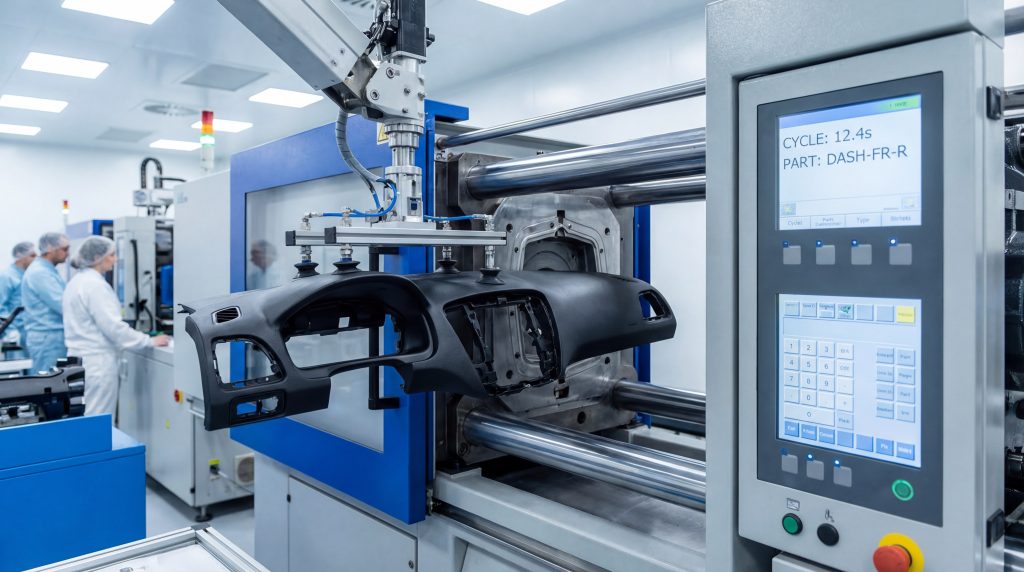
Injection molding and CNC machining are the most effective methods for producing high-precision components from various automotive plastic materials . Choosing the right fabrication method ensures you optimize both production speed and your total manufacturing budget.
Is injection molding better for mass production?
Injection molding is the gold standard for high-volume automotive manufacturing due to its incredible speed and repeatability. It supports complex geometries with tight tolerances, allowing multiple parts to be produced in a single cycle.
Simply put, once the mold is created, the cost per part drops significantly for your project.
- Supports complex geometries and tight tolerances.
- High-volume efficiency for mass production.
- Integration of overmolding and multi-materials.
Key Takeaway: Match your fabrication method to your specific production volume to achieve the best balance of speed and cost.
| Method | Best For | Typical Lead Time | |
|---|---|---|---|
| Injection Molding | High-volume production | 4 – 6 Weeks (Tooling) | |
| CNC Machining | Prototyping / Low-volume | 3 – 5 Days |
Analysis: Working with a partner that offers both services ensures you can move from rapid design to mass production seamlessly.
Frequently Asked Questions
Can I recycle automotive plastic parts after the vehicle is scrapped?Yes, many common plastics like Polypropylene (PP) and Polyethylene (PE) are thermoplastic, meaning they can be melted down and repurposed for new industrial uses.
What’s the best plastic for high-heat engine components?Nylon 6/6 (Polyamide) is the best choice because it maintains mechanical properties at high temperatures, especially when reinforced with glass fibers for added rigidity.
Can plastic bumpers really protect a car as well as steel ones?Yes, modern plastic bumpers are engineered as “crumple zones” to absorb and dissipate energy during an impact, which is safer for occupants than rigid steel.
How do I choose between ABS and PVC for interior trim?Choose ABS if you need a high-impact, glossy finish for visible parts like dashboards. Choose PVC if you need a flexible, cost-effective solution for panels or protection.
What’s the most durable plastic for exterior automotive use?Polycarbonate is exceptionally durable for exterior use because it offers high impact resistance and can be UV-stabilized to prevent yellowing over time.
Conclusion
The strategic implementation of high-performance automotive plastic materials has revolutionized the industry by solving the critical weight-reduction and safety problems of modern vehicles. By selecting advanced resins like PP, ABS, and Polyamide, you can produce components that are more durable, aerodynamic, and cost-effective than traditional metal alternatives. Whether you require precision CNC prototypes or high-volume injection molding, our IATF 16949-certified processes ensure your parts meet the highest global standards. At CN Precision, we believe that high-quality manufacturing is the bridge between innovative design and market leadership. To see how our engineering expertise can elevate your next project, contact us today for a professional consultation.