Asking the right questions is the foundation of a successful manufacturing partnership. You may be worried about long lead times or high defect rates that could jeopardize your market launch. This uncertainty often leads to wasted capital on tools that don’t perform as expected. By asking specific injection molding supplier questions , you can identify a partner who prioritizes your project’s precision and longevity.
What experience do you have in my specific industry?
A qualified partner should demonstrate a proven track record within your specific market sector to ensure regulatory and functional compliance. These injection molding supplier questions help you determine if they understand the unique stressors and standards your parts will face. You need to know if they have navigated the complexities of your niche before.
The best part? A supplier with industry experience can often anticipate design flaws before they become expensive mistakes. They bring a library of historical data to your project.
Assessing Industry Expertise
- Review their portfolio for similar geometric complexities.
- Ask for case studies involving similar resin requirements.
- Verify their familiarity with industry-specific certifications.
Key Takeaway: Industry experience reduces the learning curve and minimizes technical risks during production.
| Factor | Importance | Why It Matters | |
|---|---|---|---|
| Industry History | High | Ensures compliance with specific standards. | |
| Similar Projects | Medium | Proves capability with your part type. | |
| References | High | Validates the supplier’s reliability claims. |
The following table summarizes why vetting industry background is a critical first step.
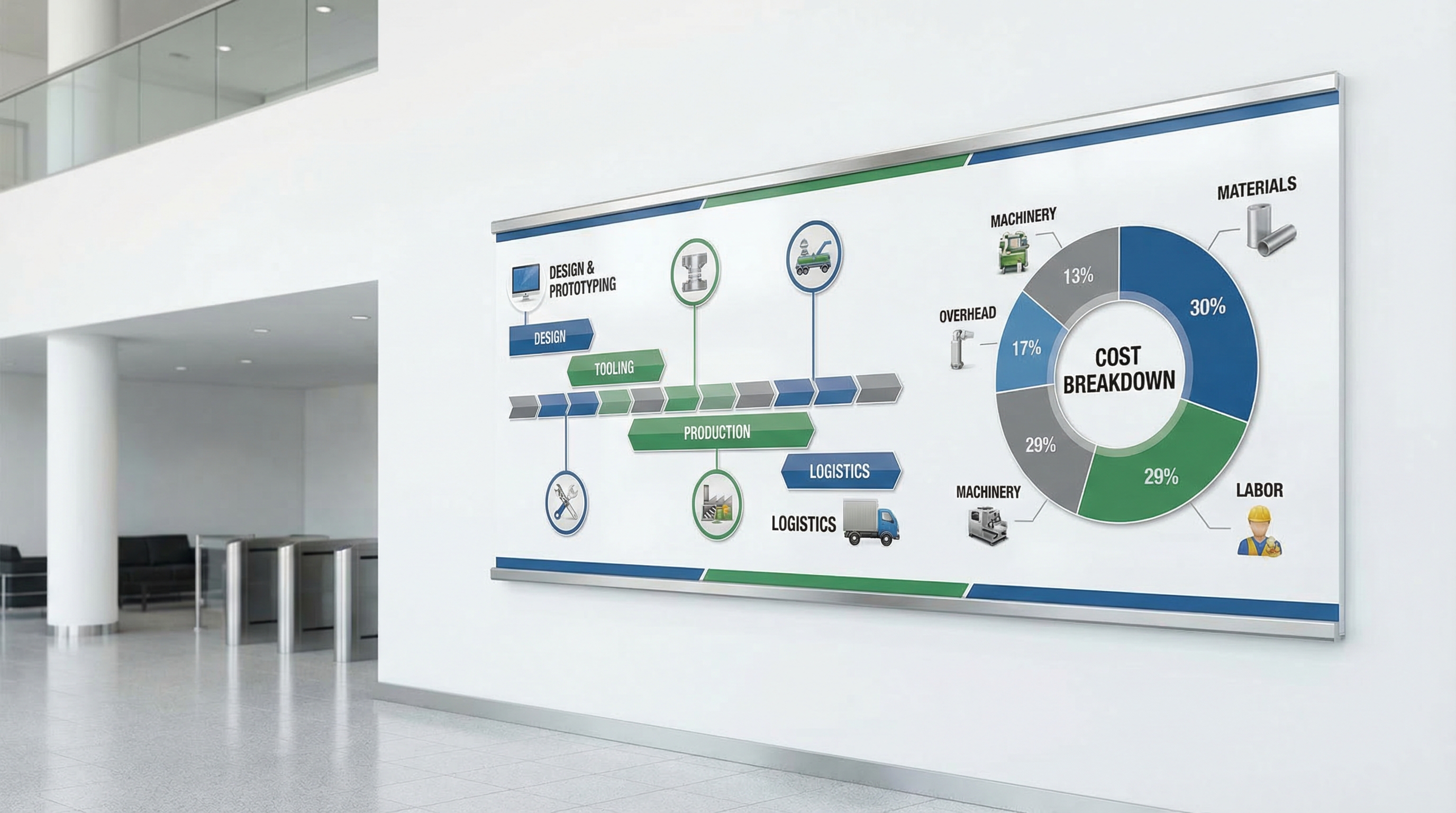
Do you offer in-house mold design and tooling?
In-house tooling capabilities ensure that your molds are designed for manufacturability and are easily maintained on-site. Addressing these injection molding supplier questions is crucial because it directly impacts your long-term mold-making costs and part quality. If they outsource tooling, you might face delays and communication gaps.
Look at it this way: When the designers and the toolmakers work under one roof, the feedback loop is instantaneous. This synergy prevents “over-the-fence” engineering issues.
Tooling Advantages
- Faster response times for mold modifications or repairs.
- Enhanced control over the steel quality and heat treatment.
- Seamless transition from design to the production floor.
Key Takeaway: In-house tooling provides a single point of accountability for both the mold and the final part.
| Tooling Aspect | In-House | Outsourced | |
|---|---|---|---|
| Communication | Direct | Indirect | |
| Repair Speed | Fast | Slow | |
| Cost Control | High | Low |
This comparison highlights the operational differences between integrated and fragmented tooling services.
What quality control standards do you follow?
Rigorous quality protocols ensure that every part meets your exact dimensional specifications and performance requirements. These injection molding supplier questions reveal how the manufacturer prevents defects rather than just catching them. You want a partner who uses data-driven methods to maintain consistency across millions of cycles.
The result? Lower scrap rates and a more predictable supply chain for your assembly line. Consistency is the hallmark of a professional molder.
Essential Quality Checks
- Utilization of automated vision systems for inspection.
- Regular calibration of measuring equipment like CMMs.
- Implementation of Statistical Process Control (SPC).
Key Takeaway: Quality control should be a proactive process integrated into every stage of manufacturing.
| QC Metric | Target | Method | |
|---|---|---|---|
| Tolerance | +/- 0.005mm | CMM Inspection | |
| Reject Rate | < 0.5% | Automated Sorting | |
| Traceability | 100% | Batch Coding |
Use this table as a checklist to evaluate a potential supplier’s quality management system.
Which resin materials do you work with most often?
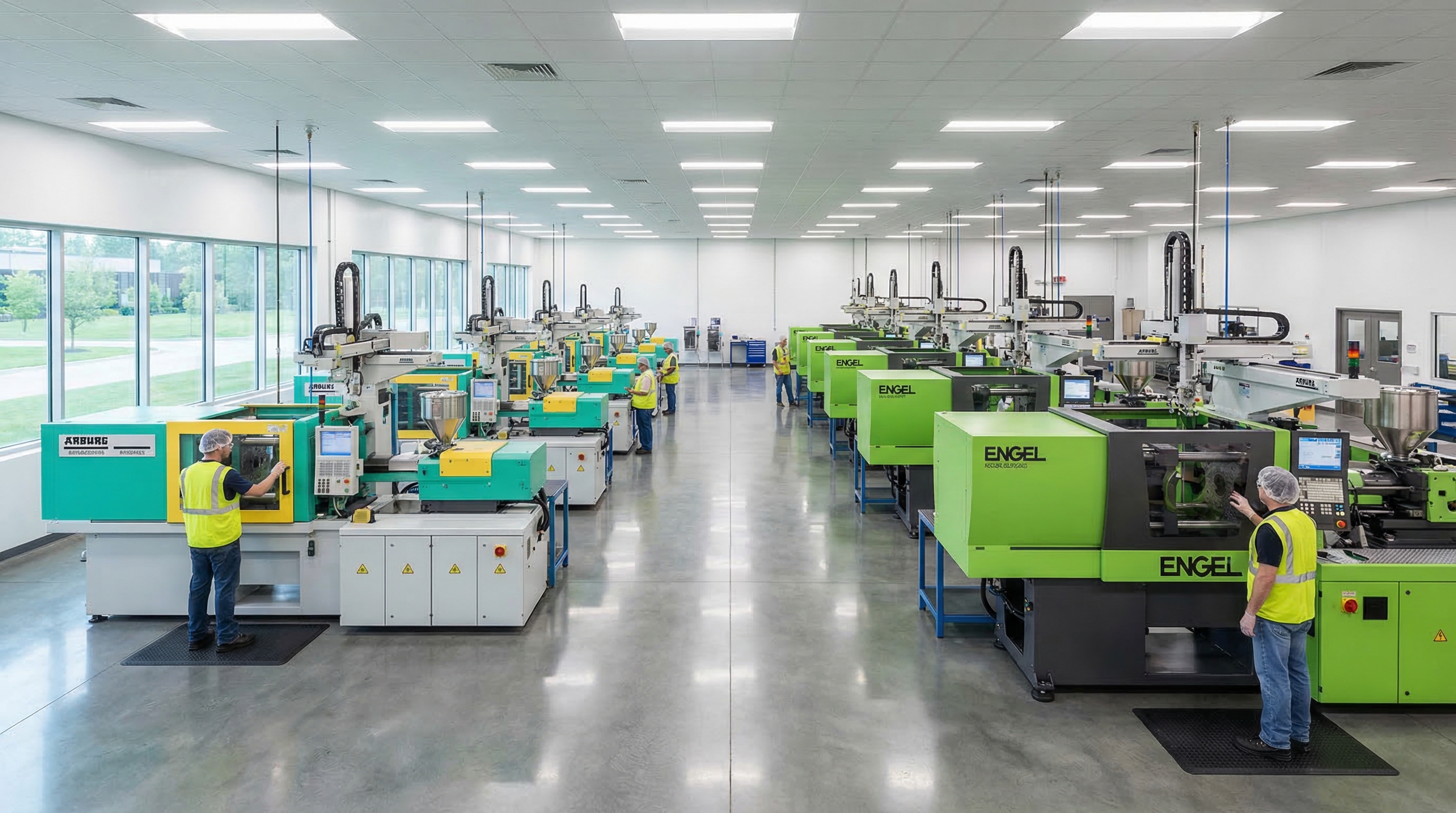
Your supplier must be proficient in processing the specific resins required for your product’s environment and mechanical needs. These injection molding supplier questions help verify their material science expertise and quality-control capabilities regarding resin handling. Some resins require specialized drying or high-temperature molds that not all facilities can provide.
It’s not just about melting plastic. Understanding shrink rates and warp characteristics for advanced polymers is a specialized skill. You need a master of materials.
Material Selection Factors
- Proficiency with engineering-grade resins and elastomers.
- Experience with additives like glass fillers or UV stabilizers.
- Proper moisture control and regrind management protocols.
Key Takeaway: Material expertise ensures your parts don’t fail due to improper processing or resin degradation.
| Material Type | Complexity | Special Requirements | |
|---|---|---|---|
| Commodity (PP/PE) | Low | Standard cooling | |
| Engineering (PC/ABS) | Medium | Strict temp control | |
| High-Performance (PEEK) | High | Specialized heaters |
The data above illustrates how material choice dictates the technical requirements of the molding process.
What are your typical lead times for new projects?
Accurate lead times are essential for meeting your product launch deadlines and maintaining your inventory goals. These injection molding supplier questions clarify how long tooling, sampling, and full-scale production will actually take. You cannot afford a partner who overpromises on speed and underdelivers on the shipping date.
Think about this: A delay in tooling can push your entire product roadmap back by months. Transparency in scheduling is non-negotiable.
Lead Time Components
- Design and engineering approval phases.
- Tooling fabrication and “First Article” sampling.
- Mass production cycle times and shipping logistics.
Key Takeaway: Understanding the realistic timeline for each phase prevents bottlenecks in your supply chain.
| Phase | Estimated Duration | Variable Factors | |
|---|---|---|---|
| Design Review | 1-2 Weeks | Complexity of part | |
| Tooling | 4-8 Weeks | Mold cavitations | |
| Production | 2-4 Weeks | Order volume |
The following breakdown helps you plan your project milestones more effectively.
Can you scale from prototyping to mass production?
A versatile manufacturer can take your project from an initial concept to millions of units without changing vendors. These injection molding supplier questions assess the scalability of their facility and their ability to handle overmolding or complex assemblies. Moving a mold between different suppliers is risky and often leads to damage.
The goal? Find a partner that grows with you. Transitioning from bridge tooling to high-cavitation production should be a seamless evolution.
Scalability Indicators
- Availability of various press sizes (tonnage).
- Capability for rapid prototyping versus hardened steel tooling.
- Automated material handling for high-volume efficiency.

Key Takeaway: Choosing a scalable supplier protects your investment as your market demand increases.
| Volume Level | Tooling Type | Focus | |
|---|---|---|---|
| Low (Prototypes) | Aluminum | Speed & Testing | |
| Medium (Bridge) | P20 Steel | Market Validation | |
| High (Mass Prod) | H13 Steel | Low Unit Cost |
This table shows how a supplier should adapt their tooling strategy based on your production volume.
Do you provide secondary operations and assembly?
Integrated services like assembly, decorating, and finishing can significantly reduce your overall logistics costs and lead times. These injection molding supplier questions allow you to consolidate your supply chain under one roof for better quality management. Managing five different vendors for one finished product is a logistical nightmare you want to avoid.
The value-add? Receiving a finished, packaged product ready for the end-user. It simplifies your operations immensely.
Available Secondary Services
- Ultrasonic welding and heat staking.
- Silk screening, pad printing, or laser engraving.
- Custom packaging and kitting for retail.
Key Takeaway: One-stop-shop suppliers reduce the risk of damage during transport between different service providers.
| Service | Benefit | Typical Use | |
|---|---|---|---|
| Assembly | Lower Labor Cost | Multi-part products | |
| Printing | Branding | Logos and instructions | |
| Welding | Structural Bond | Hermetic seals |
Consider these services to streamline your path from factory to customer.
How do you handle mold maintenance and ownership?
Defining who owns the mold and who is responsible for its upkeep is vital for protecting your long-term assets. These injection molding supplier questions prevent legal and operational headaches if you ever decide to move production. You must ensure that the mold is maintained regularly to prevent premature wear and part defects.
Don’t skip this. A mold is a high-value asset. You need a clear agreement on storage, insurance, and maintenance cycles.
Mold Lifecycle Management
- Clear contractual ownership of the physical tooling.
- Documented preventative maintenance schedules.
- Climate-controlled storage for molds during downtime.

Key Takeaway: Proactive maintenance extends the life of your tool and ensures consistent part quality over years.
| Maintenance Type | Frequency | Action | |
|---|---|---|---|
| Routine | Every Shift | Cleaning & Lubrication | |
| Periodic | Every 50k Cycles | Seal & Spring Check | |
| Major | Every 250k Cycles | Deep Refurbishment |
This schedule illustrates the commitment required to keep your investment in peak condition.
What is your process for communication and updates?
Transparent communication ensures you are never in the dark regarding your project’s status or potential production hurdles. These injection molding supplier questions set the stage for a collaborative relationship rather than a purely transactional one. You deserve a dedicated project manager who speaks your language and understands your priorities.
The best part? Knowing exactly where your project stands allows you to manage your stakeholders with confidence. No more guessing games.
Communication Standards
- Frequency of status reports and project milestones.
- Availability of digital project management portals.
- Direct access to the engineering team for technical queries.
Key Takeaway: Strong communication prevents small misunderstandings from turning into expensive project delays.
| Channel | Frequency | Content | |
|---|---|---|---|
| Email Updates | Weekly | General Progress | |
| Video Calls | Bi-Weekly | Technical Reviews | |
| Alert System | Immediate | Critical Issues |
Establishing these communication layers early ensures a smooth partnership from start to finish.
How do you optimize costs without losing quality?
Cost optimization should involve design improvements rather than cutting corners on essential materials or processing times. These injection molding supplier questions help identify a partner who adds value through Design for Manufacturing (DFM) insights. A cheaper quote often hides hidden costs like high reject rates or short mold life.
Look for value. A supplier who suggests a slight wall thickness change to reduce cycle time is saving you money every second the press runs.
Cost-Saving Strategies
- Reducing cycle times through optimized cooling designs.
- Suggesting alternative resins with similar properties but lower costs.
- Optimizing runner systems to reduce material waste.
Key Takeaway: Real savings come from engineering efficiency, not from sacrificing the integrity of the part.
| Strategy | Impact | Result | |
|---|---|---|---|
| DFM Review | High | Lower Unit Cost | |
| Automation | Medium | Reduced Labor | |
| Regrind Use | Low | Material Savings |
This summary highlights how professional molders use engineering to drive down your total cost of ownership.
Common Questions About Molding Suppliers
Can I visit your facility before signing a contract?
Yes, any reputable supplier should welcome a facility tour or a virtual audit to prove their capabilities.
How do I protect my intellectual property?
You should always sign a Non-Disclosure Agreement (NDA) before sharing detailed CAD files or proprietary designs.
What happens if the parts arrive defective?
A professional supplier will have a clear RMA (Return Merchandise Authorization) process and a quality guarantee policy.
Can you help me with part design improvements?
Most high-end molders offer DFM (Design for Manufacturing) feedback to ensure your part is optimized for the injection process.
Do you have a minimum order quantity?
MOQs vary by supplier, so it is important to match your expected volume with their production capacity.
At CN Precision, we believe that transparency is the key to manufacturing excellence. We don’t just mold parts; we engineer solutions that help your business scale with precision and speed. If you are ready to partner with a team that values your project as much as you do, please contact us today to discuss your requirements.