
Estimating molding cycle time involves calculating the total duration from the start of mold closure to the moment the part is ejected and the machine resets. You face constant pressure to reduce costs while maintaining tight production deadlines. This stress often leads to inaccurate bidding and machine scheduling errors that eat into your profit margins. By mastering injection molding cycle time, you can gain a competitive edge with precise lead times and optimized factory floor throughput at our plastic injection molding facility.
What defines the injection molding cycle time?
The cycle time is defined by three primary stages: intermediate time, injection/dwelling time, and the cooling phase. Understanding these stages is the first step toward optimizing your injection molding cycle time for high-volume production.
What defines the three main phases of a cycle?
Each phase represents a distinct mechanical or thermal event within the machine. The intermediate time covers mold movements, while the injection phase focuses on filling the cavity with molten resin.
But here is the catch:
- Intermediate time (td): Non-process time for movements.
- Injection time (ti): Time to fill and pack the material.
- Cooling time (tc): Duration for solidification.
| Phase | Description | Key Focus | |
|---|---|---|---|
| Intermediate | Mechanical movement | Machine speed | |
| Injection | Cavity filling | Pressure & Flow | |
| Cooling | Heat dissipation | Thermal management |
The distribution of time across these phases reveals that cooling usually dominates the total duration.
Key Takeaway: A complete cycle is the sum of mechanical movement, material injection, and thermal stabilization.
How is the total injection molding cycle time calculated?
You calculate the total time by summing the intermediate duration, the injection/dwelling period, and the cooling time. Accurate math is vital for predicting your injection molding cycle time across different machine tonnages.
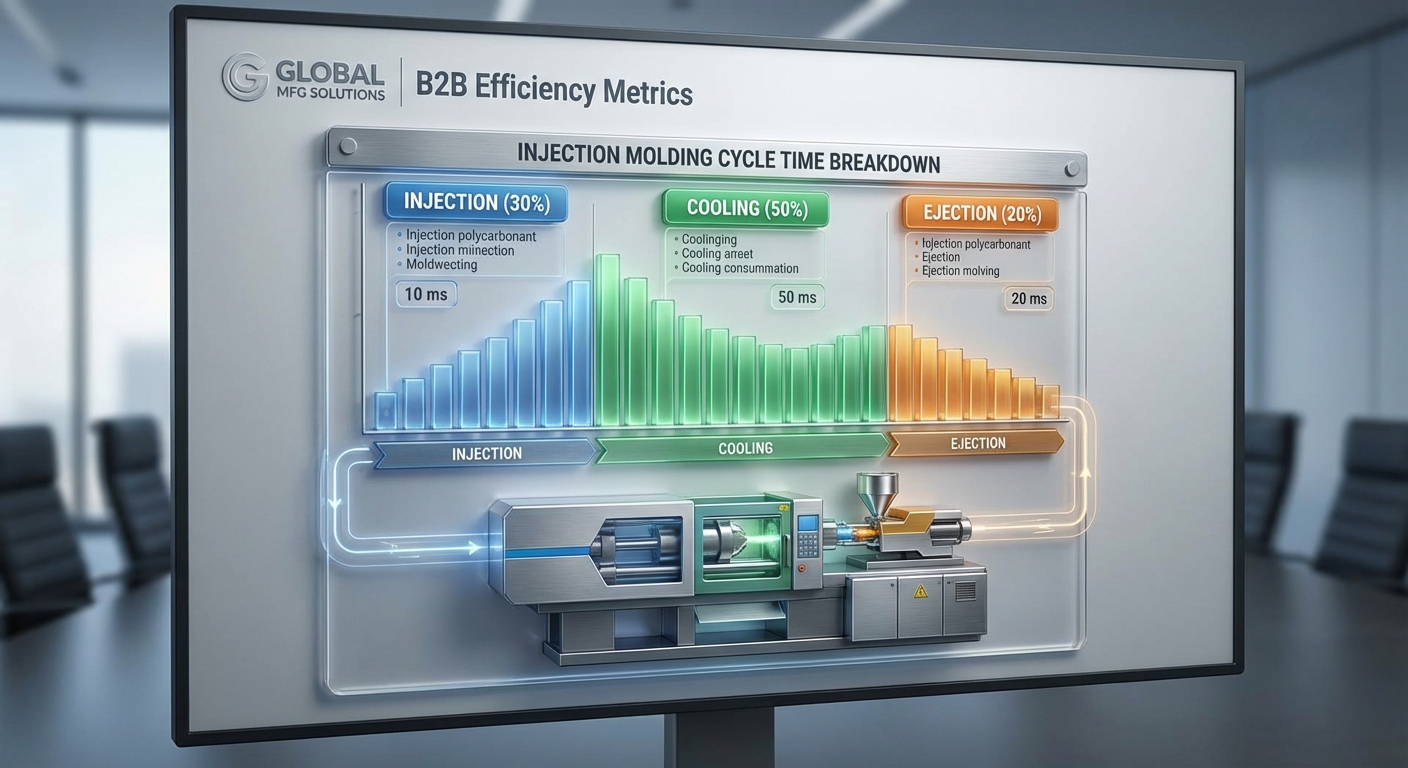
What is the primary engineering formula for estimation?
The standard formula used by engineers is
T=td+ti+tc
. This simple addition allows you to isolate which variable is causing production bottlenecks.
Believe it or not:
- td is often overlooked in early estimates.
- ti depends heavily on gate size.
- tc scales with the square of the wall thickness.
| Variable | Formula Role | Impact Level | |
|---|---|---|---|
| td | Constant base | Low/Medium | |
| ti | Dynamic filler | Medium | |
| tc | Major variable | High |
Using this formula ensures that no part of the machine’s movement is left unaccounted for in your budget.
Key Takeaway: Total cycle time is a cumulative metric that requires individual optimization of three distinct variables.
Why does intermediate time impact injection molding cycle time?
Intermediate time covers all the non-processing movements like mold opening, part removal, and mold closing. Even small delays in these mechanical movements will drag down your injection molding cycle time significantly when multiplied across thousands of parts. Expert mold making services can help minimize these delays through better tool design.
How does the dry cycle relate to machine speed?
The dry cycle is the manufacturer’s rated speed for the machine to complete its movements without any plastic. You must account for this baseline because the mold cannot move faster than the machine’s hydraulic or electric servos allow.
The reality is this:
- Faster clamp speeds reduce td.
- High-speed robots accelerate part removal.
- Safety door cycles add hidden seconds.
| Intermediate Factor | Impact on | Optimization Method | |
|---|---|---|---|
| Dry Cycle | Baseline | Machine selection | |
| Part Ejection | 1-3 seconds | Robot automation | |
| Insert Loading | 5-30 seconds | Rotary tables |
Manual intervention is the biggest enemy of a consistent intermediate time, making automation a high-priority investment.
Key Takeaway: Reducing mechanical “dead time” is the easiest way to improve efficiency without changing part quality.
How does the filling rate affect injection molding cycle time?
The filling rate determines how quickly the molten plastic occupies the mold cavity and reaches a packed state. A faster injection rate can shave seconds off your injection molding cycle time, provided the part geometry allows for it without causing defects.
Does dwelling time impact the precision of the cycle?
Dwelling, or packing time, is necessary to ensure the part doesn’t shrink away from the mold walls as it cools. You cannot skip this step, but you can optimize it by using the correct gate size and location.
It gets even better:
- Proper packing prevents sink marks.
- Gate freeze-off ends the dwelling phase.
- Excessive packing wastes valuable seconds.
| Filling Factor | Role | Effect on Quality | |
|---|---|---|---|
| Injection Speed | Cavity filling | Surface finish | |
| Packing Pressure | Density control | Dimensional accuracy | |
| Gate Freeze | Phase transition | Weight consistency |
Balancing speed and pressure during the injection phase ensures the part is structurally sound before the cooling phase begins.
Key Takeaway: Injection and dwelling times are quality-critical steps that must be balanced against the need for speed.
Why is cooling time critical to injection molding cycle time?
Cooling time is typically the longest part of the process, often accounting for over 50% of the total duration. Optimizing this stage through precision machining of cooling channels is the fastest way to lower your injection molding cycle time.
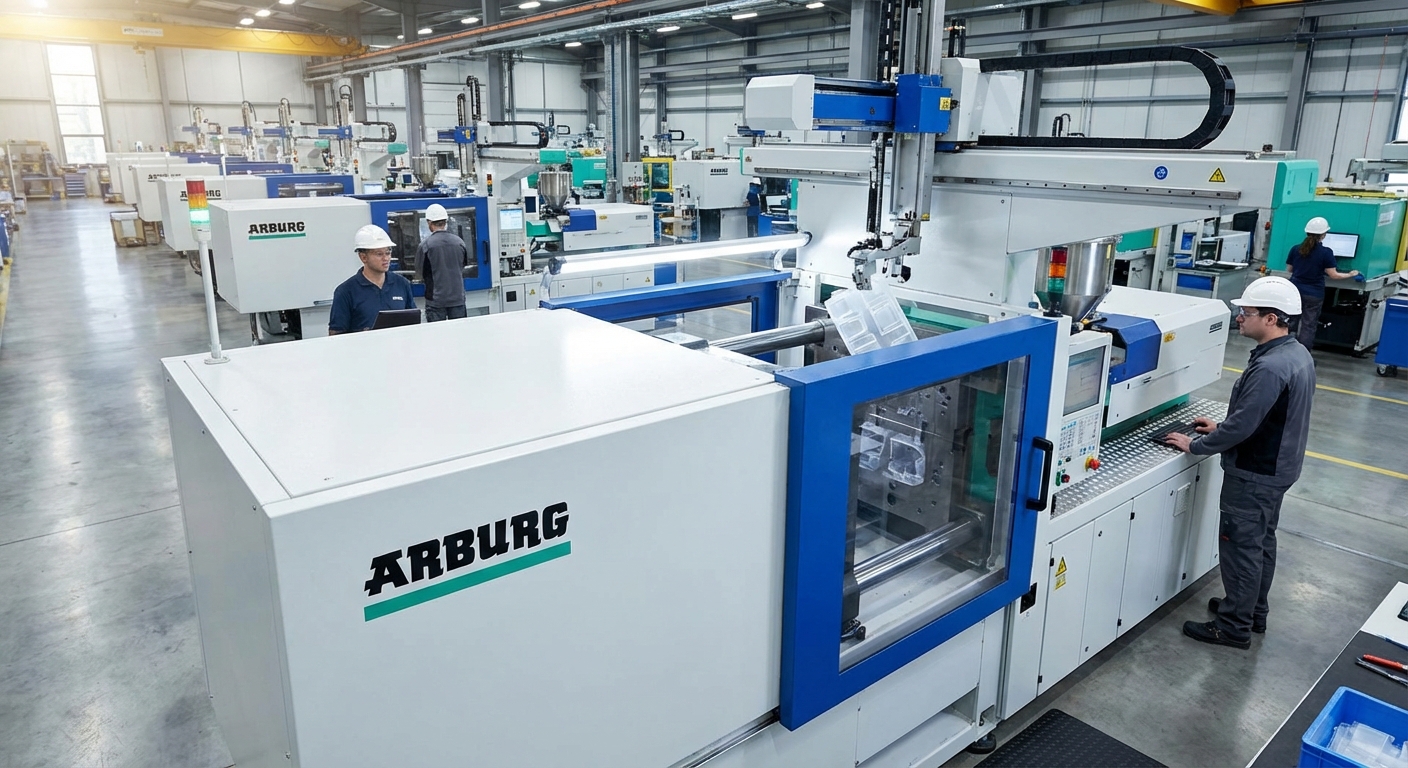
Why is the cooling phase typically the longest period?
Plastic is a natural insulator, meaning it resists the transfer of heat from its core to the mold surface. Because of this, you must wait for the center of the part to solidify enough to withstand ejection forces.
Think about it this way:
- Polymers have low thermal conductivity.
- Heat must travel through the plastic to the metal.
- The mold must absorb and remove this energy.
| Cooling Variable | Impact on Time | Control Method | |
|---|---|---|---|
| Melt Temp | Direct | Process settings | |
| Cooling Lines | Direct | Mold design | |
| Part Thickness | Exponential | DFM review |
The physics of heat conduction means that cooling will always be your primary target for cycle time reduction.
Key Takeaway: Efficient thermal management within the mold tool is the secret to high-speed production.
How do part dimensions change injection molding cycle time?
Part thickness is the most influential dimension because it dictates how long heat stays trapped in the polymer. If you double the wall thickness, you might find that your injection molding cycle time increases exponentially rather than linearly.
Does doubling wall thickness quadruple cooling time?
Yes, the cooling time is generally proportional to the square of the maximum wall thickness. This means a small change in design can have a massive impact on your production costs and machine availability.
But here is the kicker:
- 1mm wall = 4 second cool.
- 2mm wall = 16 second cool.
- 4mm wall = 64 second cool.
| Wall Thickness | Estimated Cool Time | Production Impact | |
|---|---|---|---|
| 1.0 mm | Very Short | High volume | |
| 2.5 mm | Moderate | Standard | |
| 5.0 mm | Very Long | High cost |
Designing parts with uniform, thin walls is the most effective way to keep your cycle times within a profitable range.
Key Takeaway: Wall thickness is the single most important design factor for controlling production speed.
Can material properties shift the injection molding cycle time?
Yes, the thermal conductivity and specific heat of a resin dictate how fast it releases energy to the mold. Choosing a material with higher thermal diffusivity can help you achieve a much lower injection molding cycle time while maintaining strict quality control standards.
How do different plastics compare in heat release speed?
Crystalline materials often behave differently than amorphous ones during the cooling phase because of their structured molecular alignment. You must check the specific thermal data for your resin to get an accurate cycle estimate.
Keep this in mind:
- Thermal diffusivity (α) varies by grade.
- Some resins require higher mold temperatures.
- Additives can change cooling characteristics.
| Material Type | Cooling Behavior | Typical Speed | |
|---|---|---|---|
| Polypropylene | Fast crystallization | High | |
| Polycarbonate | Slow heat release | Moderate | |
| Filled Resins | Enhanced conductivity | High |
Material selection should be done with both part performance and molding efficiency in mind to ensure project success.
Key Takeaway: Not all plastics cool at the same rate; material thermal properties are a core variable in your calculation.
Does mold temperature influence injection molding cycle time?
Lower mold temperatures generally speed up solidification, but they can also introduce internal stresses if not managed correctly. Finding the “sweet spot” for mold temperature is essential for a stable and fast injection molding cycle time.
Is water cooling effective for significant cycle reduction?
Water is the most common medium for heat removal because of its high heat capacity and ease of use. By using turbulent flow in your cooling channels, you can maximize the heat transfer rate and drop seconds off the cycle.
The simple truth is:
- Chilled water reduces tc quickly.
- Bubblers reach deep into cores.
- Conformal cooling follows part geometry.
| Cooling Method | Efficiency | Complexity | |
|---|---|---|---|
| Standard Holes | Baseline | Low | |
| Bubblers/Baffles | Improved | Medium | |
| Conformal Lines | Maximum | High |
Effective cooling design ensures that the heat is pulled out of the plastic as uniformly and rapidly as possible.
Key Takeaway: Advanced cooling techniques in the mold tool directly translate to shorter production cycles.
How can DFM reviews improve injection molding cycle time?
Design for Manufacturing (DFM) identifies thick sections and complex features that create thermal bottlenecks early in the process. Implementing DFM recommendations is a proven strategy for reducing your injection molding cycle time at our plastic injection molding facility before the mold is even built.
Why is data gathering essential for future estimations?
Recording actual cycle times from previous runs allows you to refine your bidding process and improve scheduling accuracy. You can use historical data to identify which parts of your process are consistently underperforming.
Now, consider this:
- Past performance predicts future results.
- Small tweaks add up over time.
- Data removes the guesswork from bidding.
| Data Point | Value | Application | |
|---|---|---|---|
| Actual | Reality check | Bid accuracy | |
| Machine | Limit testing | Maintenance | |
| Scrap Rate | Quality link | Profit analysis |
A data-driven approach allows you to move from “guessing” to “knowing” exactly how long your production run will take.
Key Takeaway: Early intervention through DFM and data analysis prevents costly cycle time surprises later.
How to master the injection molding cycle time?
Mastering the cycle requires a holistic approach that combines machine performance, material science, and part design. Consistent monitoring of your injection molding cycle time ensures that your production remains profitable and predictable over the long term.
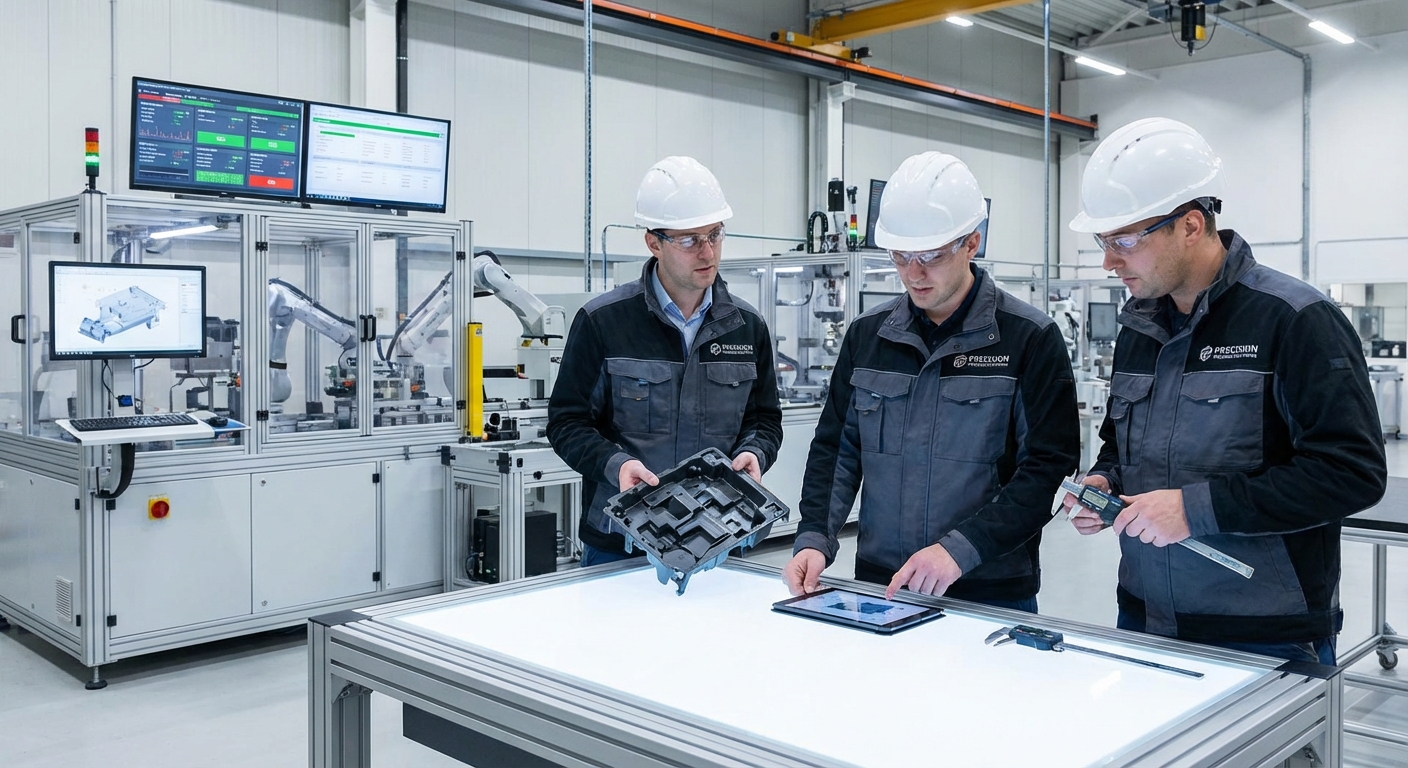
What are the risks of premature part ejection?
If you try to shorten the cycle too much, the part may still be too soft when the pins push it out. This leads to permanent deformation, dimension inaccuracies, and high scrap rates that negate any time savings.
But here is the catch:
- Pin push-through ruins aesthetics.
- Warpage occurs after cooling.
- Dimensions will drift out of spec.
| Risk Factor | Symptom | Solution | |
|---|---|---|---|
| Short Cool | Warpage | Increase | |
| High Speed | Pin marks | Adjust ejection | |
| Thin Walls | Cracking | Optimize DFM |
Finding the balance between speed and quality is the ultimate goal of any manufacturing engineer.
Key Takeaway: Efficiency is only valuable if the parts meet the required quality standards; never sacrifice stability for speed.
Mastering the math behind production speed is more than just an engineering exercise; it is the foundation of a profitable manufacturing business. You have seen how wall thickness, material choice, and mold design interact to dictate your throughput. By focusing on thermal management and mechanical efficiency, you can overcome the bottlenecks that slow down your production lines. Our mission is to provide the technical expertise and precision equipment needed to make your next project a success. To optimize your production and reduce costs, contact us today to discuss your specific molding requirements.
FAQ: What is common for an injection molding cycle time?
Can I reduce the cycle time without affecting part dimensions?Yes, but only by improving the cooling efficiency of the mold or using a material with better thermal conductivity. If you simply cut cooling time without a thermal solution, the part will likely warp or shrink inconsistently.
What’s the best way to monitor cooling efficiency in real-time?The best way is to monitor the temperature and flow rate of the coolant as it enters and exits the mold. A significant delta in temperature indicates that the mold is effectively pulling heat away from the part.
How can I calculate the dry cycle for a new molding machine?You should refer to the manufacturer’s technical specifications for the machine’s “dry cycle time.” This figure represents the fastest possible speed the clamp and ejectors can move without a load.
Why should I use the load deflection temperature for ejection?Because it provides a safe thermal limit where the plastic has enough structural integrity to withstand the force of the ejector pins. Using this temperature as a guide prevents part deformation during the ejection phase.
Is it possible to automate the removal of molded products?Yes, using a 3-axis or 6-axis robot is the standard method for automating part removal and keeping the intermediate time consistent. This eliminates human variability and allows for a perfectly timed, repetitive cycle.