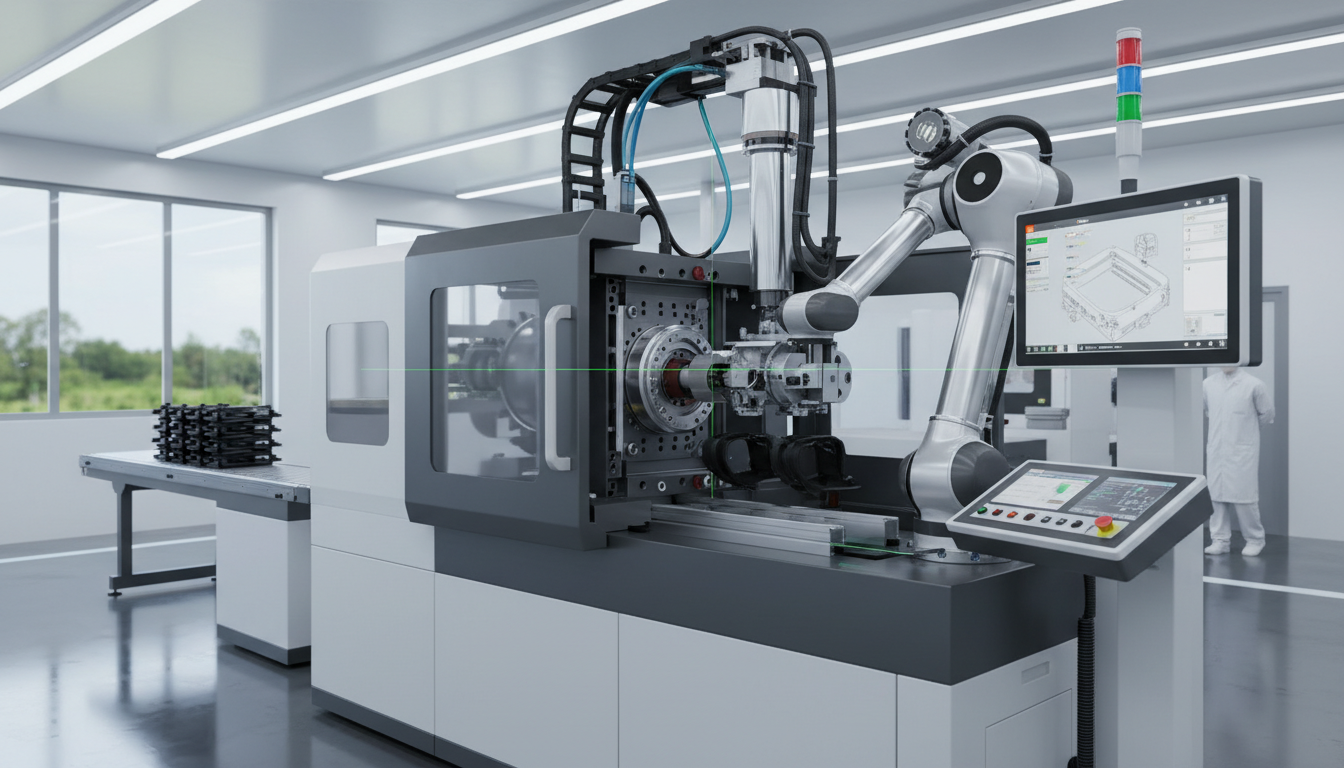
Gas assist is a specialized low-pressure manufacturing process where pressurized nitrogen gas is injected into a mold to create hollow sections within a plastic part. Are you currently facing challenges with heavy components that drive up material costs or surface defects that compromise your brand’s aesthetic? Traditional molding methods often struggle with thick-walled designs, leading to unsightly sink marks and internal stresses that cause warping. By implementing gas assisted injection molding , you can produce lightweight, structurally rigid parts with superior surface finishes.
What is gas assisted injection molding in manufacturing?
How does the gas assist process work?
The process works by injecting a “short shot” of resin into the mold followed by high-pressure nitrogen to fill the cavity. This gas flows through pre-designed channels to displace material in thick areas and press the resin against the mold walls.
Here is the thing.
- Nitrogen gas displaces molten plastic.
- Hollow sections are formed internally.
- Pressure is maintained during cooling.
| Feature | Description | |
|---|---|---|
| Media Used | Pressurized Nitrogen Gas | |
| Pressure Level | Lower than conventional molding | |
| Core Structure | Hollowed internal channels |
Key Takeaway: Gas assist utilizes the path of least resistance to create hollow structures that maintain external dimensions without the weight of solid plastic.
Our analysis shows that this technique effectively bridges the gap between lightweight design and structural integrity for large-scale housings.
How does internal gas assisted injection molding function?
How is nitrogen distributed inside the mold?
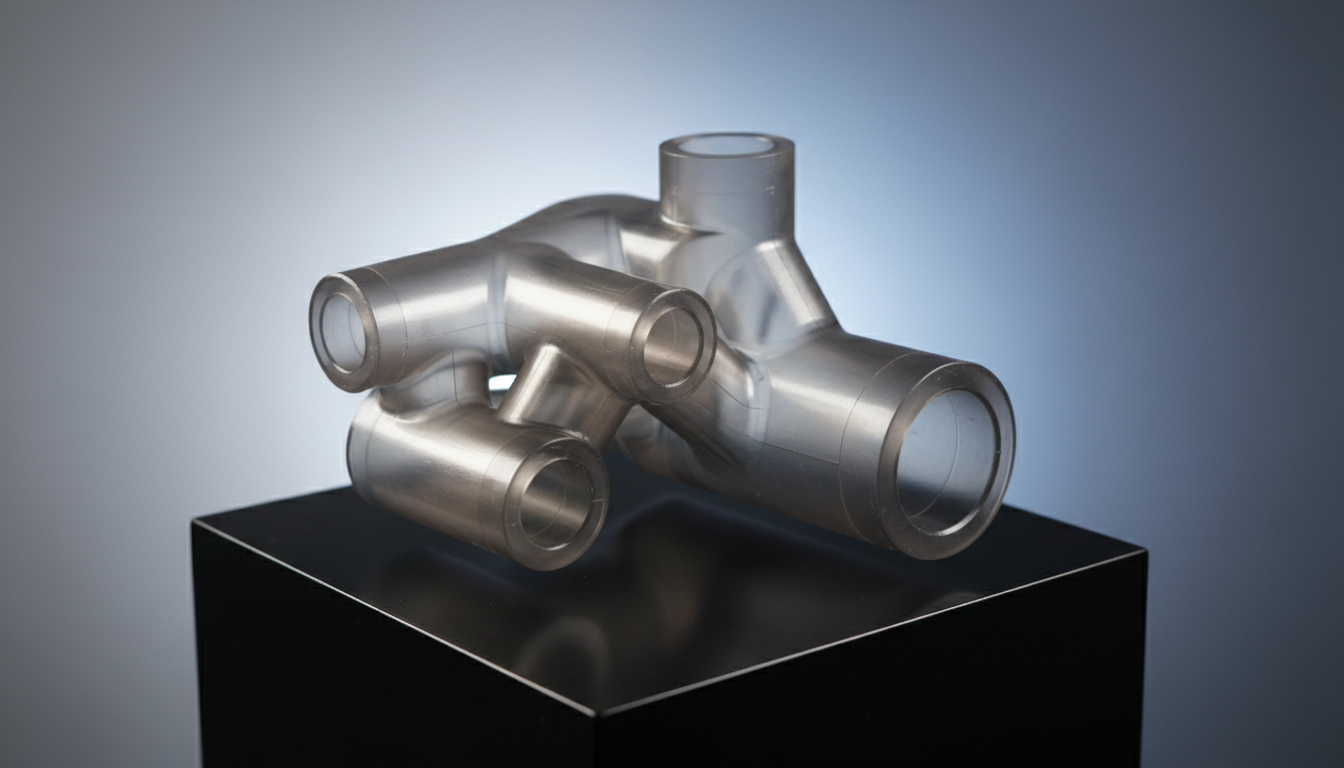
Internal gas assisted injection molding functions by introducing gas into the center of the molten resin stream through specialized nozzles. This creates a continuous gas bubble that pushes the plastic outward to replicate the mold’s exact geometry.
Believe it or not.
- Gas enters through the nozzle or runner.
- It stays contained within the plastic walls.
- Pressure remains constant during solidification.
| Component | Internal Gas Assist Role | |
|---|---|---|
| Nitrogen | Forms the hollow core | |
| Resin | Forms the exterior skin | |
| Mold Walls | Defines the final part shape |
Key Takeaway: Internal gas assist is the primary method for creating high-strength, hollow-ribbed parts while reducing raw material consumption.
The internal pressure prevents the part from shrinking away from the mold, ensuring high-tolerance dimensional stability for complex geometries.
Why choose external gas assisted injection molding for parts?
How does external gas assist improve surfaces?
External gas assist is used to press the front surface of a part against the mold by injecting gas between the back surface and the core. This ensures that the aesthetic side of the part perfectly replicates the mold texture without any evidence of internal ribs.
You might be wondering.
- Gas acts as a pressure cushion.
- It packs the resin from the reverse side.
- No gas enters the actual plastic material.
| Benefit | External Gas Assist Impact | |
|---|---|---|
| Surface Finish | Eliminates all sink marks | |
| Texture | Perfect replication of mold grain | |
| Internal Stress | Significant reduction in warping |
Key Takeaway: External gas assist is the superior choice for high-profile aesthetic panels where visual perfection is the top priority.
By applying pressure to the back of the part, you can maintain thick supporting structures without compromising the cosmetic integrity of the visible surface.
What are the cost benefits of gas assisted injection molding?
How does this method reduce tooling expenses?
Gas assisted injection molding reduces costs by requiring significantly lower clamping forces, which allows for the use of more affordable injection molds . Lower tonnage machines can be used for larger parts, directly decreasing your hourly production rates and capital investment.
But wait, there’s more.
- Reduced material usage lowers unit costs.
- Lower clamping force extends tool life.
- Freight costs drop due to lighter parts.
| Cost Driver | Typical Savings | |
|---|---|---|
| Material | 20% to 40% reduction | |
| Tooling | Lower maintenance requirements | |
| Logistics | Reduced shipping weight |
Key Takeaway: The combination of material savings and lower equipment requirements makes gas assist one of the most cost-efficient processes for large-scale plastic production.
Financial optimization is achieved not just through manufacturing speed, but through the holistic reduction of material and energy inputs.
Which design advantages does gas assisted injection molding offer?
How does gas assist enable complex designs?
This technology enables designers to incorporate varying wall thicknesses and large hollow ribs into a single, unified component. You can consolidate multiple parts into one, reducing the need for fasteners, adhesives, and labor-intensive assembly.
Make no mistake.
- Thick and thin sections coexist.
- Ribs can be placed without sink marks.
- Internal gas channels act as reinforcements.
| Design Element | Gas Assist Advantage | |
|---|---|---|
| Part Consolidation | Reduces assembly bill of materials | |
| Wall Thickness | Allows for thick structural ribs | |
| Dimensional Stability | Holds tight tolerances over long spans |
Key Takeaway: Designing for gas assist allows you to create high-performance parts that would be impossible or too expensive to produce via traditional methods.
Integrating structural support directly into the part geometry removes the secondary costs often associated with reinforcement.

Can you convert metal parts to gas assisted injection molding?
Why is gas assist a metal replacement solution?
Gas assisted injection molding provides a lightweight, corrosion-resistant alternative to heavy metal enclosures and support structures. By switching to plastic, you eliminate the need for welding, painting, and expensive multi-step fabrication.
Check this out.
- Plastic is naturally corrosion-proof.
- Molded-in color removes painting steps.
- Complex shapes are molded in seconds.
| Property | Gas Assist Plastic vs. Metal | |
|---|---|---|
| Weight | Significant reduction in mass | |
| Corrosion | Maintenance-free longevity | |
| Secondary Ops | Eliminates painting and deburring |
Key Takeaway: Converting to gas assist plastic is a strategic move for industries like automotive and medical seeking to reduce weight without sacrificing strength.
The transition from metal to plastic typically yields a faster return on investment through reduced labor and material handling.
When is gas assisted injection molding used for large parts?
Why is this process ideal for equipment covers?
This process is the preferred choice for large equipment covers and bezels that require high stiffness and low weight. It is widely used for medical scanners, printer housings, and automotive interior panels where aesthetics and durability are non-negotiable.
Don’t overlook this.
- Large surface areas stay flat.
- Integrated handles are molded hollow.
- Support features are hidden from view.
| Application | Key Requirement Met | |
|---|---|---|
| Medical Housings | Precise fit and high aesthetics | |
| Automotive Bezels | Lightweight structural rigidity | |
| Industrial Panels | Impact resistance and durability |
Key Takeaway: When your part footprint exceeds standard molding capabilities, gas assist provides the necessary pressure distribution to maintain quality.
Industrial designers often specify this process to achieve a “premium” feel in large components without the heavy weight of solid resin.
Does gas assisted injection molding reduce surface blemishes?
How are sink marks eliminated with gas?
Gas assisted injection molding eliminates sink marks by maintaining internal pressure against the mold walls as the plastic cools. Unlike traditional molding, where thick areas shrink inward, the gas bubble keeps the material “packed” outward during the entire cooling cycle.
It gets better.
- Consistent pressure throughout the part.
- No localized shrinkage in thick ribs.
- Superior aesthetic results on flat panels.
| Blemish Type | Gas Assist Solution | |
|---|---|---|
| Sink Marks | Internal pressure packing | |
| Warping | Reduced internal molded-in stress | |
| Shadow Marks | Controlled gas channel placement |
Key Takeaway: The primary cosmetic advantage of gas assist is the total removal of sink marks over thick structural features.
By controlling the gas flow, we ensure that every square inch of the visible surface remains perfectly flat and defect-free.
How does gas assisted injection molding impact tool longevity?
Why does low pressure benefit the mold?
The process operates at much lower pressures than conventional molding, which drastically reduces the mechanical wear and tear on your tooling. This means you can often utilize high-quality aluminum molds or lower-cost steel, extending the life of your investment.
Think about the possibilities.
- Less abrasive wear on the cavity.
- Reduced stress on the mold base.
- Lower maintenance costs over time.
| Metric | Gas Assist Impact | |
|---|---|---|
| Clamping Force | Reduced by up to 70% | |
| Tool Wear | Significantly lower erosion | |
| Maintenance Cycle | Longer intervals between servicing |
Key Takeaway: Protecting your tooling through low-pressure gas assist results in a lower total cost of ownership over the product’s lifecycle.
Molds subjected to lower stress maintain their precision for more cycles, ensuring consistent part quality for years to come.
Is gas assisted injection molding better than thermoforming?
How does gas assist compare to vacuum forming?
Gas assisted injection molding is often a better choice for medium to high volumes because it molds features like bosses and ribs directly into the part. While thermoforming requires expensive secondary CNC machining service for these features, gas assist delivers a finished part straight from the mold.
Keep this in mind.
- No secondary gluing or bonding.
- Higher dimensional repeatability.
- Better surface detail and texture.
| Feature | Gas Assist vs. Thermoforming | |
|---|---|---|
| Integrated Detail | Molded-in vs. Secondary Assembly | |
| Repeatability | High vs. Moderate | |
| Unit Cost | Lower at scale vs. Higher labor |
Key Takeaway: For projects requiring complex internal structures and high volumes, gas assist outperforms thermoforming in both cost and quality.
The upfront investment in gas assist tooling is quickly offset by the elimination of manual labor and secondary processing steps.

Frequently Asked Questions
Does gas assist work with all types of plastic?Yes, most thermoplastic resins are compatible, though material selection is critical for gas channel performance.
Can gas assist make my parts lighter?Absolutely, the hollow sections created by nitrogen can reduce part weight by up to 40%.
Is the gas assist equipment very expensive?While it requires a gas controller, the savings in press tonnage and material often result in a net cost reduction.
Will I see holes in my part from the gas injection?Gas entry points are strategically placed in non-visible areas or within the runner system to maintain aesthetics.
Is gas assisted injection molding good for small parts?It is primarily used for large parts or parts with long, thick handles and ribs where structural integrity is key.
Optimize Your Production Today
Transitioning to gas assist is more than a technical upgrade; it is a strategic solution to the most common manufacturing frustrations. Whether you are battling high material costs, surface defects, or the weight of traditional metal parts, this process offers a proven path to higher quality and lower expenses. At CN Precision, our vision is to empower global manufacturers with high-precision, ISO-certified molding solutions that drive innovation. We are committed to helping you refine your designs through expert DFM analysis and state-of-the-art gas assist technology. Ready to elevate your next project with professional engineering and competitive pricing? Contact us today to receive a technical consultation and discover how we can transform your manufacturing results.