In the competitive landscape of modern manufacturing, you often face the “quality-cost-speed” trilemma where unstable production runs and frequent defects derail your product launch. These inconsistencies are rarely the fault of your design alone; they often stem from a lack of rigorous oversight during the molding cycle which compromises your brand reputation and budget. High-precision plastic injection molding, underpinned by strict injection molding quality control , transforms your complex CAD designs into consistent, high-performance reality through integrated DFM and advanced inspection standards.
1. How does precision molding solve manufacturing delays?
Precision molding eliminates delays by identifying potential geometric failures and material flow issues before the tool is even cut. You must implement rigorous injection molding quality control at the start of your project to ensure that every machine parameter is optimized for repeatability.
Think about it: Without a proactive approach, you might spend weeks fixing flash or short shots that could have been avoided during the initial engineering review.
- Reduced lead times for T1 samples.
- Lower scrap rates during mass production.
- Enhanced structural integrity of the final part.
Why is the DFM stage your best defense?
A Design for Manufacturability (DFM) report provides you with a digital simulation of how plastic will flow into your mold. By analyzing wall thickness and gate placement, you can prevent future defects like warping or sink marks.
Key Takeaway: Early engineering intervention is the most cost-effective way to ensure your production schedule remains on track.
| Analysis Factor | Impact on Timeline | Quality Improvement | |
|---|---|---|---|
| Wall Thickness | High | Prevents internal voids | |
| Gate Location | Medium | Reduces visible weld lines | |
| Cooling Layout | High | Shortens cycle times |
This structured approach to engineering ensures that your technical specifications are met without costly mid-production modifications.
2. What are the essential steps of the molding cycle?
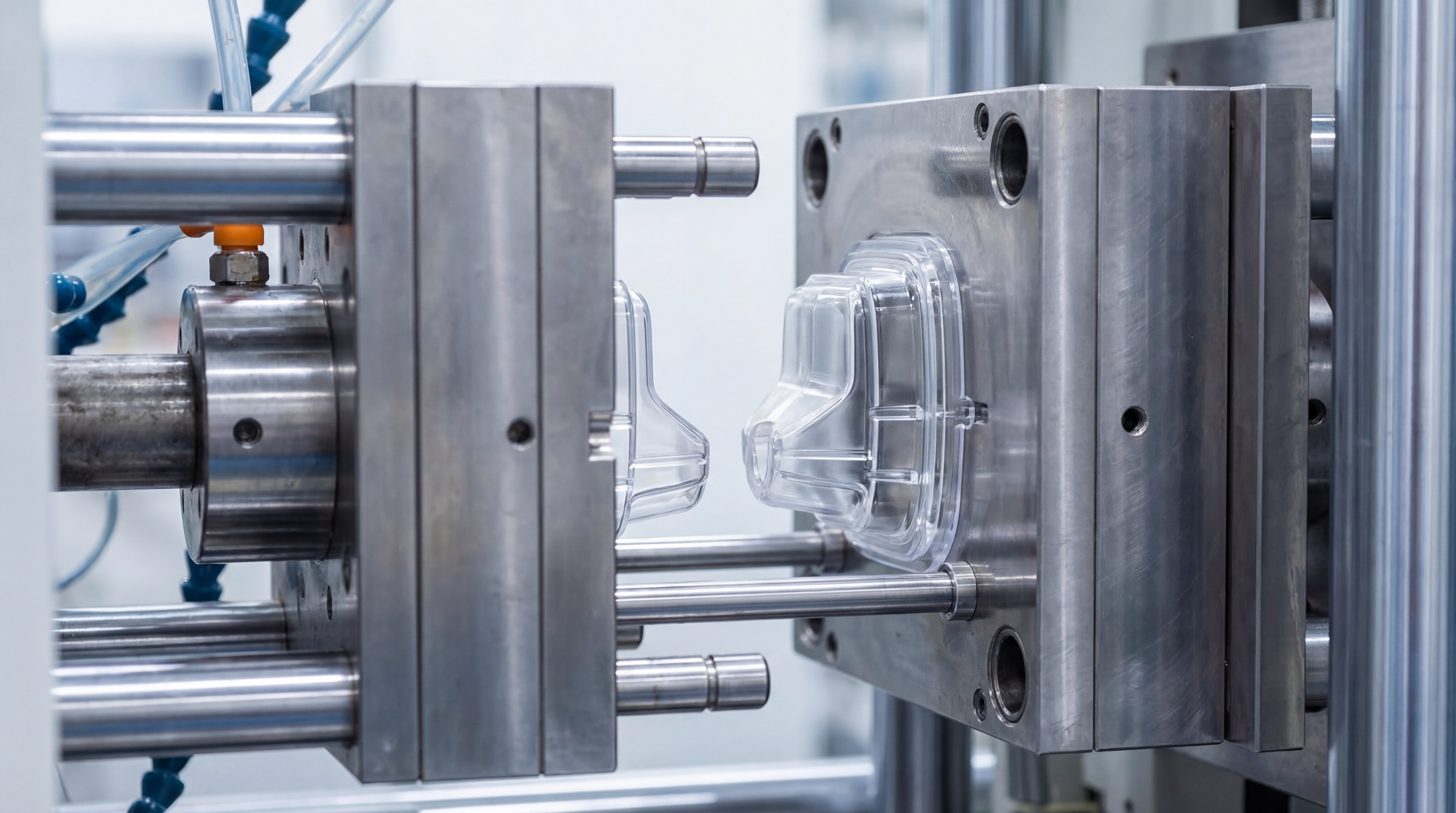
The injection molding cycle consists of four primary stages: feeding, melting, injecting, and cooling. Maintaining strict injection molding quality control throughout these phases ensures that your parts remain within the specified tolerances for every single shot.
But it gets better: Modern sensors allow you to monitor cavity pressure in real-time, providing immediate feedback on part consistency.
- Precise material dosing prevents contamination.
- Controlled injection speed reduces surface defects.
- Optimized cooling cycles prevent thermal distortion.
How does the cooling phase determine part accuracy?
You need to understand that the cooling phase often takes up the largest portion of the cycle time. Proper thermal management ensures the part solidifies uniformly, which is vital for maintaining the dimensional stability of complex housings.
Key Takeaway: Mastering the relationship between pressure and temperature allows you to produce high-precision parts at scale.
| Cycle Phase | Critical Variable | Quality Goal | |
|---|---|---|---|
| Injection | Melt Pressure | Full cavity filling | |
| Packing | Hold Time | Prevention of sink marks | |
| Cooling | Water Temp | Dimensional stability |
Effective cycle management directly correlates to lower part variability and higher overall equipment effectiveness in your facility.
3. Can you use specialized molding for complex parts?
Specialized techniques like 2K molding and insert molding allow you to create multi-material parts with superior structural integrity. By utilizing advanced injection molding quality control protocols, you can eliminate the need for secondary assembly and reduce your total manufacturing costs.
The logic is simple: Combining materials in the mold creates a chemical bond that is much stronger than traditional mechanical fastening.
- 2K molding for soft-touch grips.
- Insert molding for threaded fasteners.
- Overmolding for enhanced sealing.
Why is insert molding vital for electronics?
When you encapsulate metal components within plastic, you provide both structural support and electrical insulation for your sensors. This precision requires perfect fixture alignment to ensure the metal does not shift during the high-pressure injection phase.
Key Takeaway: Multi-material molding solutions provide you with design flexibility while significantly reducing assembly labor.
| Molding Type | Primary Benefit | Complexity Level | |
|---|---|---|---|
| 2K Molding | Aesthetics/Grip | Very High | |
| Insert Molding | Component Strength | High | |
| Overmolding | Sealing/Durability | Medium |
Choosing the right specialized technique helps you differentiate your product in the market while maintaining tight mechanical tolerances.
4. Why is injection molding better than other methods?
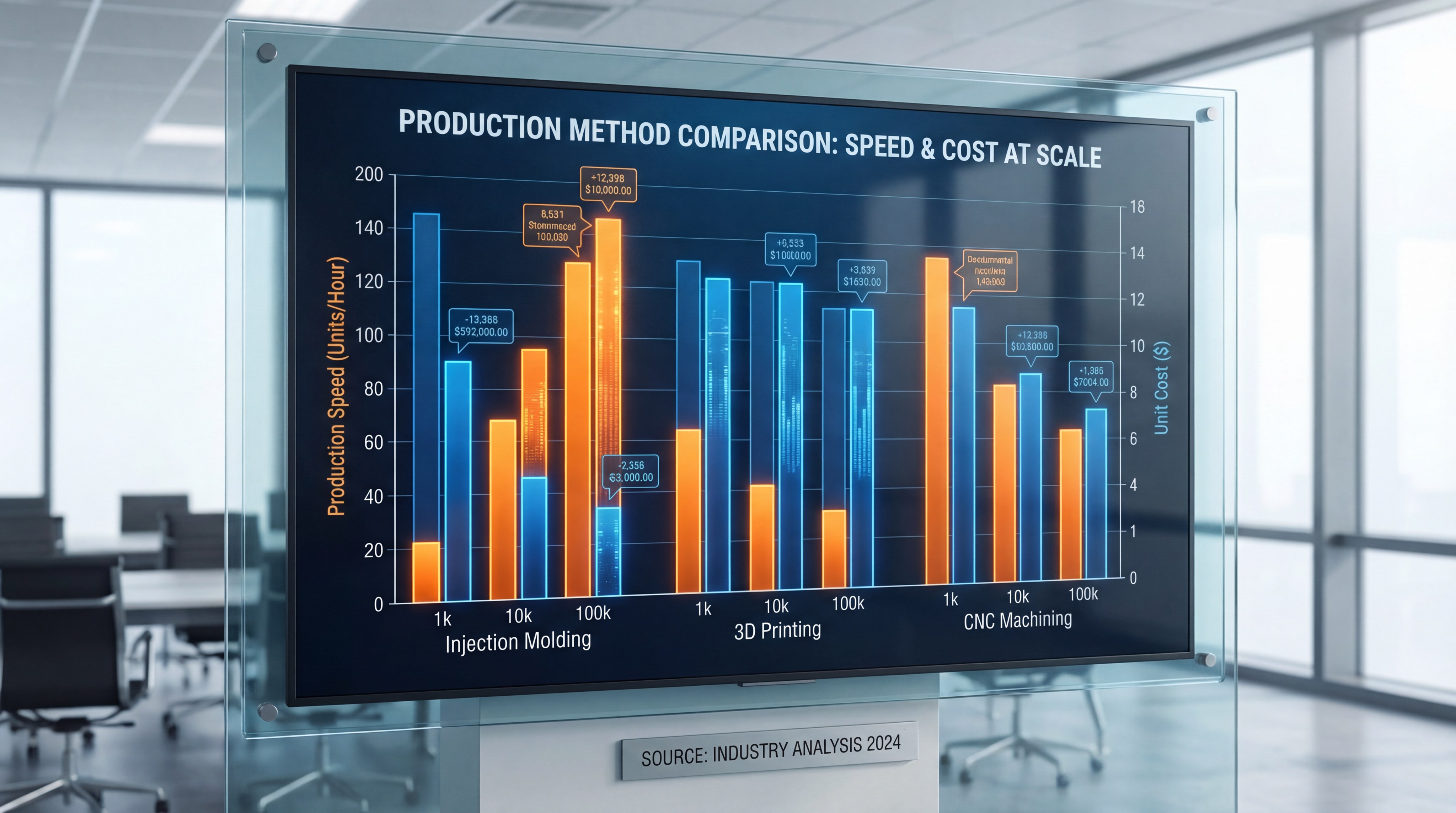
Injection molding is preferred for high-volume production because it offers unmatched repeatability and a significantly lower cost per unit compared to CNC machining or 3D printing. Your injection molding quality control system ensures that the millionth part is just as accurate as the first, which is impossible with manual fabrication.
Consider this: While 3D printing is great for prototypes, only injection molding can handle the mechanical stress of engineering-grade resins at scale.
- Faster cycle times for mass production.
- Greater material variety for functional parts.
- Superior surface finishes directly from the tool.
How does production volume impact your ROI?
As your production volume increases, the high initial cost of the mold is amortized over thousands of units. You will find that for runs exceeding 1,000 pieces, injection molding becomes the most economical choice for your brand.
Key Takeaway: The scalability of injection molding makes it the gold standard for global manufacturing and industrial applications.
| Feature | Injection Molding | 3D Printing | |
|---|---|---|---|
| Precision | ±0.01mm | ±0.1mm | |
| Unit Cost | Low (at scale) | High | |
| Speed | Seconds per part | Hours per part |
The data proves that injection molding remains the superior choice for any project requiring long-term durability and cost efficiency.
5. What are the key strategic benefits for your brand?
The primary strategic benefit is the ability to produce complex, high-quality components that enhance your product’s performance and brand perception. By partnering with experts focused on About Us standards, you leverage injection molding quality control to minimize market risks and warranty claims.
Believe it or not: A well-engineered part can reduce your total product weight by 30%, leading to significant savings in logistics and shipping costs.
- High-quality surface textures.
- Integrated functional features.
- Consistent color matching.
Can complex geometries be molded consistently?
You can push the boundaries of design with undercuts and thin walls because modern mold-making technology supports these intricate features. Using flow analysis tools allows you to predict how these geometries will behave under pressure.
Key Takeaway: Strategic molding partnerships allow you to innovate faster while maintaining a zero-defect production standard.
| Benefit | Business Impact | Customer Value | |
|---|---|---|---|
| Reduced Weight | Lower shipping costs | Better ergonomics | |
| Integrated Parts | Lower BOM count | Higher reliability | |
| Surface Finish | Premium appearance | Brand loyalty |
Investing in high-quality tooling ensures your product stands out in a crowded market through superior aesthetics and function.
6. Are there specific limits you should consider early?
The main limitations are the high initial tooling investment and the difficulty of making changes once the mold is hardened. You must prioritize injection molding quality control during the design phase to avoid these “hidden” costs that can strain your project’s budget.
Here is the kicker: A single design change after the mold is finished can cost you thousands of dollars and weeks of production time.
- High upfront mold costs.
- Long lead times for tool fabrication.
- Limited flexibility for post-production changes.
Why is mold maintenance non-negotiable?
You must realize that molds are precision instruments that wear down over hundreds of thousands of cycles. A regular maintenance schedule prevents flash and ensures that your parts remain within tolerance throughout the life of the tool.
Key Takeaway: Understanding the constraints of tooling helps you plan your product lifecycle more effectively and avoid unexpected expenses.
| Constraint | Mitigation Strategy | Long-term Risk | |
|---|---|---|---|
| Initial Cost | Amortize over volume | Low ROI on small runs | |
| Design Freeze | Thorough DFM review | Expensive re-tooling | |
| Lead Time | Bridge tooling | Market entry delay |
Careful planning and early-stage engineering are the only ways to navigate these manufacturing limitations successfully.
7. How do you troubleshoot common production defects?
Troubleshooting involves adjusting machine parameters such as injection pressure, temperature, and clamping force to eliminate visual and structural flaws. Effective injection molding quality control requires a systematic approach to identifying the root cause of issues like flash, warping, or short shots.
Don’t overlook this: Most defects are caused by small fluctuations in material viscosity or cooling rates that can be corrected in minutes by a skilled operator.
- Adjusting pressure to fix short shots.
- Improving venting to eliminate burn marks.
- Optimizing cooling to prevent warping.
How do you prevent warping in thin-walled parts?
You can prevent warping by ensuring that the mold has uniform cooling channels that pull heat away from the plastic at a consistent rate. If one side of your part cools faster than the other, it will pull and distort the final shape.
Key Takeaway: Real-time monitoring and process adjustment are the foundations of a defect-free manufacturing environment.
| Defect | Likely Cause | Solution | |
|---|---|---|---|
| Short Shot | Low Pressure | Increase injection speed | |
| Flash | Worn Tooling | Refurbish mold surfaces | |
| Sink Marks | Thick Walls | Adjust packing time |
Maintaining a stable process window is the most effective way for you to ensure every part meets your quality standards.
8. Does your choice of material affect final quality?
Material selection is the foundation of injection molding quality control, as the resin’s chemical properties determine how the part reacts to heat and pressure. You must match the material’s shrinkage rate to the tool’s dimensions to avoid out-of-tolerance parts. Amorphous and semi-crystalline resins behave differently during cooling, which can lead to unpredictable warping if not managed.
How do resin properties impact dimensional stability?
Different materials exhibit unique flow characteristics that dictate how easily they fill complex mold cavities. If you select a resin with a high Melt Flow Index (MFI), it may fill thin walls easily but increase the risk of flash at the parting line.
But wait, there’s more: Even the best design fails if the material is not dried correctly before injection. Hydroscopic resins like Nylon or Polycarbonate will develop silver streaks or structural brittleness if moisture levels exceed 0.02%.
Why is grade consistency vital for long-term runs?
Using a “near-prime” or recycled material might save costs initially, but it often leads to inconsistent viscosity between batches. You will find that these fluctuations force operators to constantly adjust machine settings, which undermines your process stability.
- Shrinkage Rates: Varies by material to ensure part accuracy.
- Thermal Stability: Prevents degradation during the melting phase.
- Chemical Compatibility: Ensures the part survives its end-use environment.
Key Takeaway: Selecting the right resin is a balancing act between mechanical requirements and the physical constraints of the molding process.
| Material Type | Strength | Shrinkage Rate | Quality Risk | |
|---|---|---|---|---|
| ABS | High Impact | Low | Surface scratches | |
| Polypropylene | Chemical Resistance | High | Warping | |
| Polycarbonate | Optical Clarity | Low | Internal stress |
The interaction between resin chemistry and tool design determines the ultimate success of your dimensional repeatability and surface aesthetics.
9. How do facility standards impact your production scale?
A world-class facility utilizes injection molding quality control to synchronize high-speed automation with rigorous manual oversight. Scaling from 10,000 to 1,000,000 units requires a facility that can maintain a stable thermal and mechanical environment. Large-scale operations rely on centralized material systems to prevent contamination and ensure color consistency across batches.
What role does automation play in consistent output?
The best part? Automation removes the “human factor” that often leads to cycle time inconsistencies. Robots ensure that parts are handled with the same force and speed every time, protecting delicate surfaces from damage.
Why is cleanroom molding necessary for certain sectors?
When you are producing medical or electronic components, even a single speck of dust can cause a functional failure. Cleanroom facilities control airborne particulates and humidity to ensure that your parts meet the highest safety and performance standards.
- ISO Certification: Guarantees standardized quality management systems.
- Robotic Handling: Reduces part-to-part variability during extraction.
- Climate Control: Maintains consistent resin behavior during processing.
Key Takeaway: Your production partner’s infrastructure is just as important as the tool design when it comes to long-term reliability.
| Facility Feature | Benefit to You | Scalability Impact | |
|---|---|---|---|
| Centralized Drying | Zero moisture defects | High | |
| 6-Axis Robots | Damage prevention | Very High | |
| Real-time Monitoring | Immediate defect detection | High |
Integrated facility technology ensures that your project remains on schedule while maintaining a zero-defect threshold across massive production volumes.
10. What are the final steps for ensuring part precision?
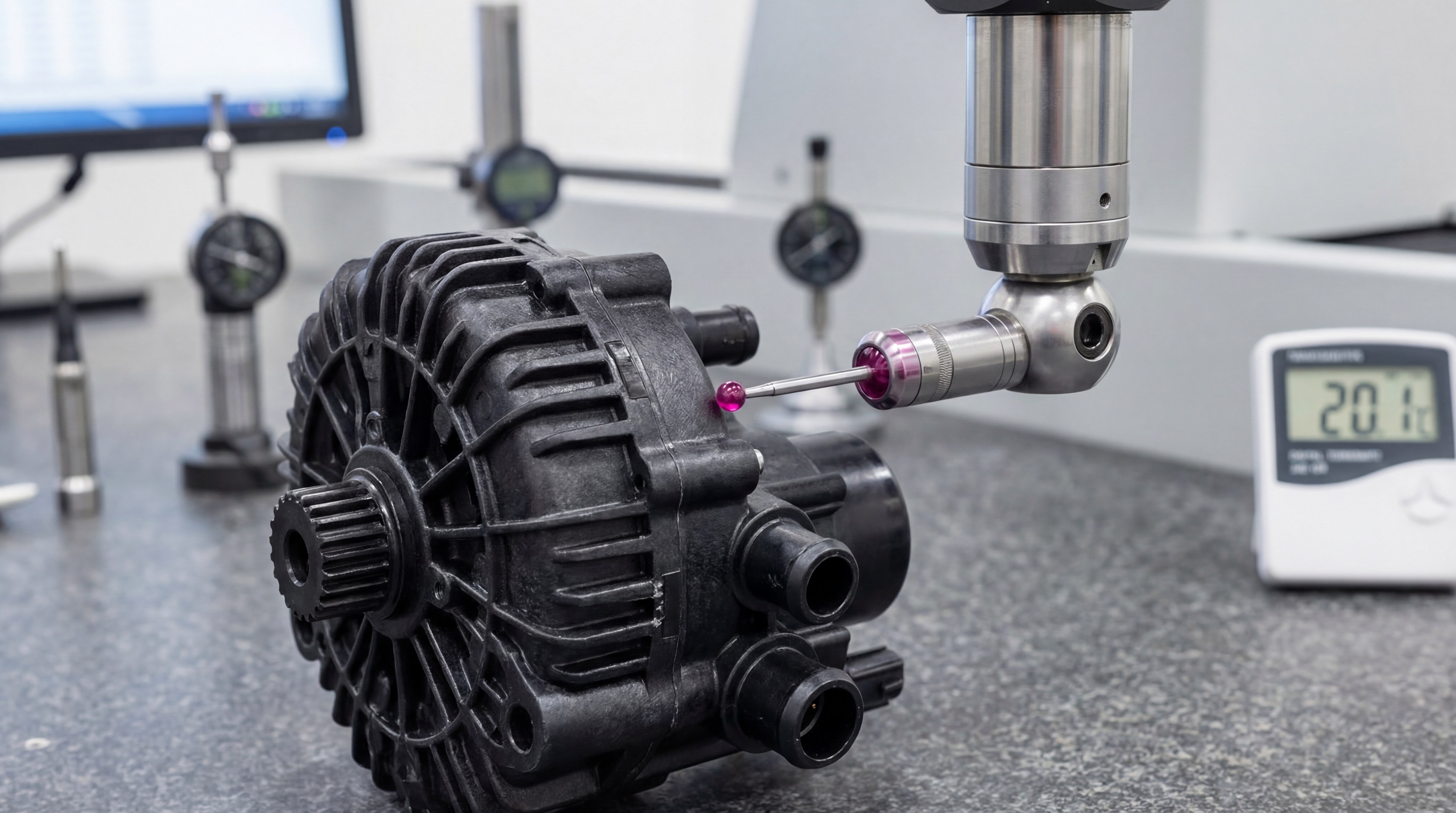
The final validation of your product relies on injection molding quality control protocols that verify every dimension against your original CAD specifications. Coordinate Measuring Machines (CMM) allow you to map the physical part back to your digital design with micron-level accuracy. It gets even better: these reports provide the statistical data needed to prove process capability (Cpk) to your stakeholders.
How does CMM inspection guarantee accuracy?
Using a ruby-tipped probe, the CMM measures complex geometries that are impossible to verify with manual calipers. This data ensures that critical fitment points, such as snap-fits or screw bosses, will function perfectly during final assembly.
What visual standards must high-end parts meet?
Beyond dimensions, you must establish “limit samples” to define acceptable levels of surface finish or knit lines. These physical benchmarks ensure your quality team has a clear, objective standard for every production shift to follow.
- First Article Inspection (FAI): Validates the first parts off the tool.
- In-process Sampling: Monitors quality at regular intervals during the run.
- Functional Testing: Ensures parts meet mechanical stress requirements.
Key Takeaway: Comprehensive measurement and visual grading are the last lines of defense for your brand’s reputation and product safety.
| Inspection Tool | Measuring Capability | Use Case | |
|---|---|---|---|
| CMM | Micron-level 3D mapping | Critical tolerances | |
| Optical Comparator | 2D profile checking | Thread/edge verification | |
| Spectrophotometer | Color delta-E testing | Branding consistency |
Rigorous post-production inspection ensures that only the highest quality components reach your assembly line, eliminating the risk of costly field failures.
Conclusion
Navigating the complexities of plastic injection molding requires a partner who understands that precision is not an option—it is a requirement. By integrating rigorous DFM, advanced material science, and uncompromising injection molding quality control, you can transform your most ambitious designs into market-ready realities. We stand at the intersection of engineering excellence and industrial scale, ensuring that every shot we fire meets your exact specifications.
Stop compromising on part consistency and lead times. If you are ready to elevate your manufacturing standards and de-risk your supply chain, contact us today to start your technical consultation.
FAQ
Can I change my material after the mold is built?Yes, but with significant caveats. Because different resins have different shrinkage rates, switching materials may result in the final part being slightly larger or smaller than originally intended.
What’s the best way to reduce my cost per part?Increase your production volume and optimize the multi-cavity design of your tool. Higher volumes allow you to amortize the initial tooling cost across more units, significantly lowering the individual price.
How do I know if my part design is suitable for molding?You should request a professional DFM (Design for Manufacturability) report. This analysis will identify potential issues like thick walls or insufficient draft angles before you invest in expensive steel tooling.
What’s the best surface finish for hidden internal parts?A standard SPI-C1 (stone finish) is usually the best choice. It is cost-effective and provides a clean, matte appearance for components that do not require high-gloss aesthetics.
Can I mold parts with different wall thicknesses?It is possible, but not recommended. You should aim for uniform wall thickness to prevent warping and sink marks; otherwise, the cooling process will be uneven and cause dimensional instability.