
Choosing between hot runner vs cold runner systems is the fundamental difference between an efficient, waste-free production line and a process bogged down by excessive material loss. Many manufacturers struggle with high scrap rates and sluggish cycle times that erode profit margins. If you choose the wrong tooling configuration, you risk inflated lead times and inconsistent part quality that can compromise your competitive edge. CN Precision Mfg provides the technical expertise to optimize your mold design, ensuring you select the system that best balances upfront costs with long-term production efficiency.
What is a hot runner vs cold runner system?
A hot runner system maintains molten plastic in a heated manifold while a cold runner system allows material to cool and solidify within the delivery channels. When evaluating hot runner vs cold runner technology, you must look at how the resin moves from the machine nozzle to the mold cavity. These systems represent the two primary methods for material delivery in modern injection molding.
Defining Hot Runner Molding Technology?
Hot runner systems utilize internally or externally heated components to keep the plastic in a liquid state throughout the manifold. Because the plastic never solidifies in the runners, you only eject the finished part during each cycle.
- No runner waste is produced.
- The manifold stays at a consistent temperature.
- Pressure drop is significantly reduced.
Believe it or not, this technology allows you to run faster cycles because you are not waiting for a thick runner to cool. You get a cleaner process that is ideal for high-precision manufacturing.
What is Cold Runner Injection Molding?
Cold runner systems are simpler designs where the plastic in the delivery channels cools and hardens along with the part. You must eject both the component and the “tree” of plastic runners, which are then separated manually or via automation.
- Lower initial tooling costs.
- Easier maintenance and cleaning.
- Compatible with nearly all thermoplastic resins.
Think about it: the simplicity of this design makes it a favorite for prototyping and shorter production runs. You don’t have to worry about complex heating elements or electrical failures.
How do molten plastics flow in each?
The flow in a hot runner is continuous and controlled by thermal sensors, while a cold runner relies on the pressure of the shot to push material through unheated paths. You will find that hot runners provide much better control over the “gate” where the plastic enters the part.
Look: controlling the flow is the key to preventing defects like flash or short shots.
Key Takeaway: Understanding the flow dynamics helps you predict how your material will behave under pressure and heat.
| Feature | Hot Runner Flow | Cold Runner Flow | |
|---|---|---|---|
| Temperature State | Consistently Molten | Solidifies Every Cycle | |
| Delivery Path | Heated Manifold | Unheated Channels | |
| Gate Control | High (Valve Gates) | Low (Manual Trimming) |
This comparison illustrates why thermal management is the deciding factor in delivery efficiency.
How does hot runner vs cold runner tech differ?
The mechanical difference centers on the integration of heating elements and manifolds within the mold structure itself. Assessing hot runner vs cold runner hardware requires you to look at the complexity of the plates and the requirement for external temperature controllers.
Mechanical Differences in Mold Construction?
Hot runner molds require additional plates to house the manifold and wiring, making them much thicker and heavier than cold runner molds. You will notice that the engineering hours required for a hot runner are significantly higher.
- Manifold plates are required.
- Nozzles must be precisely aligned.
- Electrical connectors are integrated.
The best part? Once the mold is built, the lack of a physical runner means you can often fit more cavities into the same mold base.
How Does Thermal Management Vary?
Thermal management is active in hot runners, using thermocouples to monitor heat, whereas cold runners use water lines to actively cool the entire mold. You must manage heat zones carefully in a hot runner to prevent material degradation.
- PID controllers manage zones.
- Thermal expansion must be calculated.
- Cooling lines are still used for the cavity.
Here is the kicker: if your thermal balance is off, you will face “stringing” or gate drool.
The Role of Heated Manifolds and Nozzles?
The manifold acts as a distribution hub, keeping the resin at the exact processing temperature until it reaches the nozzle tip. You rely on these components to ensure every cavity fills at the same rate and pressure.
Look at it this way: the manifold is the heart of your production speed.
Key Takeaway: Mechanical complexity in hot runners is an investment in process stability and part repeatability.
| Component | Hot Runner System | Cold Runner System | |
|---|---|---|---|
| Manifold | Heated & Insulated | Non-existent | |
| Nozzle Type | Heated Tips | Standard Bushings | |
| Maintenance | High Complexity | Low/Routine |
This structural breakdown shows that hot runners are essentially a machine within a mold.
Which is cheaper: hot runner vs cold runner?
Cold runner molds have a much lower upfront price, but hot runners frequently offer a lower total cost of ownership for high-volume projects. Calculating the ROI of hot runner vs cold runner systems means you must look at material savings over millions of cycles.
Comparing Initial Tooling Investments?
You can expect to pay 20% to 50% more for a hot runner mold due to the cost of the manifold, heaters, and specialized machining. For a simple two-plate cold runner mold, the investment is much more accessible for startups.
- Materials for hot runners are premium.
- Electrical systems add cost.
- Engineering time is doubled.
Believe it or not, many companies choose cold runners initially just to preserve capital during the product launch phase.
Long-Term Maintenance and Operating Costs?
Hot runners require specialized technicians for maintenance and can suffer from electrical failures that halt production entirely. You will spend less on daily labor with a cold runner, but you will pay more for material waste and runner disposal.
- Nozzles require periodic cleaning.
- Heaters eventually burn out.
- Cold runners only need basic greasing.
The truth is, your energy bill will be higher with a hot runner because you are keeping metal hot 24/7.
Why does waste management impact the total price?
Every cold runner cycle produces a piece of scrap that you must either regrind or pay to dispose of. You will find that with expensive resins like PEEK or Ultem, the hot runner pays for itself in just a few months.
Think about this: if your runner weighs as much as your part, you are literally throwing away half your profit.
Key Takeaway: Always calculate the “break-even” point where material savings exceed the higher tooling price.
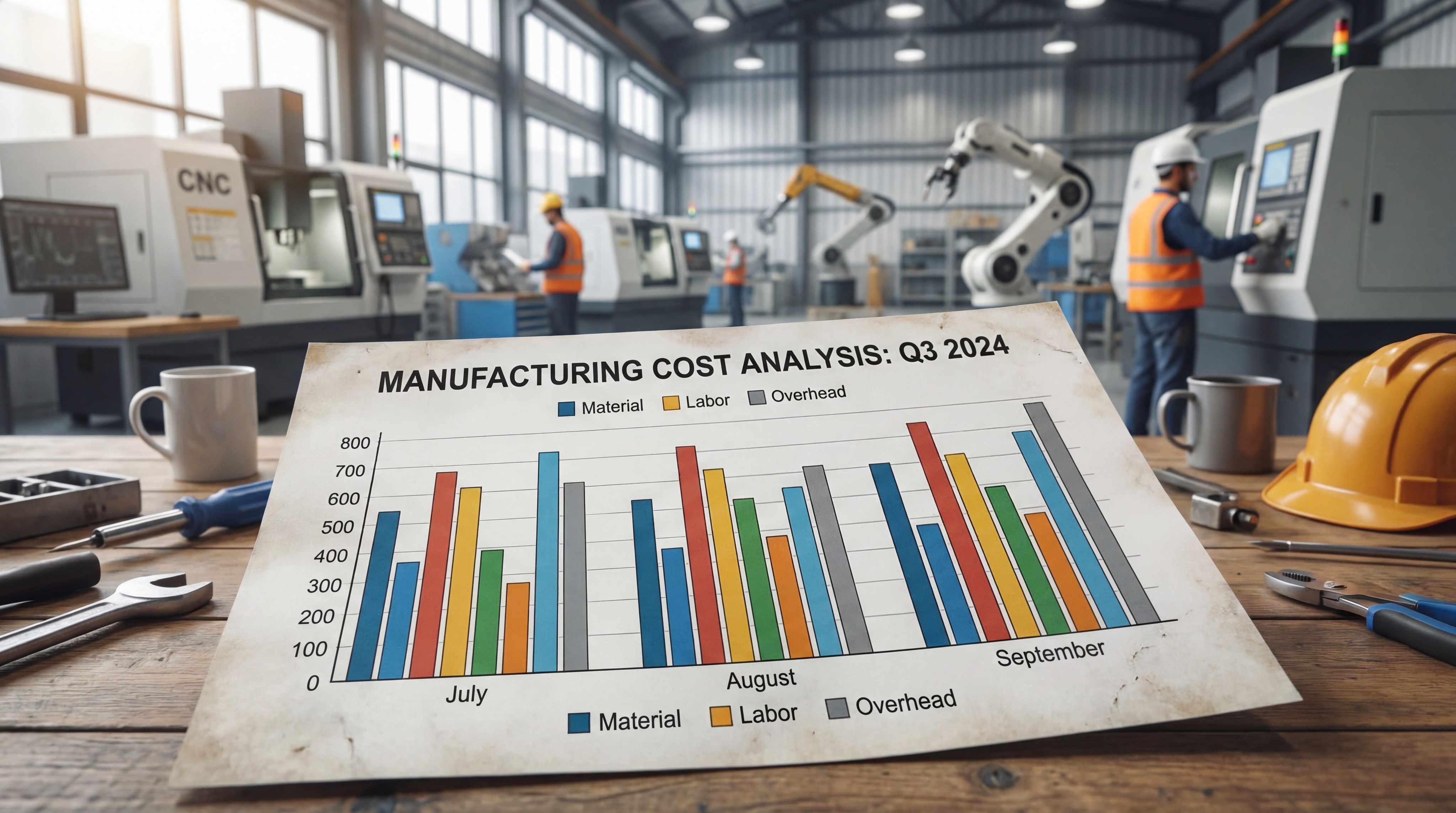
| Cost Factor | Hot Runner | Cold Runner | |
|---|---|---|---|
| Tooling Price | Very High | Lower | |
| Material Waste | Zero/Minimal | High | |
| Energy Usage | Higher | Lower |
Detailed cost analysis proves that volume is the primary driver of system selection.
Why choose hot runner vs cold runner molds?
You choose a hot runner to maximize output and quality, while you select a cold runner for flexibility and budget-sensitive applications. The choice between hot runner vs cold runner is a strategic decision that affects your entire supply chain.
Benefits of Eliminating Secondary Waste?
By removing the runner from the process, you eliminate the need for secondary operations like manual trimming or regrinding. You get a leaner manufacturing floor and a much cleaner final product.
- Reduced labor costs.
- Lower storage requirements.
- Sustainability benefits.
Look: a waste-free process is not just about money; it’s about operational efficiency and brand reputation.
When Are Cold Runners More Advantageous?
Cold runners are the better choice when you are running multiple colors or different materials through the same mold base. You can change colors in minutes because you don’t have to “purge” a massive heated manifold.
- Faster color changeovers.
- Lower risk of thermal degradation.
- Ideal for low-volume orders.
The best part? You can use heat-sensitive materials that would otherwise burn in a hot runner system.
Flexibility in Color and Material Changes?
If your business model relies on small batches of custom colors, the hot runner will be a nightmare for your setup team. You must consider the time lost during purges when choosing your tooling.
Here is the deal: flexibility is often more valuable than speed in a job-shop environment.
Key Takeaway: Choose based on your production strategy—efficiency for volume, or flexibility for variety.
| Scenario | Choose Hot Runner | Choose Cold Runner | |
|---|---|---|---|
| High Volume | Yes | No | |
| Frequent Color Change | No | Yes | |
| Fragile Materials | No | Yes |
This decision matrix ensures you don’t over-engineer a simple project or under-power a complex one.
Is hot runner vs cold runner faster for production?
Hot runner systems are significantly faster because they remove the cooling time of the runner from the overall cycle equation. When analyzing the throughput of hot runner vs cold runner setups, you must focus on the “gate freeze” time and ejection speed.
Analyzing Cycle Time and Throughput?
In a hot runner, you only wait for the part itself to cool, which can shave 5 to 15 seconds off every single shot. You will see your daily output increase by 30% or more without changing the injection machine.
- Faster cooling phases.
- No runner ejection delay.
- Lower injection pressures.
Believe it or not, that 10-second saving adds up to thousands of extra parts per week.
Impact of Cooling Rates on Lead Times?
Cold runners often have thick sections that stay hot much longer than the thin-walled parts they feed. You are forced to slow down the entire machine just to wait for the runner to solidify.
- Thick runners dictate cycle time.
- Hot runners use targeted cooling.
- Faster lead times for customers.
Look at it this way: your machine is only making money when the mold is closed and plastic is flowing.
Can automation speed up the cold runner process?
You can use robotic arms to pick runners and drop them into a grinder, but this still doesn’t eliminate the actual cooling time. While automation helps, it cannot overcome the physics of a thick cold runner.
Think about it: even the fastest robot can’t pick a part that hasn’t hardened yet.
Key Takeaway: Speed is the most tangible advantage of hot runner systems for high-volume manufacturing.
| Speed Metric | Hot Runner | Cold Runner | |
|---|---|---|---|
| Cooling Time | Only the Part | Part + Runner | |
| Ejection Speed | Immediate | Delayed | |
| Daily Throughput | Maximize | Moderate |
This data confirms that hot runners are the gold standard for rapid, high-capacity production.
What are hot runner vs cold runner pros and cons?
Hot runners excel in efficiency and quality but fail in cost and simplicity, whereas cold runners are affordable but wasteful. Balancing the pros and cons of hot runner vs cold runner technology requires an honest assessment of your technical capabilities.
Key Advantages of Heated Manifolds?
The biggest pro is the total elimination of waste and the ability to achieve perfect part-to-part consistency. You get a system that can run unattended for days with very little operator intervention.
- Higher dimensional accuracy.
- Eliminates visual “gate marks.”
- Supports larger part sizes.
The best part? You can use valve gating to control exactly when and where the plastic enters the cavity.
Common Drawbacks of Cold Gate Systems?
The main con is the massive amount of regrind material you produce, which can affect the structural integrity of your parts if reused. You also face the risk of “gate freeze” where the plastic hardens before the cavity is full.
- High material waste.
- Slow cycle times.
- Manual labor for trimming.
Believe it or not, the labor cost to trim runners can sometimes exceed the cost of the molding itself.
Which system is easier to troubleshoot?
Cold runners are infinitely easier to fix because there are no electrical components or hidden manifold leaks to worry about. You can see every part of the flow path as soon as you open the mold.
Here is the kicker: troubleshooting a hot runner often requires pulling the mold and disassembling it completely.
Key Takeaway: Match the complexity of your tooling to the skill level of your maintenance and setup teams.
| Pros & Cons | Hot Runner | Cold Runner | |
|---|---|---|---|
| Advantage | Speed & Precision | Cost & Simplicity | |
| Disadvantage | Price & Maintenance | Waste & Slow Cycles | |
| Ease of Repair | Low | High |
Weighting these factors helps you avoid “maintenance traps” that can derail production schedules.
Does hot runner vs cold runner affect part quality?
Hot runner systems generally produce higher-quality parts because they allow for more precise pressure control and uniform thermal distribution. When checking the quality of hot runner vs cold runner outputs, you will notice differences in surface finish and dimensional stability.
Dimensional Precision and Tolerances?
Because the plastic in a hot runner manifold is kept at a constant temperature, the viscosity remains stable throughout the run. You get parts that match the CAD data much more closely over long production cycles.
- Consistent shrinkage rates.
- Better cavity-to-cavity balance.
- Lower internal stresses.
Think about this: if your parts must fit into a complex assembly, the hot runner is your best friend.
Surface Finish and Gate Vestige Differences?
Hot runners use valve gates that leave almost no mark on the part, whereas cold runners leave a visible “nub” that must be trimmed. You can hide the gate much more effectively in a hot runner design.
- Pristine aesthetic surfaces.
- No manual trimming scars.
- Better flow-line control.
Look: for consumer electronics or medical housings, surface finish is often a “pass/fail” metric.
How do these systems handle sink marks?
Hot runners allow you to “pack” the part with extra pressure for a longer period because the gate doesn’t freeze prematurely. You can effectively eliminate sink marks in thick-walled sections using this method.
The truth is, cold runners often freeze at the gate before the part is fully packed, leading to voids or dimples.
Key Takeaway: If your part has strict aesthetic or dimensional requirements, the hot runner is usually necessary.
| Quality Aspect | Hot Runner Result | Cold Runner Result | |
|---|---|---|---|
| Gate Mark | Nearly Invisible | Visible Nub | |
| Tolerance | Tight (±0.05mm) | Standard | |
| Sink Marks | Easily Controlled | Harder to Fix |
Superior quality control is a byproduct of the stable thermal environment found in hot runners.
When to use hot runner vs cold runner systems?
Use hot runners for millions of parts and cold runners for thousands, or when the material choice makes heating risky. The application of hot runner vs cold runner tech is usually dictated by the annual volume and the specific industry standards.
Selecting the Best Fit for High-Volume Jobs?
For automotive, medical, and packaging industries where volumes reach the millions, the hot runner is the only logical choice. You cannot compete on price if you are producing tons of waste and running 30-second cycles.
- High-cavitation molds (16+).
- Automated assembly lines.
- Commodity parts (caps, bins).
Believe it or not, most Tier 1 automotive suppliers won’t even consider a cold runner for mass production.
Which System Suits Small Production Batches?
If you only need 5,000 parts, the extra $20,000 for a hot runner manifold will never be recouped in material savings. Cold runners are the industry standard for bridge tooling and low-volume industrial parts.
- Prototype verification.
- Customized components.
- Heat-sensitive resins (PVC).
Look at it this way: the goal of small batches is to get to market fast and cheap.
Factors like Material Sensitivity?
Some plastics, like those with flame retardants or certain bio-plastics, will degrade if they sit in a heated manifold for too long. You should choose a cold runner to ensure the material only gets hot once and then cools immediately.
Here is the deal: burning a manifold full of expensive plastic can ruin your entire mold.
Key Takeaway: Volume and material chemistry are the primary gatekeepers for tooling selection.
| Selection Factor | Hot Runner | Cold Runner | |
|---|---|---|---|
| Volume > 100k | High Recommended | Not Recommended | |
| Volume < 10k | Not Recommended | Highly Recommended | |
| Heat Sensitive | Risky | Safe |
By following these rules, you align your production method with your business’s financial goals.

What are hot runner vs cold runner alternatives?
While molding is dominant, you can also use 3D printing, thermoforming, or extrusion depending on your part’s geometry. Exploring alternatives to hot runner vs cold runner systems ensures you aren’t using a “sledgehammer to crack a nut.”
Evaluating 3D Printing for Prototyping?
3D printing is perfect for when you need a single part tomorrow and don’t want to spend $5,000 on a cold runner mold. You sacrifice material strength and surface finish, but you gain incredible speed.
- No tooling investment.
- Complex internal geometries.
- Instant design changes.
Think about it: 3D printing has replaced cold runner prototyping for most simple functional tests.
How Does Thermoforming Compare?
If you are making thin-walled trays or covers, thermoforming is much cheaper than injection molding. You use a single-sided mold and vacuum pressure to shape a heated sheet of plastic.
- Extremely low tooling costs.
- Large surface area parts.
- Faster setup than molding.
The best part? You can get a thermoformed tool ready in days rather than weeks.
Exploring Plastic Extrusion Processes?
Extrusion is the alternative when you need a continuous profile, like a pipe, a window frame, or a gasket. You don’t use a “mold” in the traditional sense, but rather a die that the plastic is pushed through.
Look: if your part has a constant cross-section, molding is the wrong process entirely.
Key Takeaway: Molding isn‘t the only way to manufacture parts with complex features, but it remains the most scalable option for mass production.
| Process | Tooling Cost | Lead Time | Volume Suitability | |
|---|---|---|---|---|
| 3D Printing | Minimal | Instant | Prototyping | |
| Thermoforming | Low | 2-4 Weeks | Large, Thin Parts | |
| Extrusion | Medium | 4-6 Weeks | Continuous Shapes |
Analyzing these alternatives reveals that molding is only cost-effective when your part design requires three-dimensional complexity that other processes cannot replicate.
How to decide on hot runner vs cold runner?
Deciding between a hot runner vs cold runner system requires a rigorous financial audit of your project’s total lifecycle and material requirements. You must weigh the higher upfront tooling investment against the potential for significant material savings and reduced labor.
Checklist for Your Next Tooling Project
You should start by defining your annual production volume to determine if the material savings will cover the manifold cost. A high-cavitation mold almost always demands a heated system to maintain part consistency across the entire plate.
- Verify annual production volume targets.
- Audit material costs per kilogram.
- Assess the importance of aesthetic gate placement.
- Determine the skill level of your maintenance team.
Believe it or not, many projects fail because the tooling was under-engineered for the target volume, leading to massive waste. You need to be honest about your budget and production goals before cutting steel.
Material Compatibility and Resin Sensitivity
The type of resin you choose is the final gatekeeper in the decision process, as heat-sensitive materials can degrade in a manifold. You should consult with your molder to ensure the chosen hot runner components can handle the specific melt temperature of your resin.
Think about it: even the best hot runner system is useless if it consistently burns your material or causes “black specks” in your parts. If you are using specialized engineering grades, a cold runner might be the safer path to consistent quality.
Key Takeaway: The final decision rests on a balance of material chemistry, production volume, and your tolerance for technical complexity.
| Decision Factor | Hot Runner Preference | Cold Runner Preference | |
|---|---|---|---|
| Production Volume | >100,000 units/year | <20,000 units/year | |
| Part Material | Standard Thermoplastics | Heat-Sensitive / PVC | |
| Budget Type | Long-term ROI focused | Low Upfront Capex |
This structured decision-making process ensures that your tooling strategy supports both your technical specifications and your financial bottom line.
Conclusion
Navigating the choice between hot runner and cold runner systems is critical for eliminating production bottlenecks and reducing unnecessary material waste. Many manufacturers face the problem of choosing a system that looks cheaper on paper but destroys profitability through high scrap rates and slow cycle times. At CN Precision Mfg, we solve these challenges by providing high-precision tooling solutions that optimize your manufacturing efficiency from the very first shot. Our vision is to empower brands with the technical excellence required to dominate their markets through superior part quality and lean production. To ensure your next project is built for maximum success, contact us today for a comprehensive tooling evaluation.
Frequently Asked Questions (FAQ)
Can I switch from a cold runner to a hot runner later?
Yes, but it is expensive. You generally have to rebuild the entire top half of the mold to accommodate the manifold and electrical systems, making a new mold often more cost-effective.
What’s the best system for medical-grade plastics?
Hot runners are typically preferred. They eliminate the risk of runner contamination and provide the extreme dimensional precision required for medical certifications.
How do I know if my design requires a hot runner?
Check your wall thickness and gate location. If you have thin walls that require fast filling or a design that cannot show a visible gate nub, a hot runner is likely mandatory.
Can I recycle waste produced by cold runner systems?
Yes, if the material properties allow. Most thermoplastics can be reground and mixed with virgin material, though this can slightly impact the structural integrity of the final part.
What’s the best choice for heat-sensitive resins?
Cold runner systems are safer. They minimize the “residence time” of the plastic at high temperatures, preventing the thermal degradation that often occurs in heated manifolds.