The choice between multi-cavity and family injection molds depends on whether you need high-volume identical parts or a set of different components for a single assembly. When your production demand spikes, using single-cavity tools creates a massive bottleneck that slows down your entire supply chain. If you continue with inefficient tooling, your lead times will expand, competitors will seize your market share, and your profit margins will vanish under the weight of high labor costs. Investing in a high-precision multi cavity mold provides the scalable solution needed to maximize throughput and ensure long-term manufacturing success.
What Defines a Multi Cavity Mold in Production?
A multi cavity mold is a specialized tooling configuration that features multiple identical impressions of the same part within a single mold base. This design allows you to produce several identical units during every injection cycle, significantly increasing your output.
Achieving High-Precision Tolerances
These molds are engineered to ensure every cavity is a carbon copy of the next. Using advanced CNC machining and EDM technology, manufacturers maintain tolerances as tight as ±0.01mm.
Optimizing Runner Systems for Flow
Maintaining consistent pressure and temperature across all cavities is the primary engineering challenge. Balanced runner systems ensure the resin reaches every part of the tool simultaneously.
Efficient Cycle Time Management
Think about it. Why settle for one part per shot when you can have eight?
- High-volume output per machine hour.
- Reduced energy consumption per unit.
- Lower wear and tear on the injection press.
Key Takeaway: Multi-cavity tools focus on “one part, many copies” to drive extreme efficiency in mass production.
| Metric | Multi Cavity Detail | |
|---|---|---|
| Part Identity | 100% Identical Parts | |
| Tolerance | Extremely Tight (±0.01mm) | |
| Output Type | Mass Volume Scaling |
High-precision engineering ensures that every cavity performs identically over millions of cycles.
Why Choose Multi Cavity Molds for High Volumes?
When you need to scale production from thousands to millions of units, the multi cavity mold is the most effective asset in your facility. It maximizes the value of your shot guarantee by producing more sellable goods for every cycle the machine completes.
Reducing Lead Times for Batch Orders
By increasing the cavitation, you slash the total machine time required to fulfill large purchase orders. This speed allows you to respond faster to market shifts and consumer demand.
Lowering the Unit Cost of Production
While the upfront cost is higher, the cost-per-part drops significantly as the volume increases. You save on overhead, machine labor, and energy costs across the board.
Compatibility with Advanced Automation
Here is the kicker. Identical parts are much easier to handle with robotics.
- Simple End-of-Arm Tooling (EOAT) design.
- Direct-to-box packaging workflows.
- Minimal human sorting required.
Key Takeaway: High-volume projects demand the repeatability and low per-unit cost that only multi-cavity configurations can offer.
| Scaling Factor | Advantage | |
|---|---|---|
| Speed | Up to 64+ parts per cycle | |
| Labor | Highly automated | |
| Efficiency | Optimized material usage |
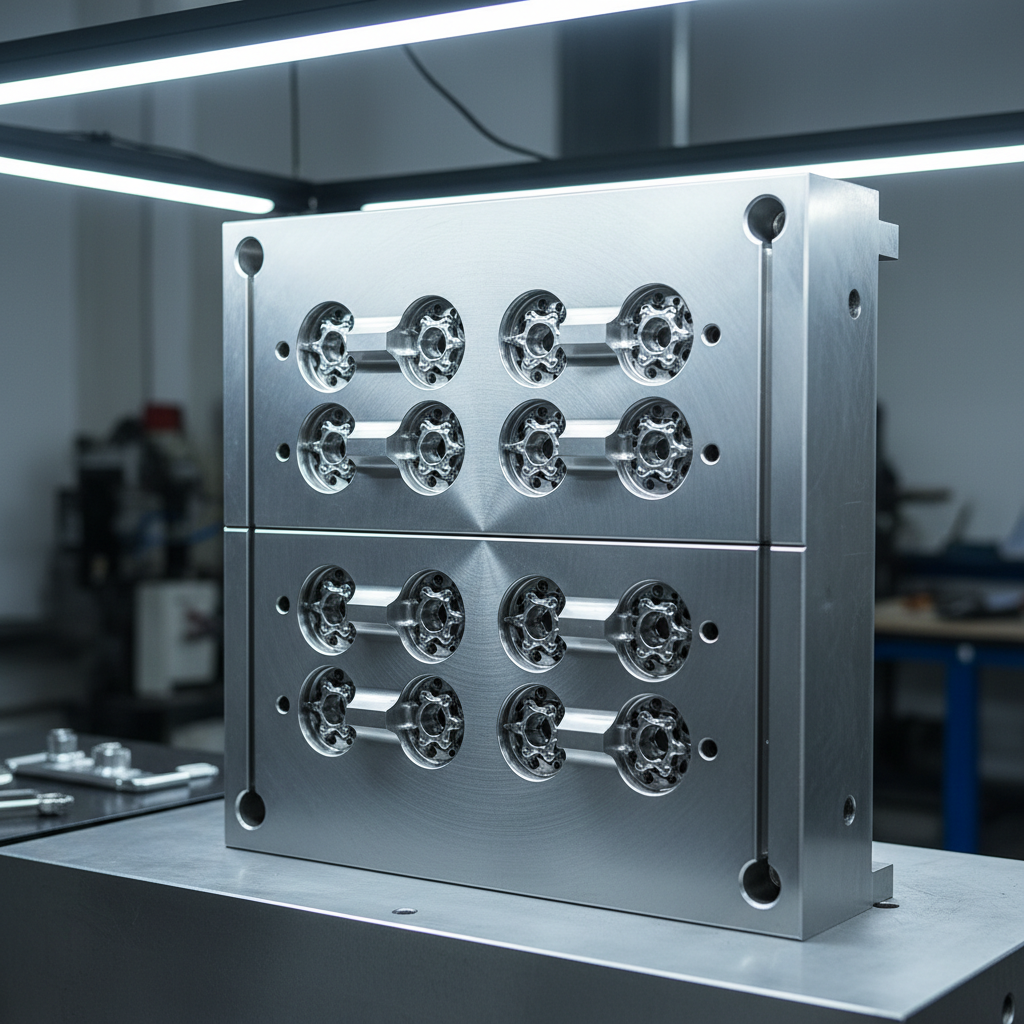
The speed of multi-cavity tooling directly correlates to your ability to dominate high-volume markets.
What Is a Family Injection Mold Exactly?
A family injection mold is a tool that contains different part shapes—often siblings of the same assembly—within one multi cavity mold base. This allows you to produce a complete product kit in a single injection cycle.
Prototyping and Kit Production Use
These molds are ideal for low-volume production or prototyping where you need one of every component to test a fit. It saves you from building five or six individual tools for a single project.
Material and Color Limitations
Because all parts are injected at once, every component in the “family” must use the same resin and color. This restriction limits design flexibility but simplifies material logistics.
Challenges with Manual Sorting
But that’s not all. Because the parts are different, they require sorting.
- Manual separation from the runner.
- Higher risk of kitting errors.
- Increased labor costs per shot.
Key Takeaway: Family molds reduce initial tooling investment for assemblies but introduce significant labor and quality trade-offs.
| Feature | Family Mold Detail | |
|---|---|---|
| Part Identity | Different “Sibling” Parts | |
| Primary Use | Product Kits / Prototypes | |
| Material | Must be Identical |
Using family molds requires a strategic choice between lower entry costs and higher operational labor.
How Do These Molds Impact Your Tooling Budget?
Deciding between a family mold and a multi cavity mold depends on your total production lifecycle and available capital. Initial prices can be misleading if you do not account for long-term maintenance and scrap rates.
Initial Tooling Investment Comparison
A family mold is generally cheaper than building several separate single-cavity molds. However, a multi-cavity tool offers a faster return on investment through massive machine-time savings.
Maintenance and Repair Considerations
Maintaining a multi-cavity tool is often easier because the cavities are interchangeable. If one cavity in a family mold is damaged, the entire assembly kit production may stop.
Impact of Scrap Rates on ROI
Believe it or not. Imbalanced filling in family molds leads to more waste.
- Higher scrap rates on small parts.
- Frequent tool “tuning” required.
- Potential for uneven cooling.
Key Takeaway: You must look beyond the initial sticker price to evaluate the total cost of ownership (TCO) over the project life.
| Cost Element | Multi Cavity | Family Mold | |
|---|---|---|---|
| Initial Tooling | Higher Investment | Lower Investment | |
| Cost Per Part | Lowest | Moderate | |
| Maintenance | Predictable | Complex |
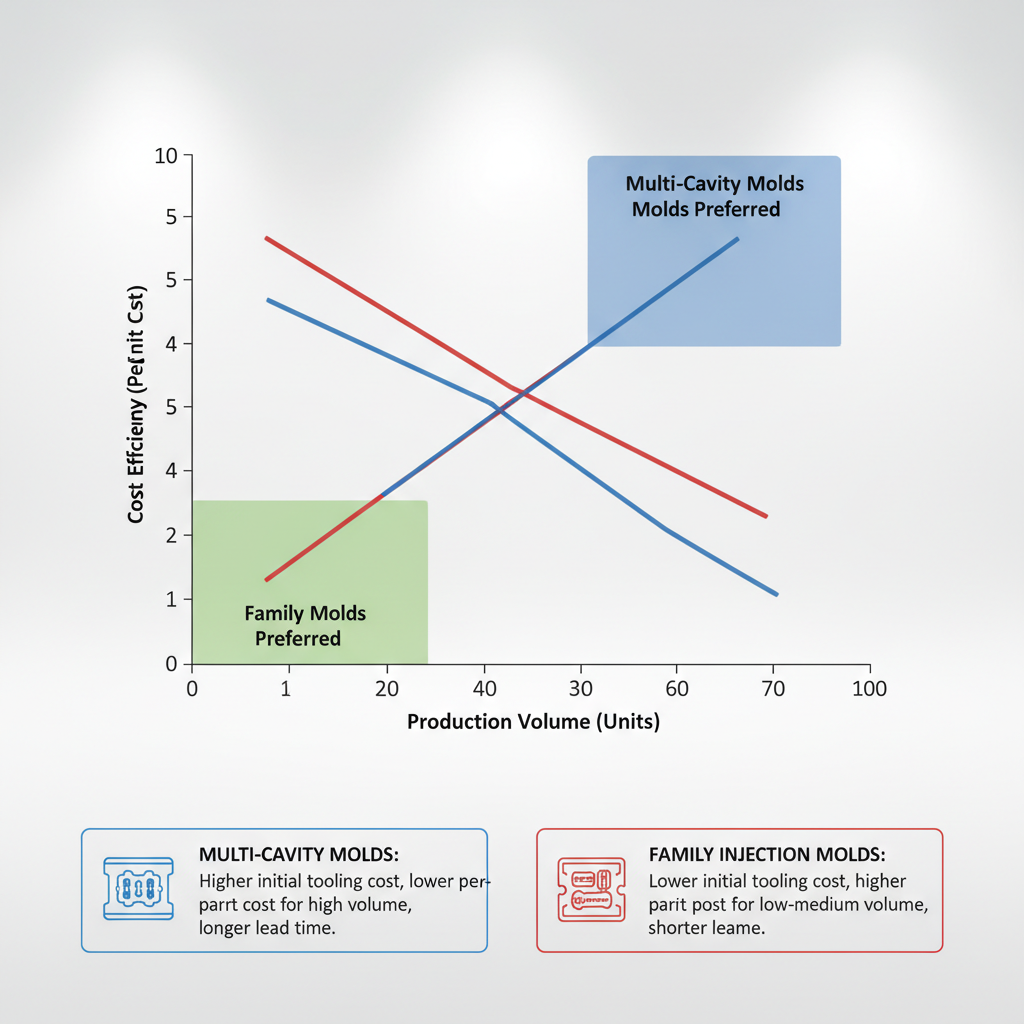
Long-term profitability is usually found in the high-efficiency performance of multi-cavity systems.
Why Do Family Molds Struggle With Precision?
Pressure balance is a constant struggle in any multi cavity mold , but it is a major defect driver in family molds. Because the cavities have different volumes and wall thicknesses, the plastic flows at different rates.
The Physics of Filling Imbalances
A large part in a family mold might still be filling while a smaller part has already solidified. This discrepancy leads to flash on small parts and short shots on larger ones.
Achieving Tight Tolerances
It gets better. Multi-cavity molds achieve ±0.01mm because the flow is perfectly symmetrical. In family molds, achieving this across different shapes is nearly impossible.
Risk of Aesthetic Defects
What does this mean for you? You may see visual inconsistencies.
- Sink marks on thicker components.
- Warping due to uneven cooling.
- Variation in surface finish.
Key Takeaway: For precision-focused components, the imbalance inherent in family molds represents a significant quality risk.
| Quality Metric | Multi Cavity | Family Mold | |
|---|---|---|---|
| Flow Balance | Perfect Symmetry | Constant Imbalance | |
| Defect Risk | Minimal | High | |
| Precision | Very High | Moderate |
High-precision manufacturing environments almost exclusively utilize identical multi-cavity setups to ensure quality.
How Does Mold Type Affect Your Automation Strategy?
The long-term profitability of your multi cavity mold project is often determined by your floor-level labor requirements. Automation thrives on predictability, which is where these two mold types diverge.
Robotics in Multi-Cavity Setups
Since every part is the same, robotic arms can pluck them from the mold and move them instantly to secondary operations. This “lights-out” manufacturing approach drastically reduces your labor overhead.
Manual Labor in Family Molding
Family molds usually require a human operator to clip parts and sort them into bins. This manual handling adds a hidden cost to every cycle that can erode your margins.
Tool Life and Stability
Wait, there’s more. Stainless steel multi-cavity tools can run for over a million cycles with minimal intervention. Family molds often need frequent adjustments to keep the different shapes in balance.
Key Takeaway: If your goal is automated, high-speed manufacturing, the multi-cavity mold is the only viable path forward.
| Labor Factor | Multi Cavity | Family Mold | |
|---|---|---|---|
| Sorting | Automated | Manual | |
| Packaging | Direct | Kitting Needed | |
| Monitoring | Low | High |
Automation compatibility is the key to maintaining a competitive edge in global manufacturing markets.
Can Multi Cavity Molds Support Automotive Standards?
In the automotive sector, where IATF 16949 certification is mandatory, the multi cavity mold is the standard choice. Parts like airbag covers or water tanks require absolute consistency that family molds cannot provide.
Meeting Quality Management Systems
Automotive OEMs demand rigorous process control and high CPK/PPK values. The repeatability of a multi-cavity tool ensures that every safety-critical part meets these strict engineering specifications.
High-Volume Global Supply Chains
Tier 1 and Tier 2 suppliers must move millions of units per year. Multi-cavity tooling allows for the 24/7 high-speed production required to keep automotive assembly lines moving.
Advanced 2K and Overmolding
The best part? Multi-cavity systems are more stable for complex double-injection molding.
- Superior bond strength.
- Consistent multi-color aesthetics.
- Reduced assembly operations.
Key Takeaway: The automotive industry prioritizes the stability and certification-readiness of multi-cavity systems over the cost savings of family molds.
| Industry Need | Preferred Solution | |
|---|---|---|
| Repeatability | Multi Cavity | |
| Traceability | Multi Cavity | |
| Compliance | Multi Cavity |

Automotive-grade quality is built on the foundation of balanced and identical multi-cavity tooling.
How Does DFM Analysis Optimize Mold Performance?
Before any steel is cut for a multi cavity mold, a Design for Manufacturability (DFM) analysis is required. This technical review identifies potential failures on your computer screen before they become physical defects.
Optimizing Gate and Runner Locations
DFM software simulates the resin flow through the runners and into the cavities. This ensures that every cavity in your tool fills at the exact same millisecond.
Managing Wall Thickness and Cooling
Proper cooling is the secret to fast cycle times and part quality. DFM helps engineers design cooling channels that wrap around each cavity for uniform heat removal.
Reducing Tooling Modification Costs
Here is why. Catching a flaw early saves you thousands in modification fees.
- Optimized draft angles for ejection.
- Elimination of air traps.
- Reduced weld line visibility.
Key Takeaway: Never skip the DFM phase; it is the most cost-effective way to ensure your high-cavitation tool performs as expected.
| DFM Checkpoint | Benefit | |
|---|---|---|
| Mold Flow | Balances Pressure | |
| Cooling | Reduces Warpage | |
| Draft | Easy Ejection |
A thorough DFM report can reduce your total tooling modification costs by up to 20%.
Which Mold Type Offers the Best Long-Term Value?
Deciding between a family mold and a multi cavity mold requires an honest assessment of your annual usage and quality requirements. Long-term value is found where production speed meets quality stability.
Evaluating Estimated Annual Usage (EAU)
If your usage is over 50,000 units, the multi-cavity mold is almost always the better choice. The machine-time savings quickly pay for the higher initial cost of the tool.
Assessing Tolerance and Fit Needs
Functional components with tight fits require the balance of a multi-cavity tool. Family molds are better suited for non-critical, lower-precision kits or consumer goods.
Analyzing Strategic Business Goals
You might be wondering. Should I start small?
- Start with a family mold for market testing.
- Switch to multi-cavity for mass scaling.
- Use multi-cavity for core product stability.
Key Takeaway: Choose based on where you want your production to be in two years, rather than just solving today’s budget constraint.
| Decision Factor | Multi Cavity | Family Mold | |
|---|---|---|---|
| Volume | >50,000 / Year | <10,000 / Year | |
| Precision | Critical (±0.01mm) | Moderate (±0.1mm) | |
| Strategy | Mass Scaling | Prototyping |
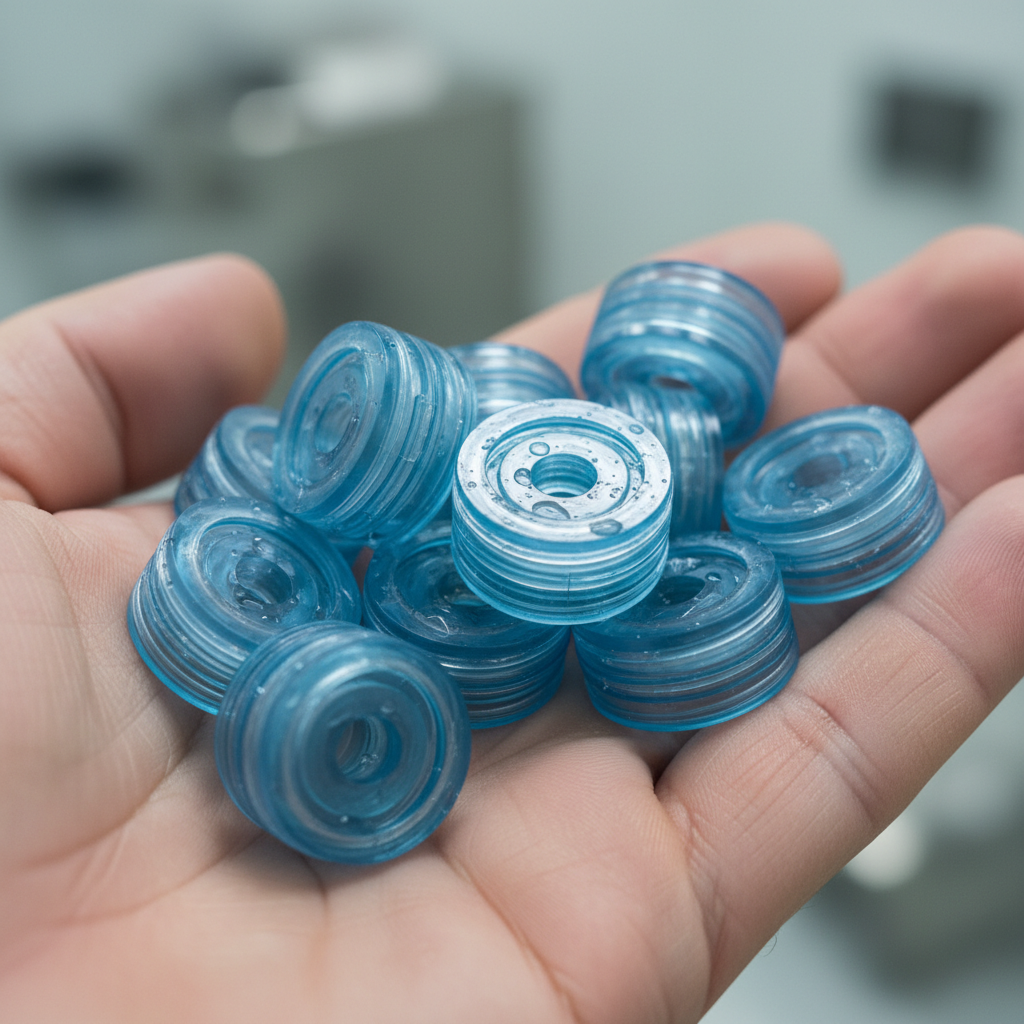
Investing in the right mold type today prevents costly production re-tooling tomorrow.
What Steps Should You Take to Select a Mold?
Selecting the right multi cavity mold design is a process that involves your engineering, procurement, and production teams. Follow a structured workflow to ensure you select the tool that matches your growth trajectory.
Conduct a Production Audit
Review your sales forecasts and historical data to determine if your EAU justifies high cavitation. If you are launching a new product, consider starting with lower cavitation and scaling up.
Request a Technical Consultation
Engage with your mold manufacturer early to discuss material selection and gating strategies. Their expertise in runner balance can save you months of troubleshooting during production.
Finalize Your Quality Requirements
Here is the best part. Defining your standards early ensures the mold is built to last.
- Specify mold steel grades (e.g., S136).
- Set tolerance limits.
- Confirm automated inspection needs.
Key Takeaway: A successful molding project starts with clear communication and a data-driven selection of tooling architecture.
| Selection Step | Action | |
|---|---|---|
| Volume Check | Confirm EAU | |
| DFM Review | Simulate Flow | |
| Steel Choice | Pick Durable Material |
Your choice of mold architecture is the single most important decision for your manufacturing profitability.
Selecting between multi-cavity and family molds is the key to solving production bottlenecks and reducing long-term unit costs. By choosing a multi-cavity setup for your high-volume needs, you ensure identical part quality, seamless automation, and IATF-compliant standards. Our mission is to bridge the gap between your design concepts and high-performance mass production. We envision a future where your manufacturing is “lights-out,” efficient, and consistently profitable. To explore how our 15+ years of precision engineering can optimize your next project, contact us today .
FAQ: Common Questions About Multi Cavity Tooling
Can I mix different materials in a family mold?No. Every cavity in a single mold must use the same resin and color because they are fed by the same injection unit.
What’s the best way to handle different parts if I can’t use a family mold?The best way is to build separate single or multi-cavity molds for each part to ensure balanced flow and higher quality control.
Can I convert a single-cavity mold into a multi cavity mold later?No, you generally cannot convert them because the mold base and runner system are designed specifically for the initial number of cavities.
How many cavities can a single mold hold?It depends on part size and machine tonnage, but small components can often be produced in 64, 128, or even higher cavitation molds.
What is the typical lead time for a multi cavity mold?Lead times typically range from 25 to 40 days depending on the complexity of the cooling systems and the total cavitation count.