
Designing molded threads requires a strategic balance between thread geometry, material shrinkage, and the mechanical limitations of injection mold extraction. You might be developing a high-stakes automotive component or a simple consumer enclosure, only to find that your fastening system fails during assembly. It is incredibly frustrating when threads strip or parts won’t mate correctly because the tolerances were ignored during the design phase. By implementing Design for Manufacturability (DFM) principles early, you can create robust plastic threads that provide lasting structural integrity without breaking your production budget.
How can you design efficient plastic threads?
Designing efficient threads starts with selecting the right profile and pitch to accommodate the unique flow characteristics of molten resin. Unlike metal fasteners, these components must be able to withstand the stresses of the molding cycle and ejection without deforming.
When you work with plastic threads , you must move away from the sharp “V” profiles typical of machined bolts. Sharp corners are notorious for acting as stress concentrators, which often lead to premature part failure.
Why choose rounded thread profiles?
Rounded or “buttress” thread profiles are far superior for injection molding applications. These shapes allow for better resin flow into the thread peaks and reduce the risk of air entrapment.
Here is the deal:
- Rounded roots increase the overall strength of the thread.
- They help the part release more easily from the mold steel.
- Buttress threads are ideal for handling high axial loads in one direction.
Should you use coarse or fine pitches?
Coarse pitches are almost always preferable for molded components because they provide more surface area for the plastic to grip. Fine threads are prone to stripping and are much harder to fill consistently during the injection process.
Think about it:
- Coarse threads allow for thicker mold steel sections.
- They are more forgiving of minor shrinkage variations.
- Assembly is faster and less prone to cross-threading.
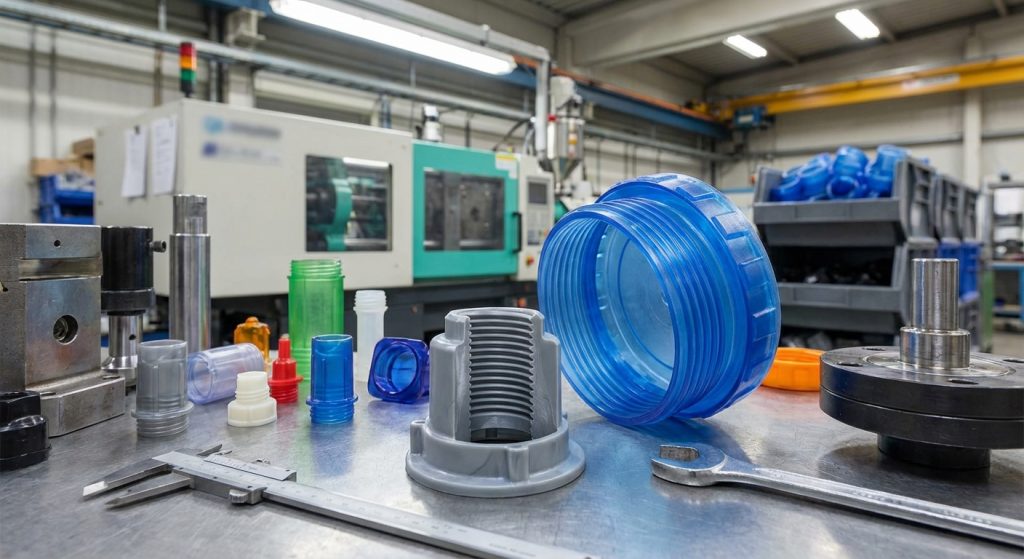
Key Takeaway: Optimized thread design prioritizes rounded profiles and coarse pitches to ensure structural reliability and ease of manufacturing.
| Feature | Recommended Specification | Benefit | |
|---|---|---|---|
| Profile Shape | Rounded or Buttress | Reduces stress concentration | |
| Pitch Type | Coarse | Better resin flow and grip | |
| Root Radius | 0.127mm minimum | Prevents cracking |
The following table highlights the critical geometric specifications required for high-performance molded fastening systems.
Why do thread size and pitch matter for plastic threads?
Size and pitch are the primary variables that determine the shear strength and long-term durability of your fastening solution. If your plastic threads are too small, the material may not have enough bulk to resist the torque applied during assembly.
Generally, internal threads should not be smaller than 7.6mm in diameter to ensure the mold core is strong enough to resist bending. When dealing with smaller diameters, the risk of “stripping” increases exponentially as the material’s shear strength is reached.
How does pitch affect shear strength?
The pitch determines how many “teeth” are engaged at any given time, distributing the load across the part. A coarser pitch allows for a larger cross-section of plastic at each thread, which significantly boosts load-bearing capacity.
But that’s not all:
- Higher pitch reduces the number of turns required for assembly.
- It prevents the “sawing” effect that occurs with fine-pitched metal screws.
- Molded coarse threads have better thermal stability during the cooling phase.
What are the limits of small diameters?
For very small diameters, the mold steel becomes incredibly fragile and prone to breaking. Designers must ensure that the thread depth remains proportional to the overall wall thickness to prevent sink marks.
Consider these factors:
- Minimum diameter recommendations prevent tool breakage.
- Proportional depth ensures uniform cooling.
- Larger diameters allow for more robust unscrewing mechanisms.
Key Takeaway: Selecting a diameter above 7.6mm and a coarse pitch ensures the mold’s longevity and the part’s mechanical performance.
| Parameter | Minimum Value | Reason | |
|---|---|---|---|
| Internal Diameter | 7.6 mm | Tooling strength | |
| Thread Depth | 0.5 x Pitch | Structural integrity | |
| Engagement Length | 1.5 x Diameter | Maximum grip |
The data above provides a baseline for sizing threads to avoid common mechanical failures during end-use applications.
Can you use undercuts for your plastic threads?
Yes, you can use undercuts, but they require specialized mold features like side-actions or collapsible cores to prevent part damage. When you design plastic threads that wrap around a cylinder, they are technically considered undercuts relative to the mold’s opening direction.
The complexity of these features often dictates the final cost of the tooling. If you can design the threads to sit on a parting line, you might avoid these expensive mechanisms entirely.
How do side-actions handle threads?
Side-actions move perpendicular to the mold opening to release external threads before the part is ejected. This allows for a fully formed 360-degree thread without the need for manual unscrewing.
Here’s the kicker:
- Side-actions automate the process for high-speed production.
- They ensure high dimensional accuracy across the thread diameter.
- This method is best for external threads on complex geometries.
When are collapsible cores necessary?
Collapsible cores are used for internal threads where an unscrewing motor isn’t feasible. These cores “shrink” inward, allowing the part to be pulled straight off the mold without damage.
Keep in mind:
- They are excellent for high-volume internal thread production.
- They reduce cycle times by eliminating rotation.
- Maintenance costs for these complex tools can be higher.
Key Takeaway: Undercuts are manageable through advanced tooling but require careful evaluation of production volume versus initial mold cost.
| Mechanism | Application | Cost Level | |
|---|---|---|---|
| Side-Action | External Threads | Moderate | |
| Collapsible Core | Internal Threads | High | |
| Manual Inserts | Low Volume | Low |
This comparison clarifies which mechanical solution best fits your specific thread design and budget requirements.
How do parting lines affect your plastic threads?
Parting lines are inevitable in injection molding and will typically run lengthwise down the center of external threads. On your plastic threads, this line can create a microscopic “step” or flash that might interfere with smooth engagement.
If the mold is not perfectly aligned, this mismatch can cause the thread to bind. Professional molders minimize this by using high-precision centering features in the tool.
Can you hide the parting line?
While you can’t completely eliminate the parting line, you can design “flats” on the sides of the thread where the mold halves meet. This “half-thread” design ensures that any flash occurs on a flat surface rather than on the thread crest.
Check this out:
- Flats prevent the nut from catching on the parting line.
- They make the mold easier to manufacture and maintain.
- Strength is slightly reduced, but reliability is greatly increased.
What about flash in the threads?
Excessive flash in the thread area can prevent the mating part from fully seating. This is usually caused by worn mold seals or improper clamping pressure during the injection cycle.
Wait, there’s more:
- Tight tolerances at the parting line are critical.
- Regular mold maintenance prevents flash buildup.
- Parting line placement affects aesthetic quality.
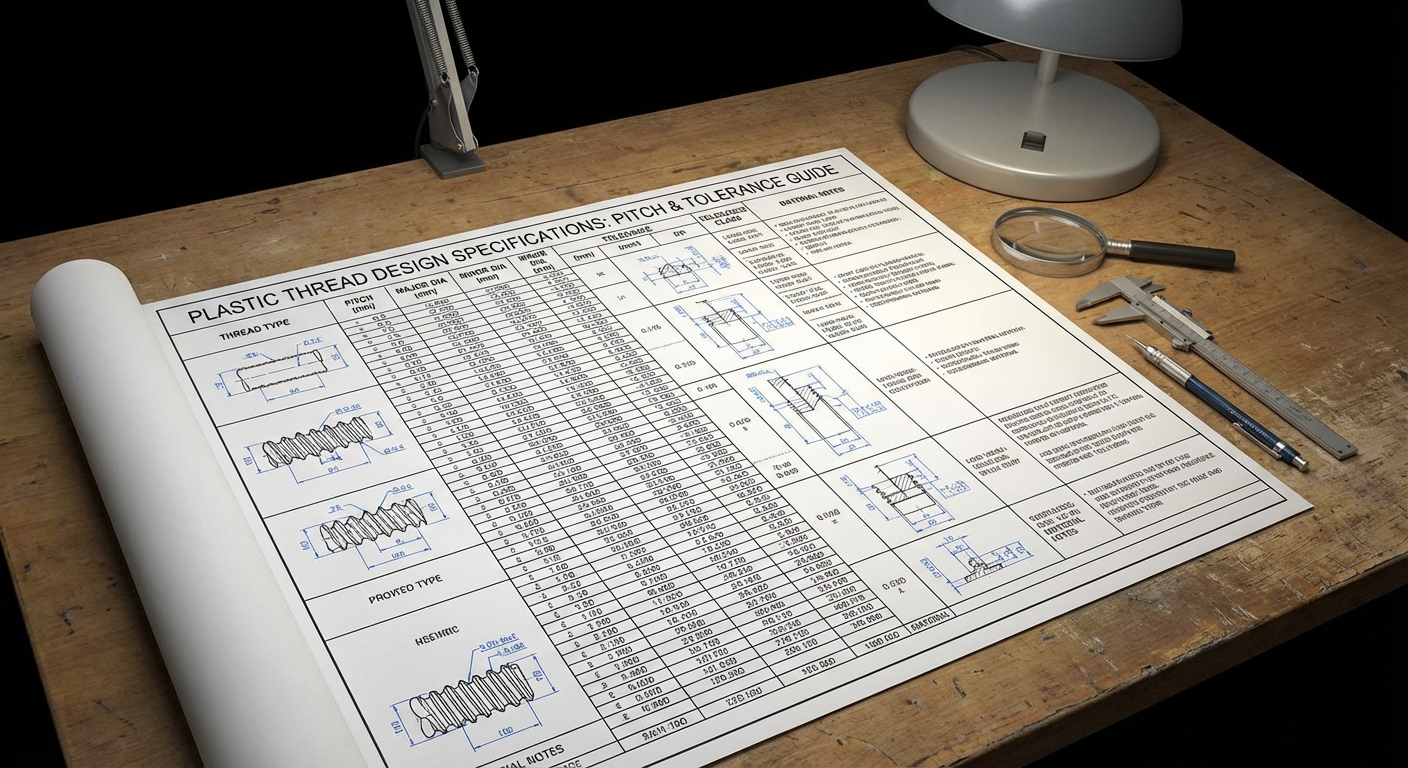
Key Takeaway: Managing parting line placement through the use of flats is the most effective way to ensure smooth thread engagement.
| Issue | Impact | Mitigation | |
|---|---|---|---|
| Mismatch | Binding | Precision alignment pins | |
| Flash | Poor fit | Clamping pressure control | |
| Visibility | Aesthetics | Hidden parting line design |
The table summarizes the risks associated with parting lines and the technical steps used to negate their impact.
When should you use inserts for plastic threads?
You should use inserts when your application requires the strength of metal or when the plastic threads will be subjected to frequent disassembly. Overmolding metal inserts provides a permanent, high-strength solution that resists stripping and wear.
Molded-in threads are great for single-use or permanent assemblies, but they can’t match the cycle life of a brass or stainless steel insert.
Why choose metal overmolding?
Metal overmolding involves placing a threaded component into the mold before injection. The plastic then flows around the insert, locking it into the part’s structure for maximum pull-out resistance.
The reality is:
- Metal threads handle much higher torque than plastic.
- They are ideal for medical or automotive applications.
- This process eliminates the need for secondary tapping operations.
Are hand-loaded inserts viable?
For internal plastic threads in low-volume production, hand-loaded inserts (also known as “loose pieces”) are often used. These are unscrewed manually from the part after it is ejected from the mold.
Watch out for these:
- They significantly increase the cycle time.
- Labor costs per part will be higher.
- They are limited to two or three inserts per part.
Key Takeaway: Metal inserts are the gold standard for high-cycle durability, while hand-loaded inserts offer a cost-effective path for low-volume plastic threads.
| Insert Type | Durability | Production Speed | |
|---|---|---|---|
| Molded-in Metal | Very High | Fast | |
| Hand-loaded Plastic | Low | Slow | |
| Heat-Staked Metal | High | Moderate |
This selection guide helps you choose the right fastening technology based on your part’s expected lifespan and assembly frequency.
What are the best materials for plastic threads?
The choice of resin is critical because shrinkage and lubricity directly impact how well your plastic threads perform. Semi-crystalline resins are generally preferred for threaded applications due to their toughness and natural resistance to wear.
Nylon, POM (Acetale), and Polypropylene are among the most common choices. Each has unique shrinkage rates that must be accounted for in the mold design to ensure the final threads meet the required dimensions.
Is Nylon the right choice?
Nylon is exceptionally strong and has high impact resistance, making it perfect for functional fasteners. However, it is hygroscopic, meaning it absorbs moisture, which can cause the threads to swell over time.
Think about this:
- Nylon offers excellent chemical resistance.
- It is naturally self-lubricating for easier assembly.
- Glass-filled grades offer even higher stiffness.
Why is POM used for precision?
POM, or Delrin, is often the preferred material for precision threads because it has very low moisture absorption and high dimensional stability. It provides a “slippery” surface that allows for very smooth threading action.
It gets better:
- POM maintains its strength over a wide temperature range.
- It resists “creep,” meaning the threads won’t deform under long-term load.
- It has a high fatigue endurance limit.
Key Takeaway: Selecting a semi-crystalline material like POM or Nylon provides the necessary wear resistance and strength for functional threads.
| Material | Key Advantage | Major Drawback | |
|---|---|---|---|
| Nylon (PA) | High Strength | Moisture absorption | |
| POM (Acetal) | Dimensional stability | High shrinkage rate | |
| Polypropylene | Low cost | Lower shear strength |
Understanding these material trade-offs is essential for ensuring that your threads remain functional throughout the product’s life cycle.
Are there better alternatives to plastic threads?
Sometimes, the best way to design plastic threads is to avoid them entirely in favor of more robust fastening methods. Self-tapping screws or heat-stake inserts are often faster to implement and offer higher reliability in thin-walled designs.
If your part volume is low, machining the threads as a secondary operation might be more cost-effective than building a complex unscrewing mold.
Should you use self-tapping screws?
Self-tapping screws create their own threads as they are driven into a pre-molded hole (boss). This eliminates the complexity of molding internal threads and is the standard for consumer electronics.
Here’s why:
- It significantly reduces tooling costs.
- Assembly is simplified for high-speed lines.
- It allows for much smaller fastener diameters.
When to use ultrasonic inserts?
Ultrasonic or heat-staked inserts are metal components pressed into a molded hole using heat or vibration. This melts the surrounding plastic, which then re-solidifies around the insert’s knurling.
Consider the following:
- This is the most reliable way to add metal threads to plastic.
- It allows for high torque and repeated assembly.
- It is very easy to automate in a production environment.
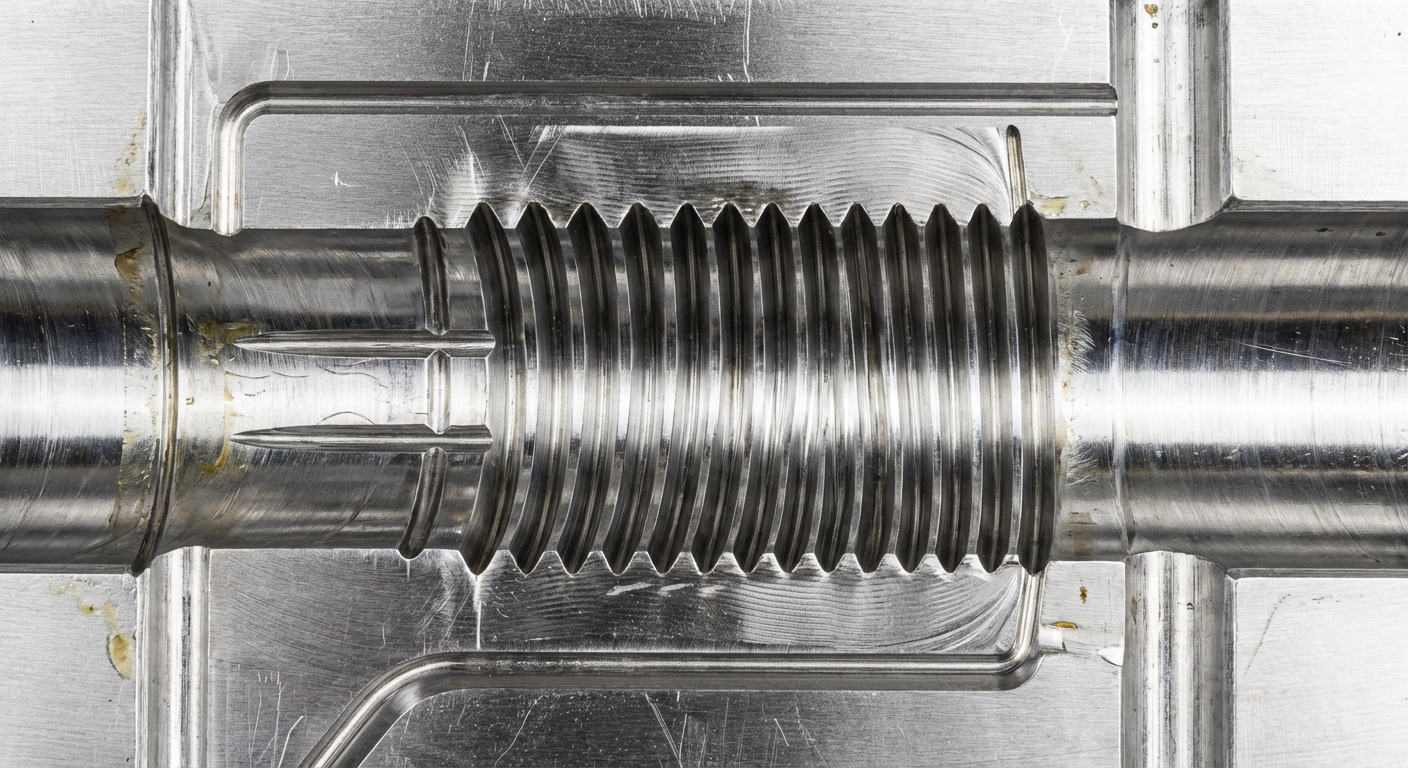
Key Takeaway: Alternatives like self-tapping screws or post-mold inserts can offer better performance and lower tooling costs than molded-in threads.
| Alternative | Best For | Tooling Impact | |
|---|---|---|---|
| Self-Tapping | One-time assembly | None (Simple hole) | |
| Heat-Stake | High durability | Minimal | |
| Machined Threads | Low volume | None (Secondary) |
The table above illustrates the strategic advantages of choosing alternative fastening methods over traditional molded threads.
How do you design bosses for plastic threads?
A boss is the cylindrical feature that houses the thread, and its design is just as important as the thread itself. To support your plastic threads effectively, the boss must have enough wall thickness to prevent bursting during screw insertion.
A common mistake is making the boss walls too thick, which leads to “sink marks” on the outer surface of the part. This occurs because thick sections cool slower than the surrounding walls.
What is the ideal boss thickness?
The wall thickness of a boss should generally be about 60% of the nominal wall thickness of the part. This provides a balance between structural strength and cosmetic appearance.
Don’t forget:
- Adding gussets or ribs to the base of the boss increases stability.
- Internal radii at the base prevent stress fractures.
- Proper draft (1 to 2 degrees) ensures easy part ejection.
How do you prevent sink marks?
To prevent sink marks on the show surface, you can “core out” the base of the boss or use a recessed design. This ensures that the material volume remains consistent throughout the part.
Keep this in mind:
- Uniform wall thickness is the golden rule of molding.
- Ribs can provide strength without adding bulk.
- Proper cooling channel placement in the mold is vital.
Key Takeaway: Well-designed bosses utilize a 60% wall thickness ratio and supporting ribs to provide strength without causing cosmetic defects.
| Feature | Design Rule | Purpose | |
|---|---|---|---|
| Wall Ratio | 0.6 x Main Wall | Prevents sink marks | |
| Draft Angle | 1.0 – 2.0 Degrees | Ease of ejection | |
| Support | Use Gussets/Ribs | Increases rigidity |
These design guidelines ensure that your fastener housings are both structurally sound and aesthetically pleasing.
What best practices ensure quality plastic threads?
Success with plastic threads requires adhering to strict design standards that account for the physics of injection molding. For instance, always include a lead-in chamfer at the start of the thread to guide the mating part and prevent cross-threading.
Furthermore, you should avoid “feather edges” at the end of the thread. These thin sections of plastic are incredibly fragile and will likely break off during the first assembly attempt.
Why are draft angles essential?
Draft angles of at least 1 degree should be applied to all vertical surfaces of the thread. This creates a “wedge” effect that allows the part to release from the mold steel the moment the tool starts to open.
Here is the secret:
- Draft reduces friction and prevents “galling” of the plastic.
- It extends the life of the mold by reducing wear.
- Parts with draft are less likely to stick in the cavity.
How to manage thread termination?
Threads should never simply “stop” at a flat surface; they should be recessed or ended with a specific radius. This ensures that the mold steel is robust and that the part has a clean finish.
Think about it:
- Recessed threads protect the first turn from damage.
- It provides a cleaner aesthetic for the final product.
- Mold maintenance becomes significantly easier.
Key Takeaway: Implementing draft angles and proper thread termination prevents manufacturing defects and improves end-user assembly experience.
| Best Practice | Recommendation | Benefit | |
|---|---|---|---|
| Lead-in | 45-degree chamfer | Easy assembly | |
| Draft Angle | 1° minimum | Clean ejection | |
| End Point | Recessed/Blunt start | Prevents breakage |
The analytical data suggests that minor geometric adjustments can lead to significant improvements in production yield and part quality.
How does CN Precision optimize your plastic threads?
At CN Precision, we specialize in transforming complex designs into high-performance plastic threads through our integrated DFM process. We don’t just cut steel; we analyze your geometry to identify potential sink marks, flow issues, and structural weaknesses.
Our IATF 16949 certified facility in Shenzhen uses high-end equipment from Sodick and Fanuc to achieve tolerances down to ±0.01mm. This precision is what allows us to produce threads that engage perfectly every time.
What does our DFM report cover?
Every project starts with a comprehensive DFM analysis where our engineers review your thread specifications. We provide feedback on gate placement, cooling cycles, and material selection to optimize your part for mass production.
Here’s how we help:
- We identify areas where draft is insufficient.
- We suggest material alternatives to reduce shrinkage.
- Our team optimizes the mold cooling to reduce cycle times.
How do we ensure thread accuracy?
We use CMM (Coordinate Measuring Machine) inspection for every production run to verify thread pitch, diameter, and concentricity. This rigorous quality control ensures that your parts meet the most demanding automotive and medical standards.
Wait, there’s more:
- Automated electrode libraries speed up the EDM process.
- We provide T1 samples within 25-30 days for most projects.
- Continuous monitoring ensures 24/7 quality consistency.
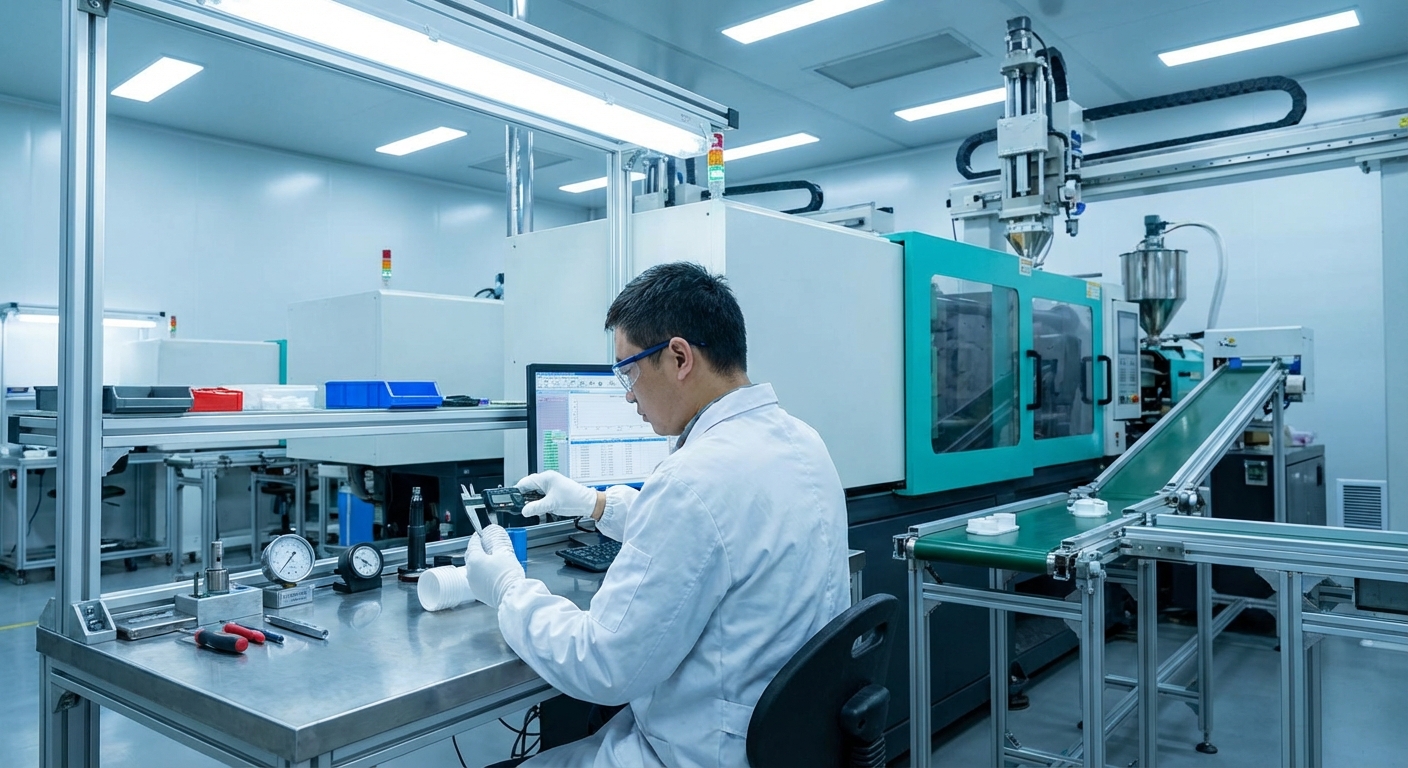
Key Takeaway: Partnering with CN Precision provides you with the engineering expertise and high-precision equipment needed to manufacture flawless threaded components.
| Capability | Standard | Benefit to You | |
|---|---|---|---|
| Precision | ±0.01 mm | Perfect fitment | |
| Certification | IATF 16949 | Automotive reliability | |
| Speed | 25-Day T1 | Faster time-to-market |
Choosing a manufacturer with advanced engineering support ensures your project moves from design to production without costly delays.
Elevate Your Design with CN Precision
We have solved the most common threading challenges—from stripping and sink marks to complex tool extraction—for global leaders in the automotive, medical, and electronics sectors. By combining advanced DFM analysis with IATF 16949 certified production, we ensure your components aren’t just manufacturable, but optimized for peak performance and cost-efficiency. Our mission is to bridge the gap between ambitious engineering and reliable mass production. Whether you need high-precision 2K molding or robust threaded assemblies, our team in Shenzhen is ready to deliver. If you want to eliminate manufacturing risks and accelerate your product launch, contact us today for a technical consultation.
Frequently Asked Questions
Can I mold threads without using an unscrewing motor?Yes, you can. For external threads, a simple two-plate mold with the parting line running through the center of the threads is the most cost-effective method. For internal threads, you can use collapsible cores or manual inserts, though these may impact your cycle time or tooling budget.
What is the smallest diameter recommended for molded internal threads?We generally recommend a minimum diameter of 7.6mm (0.3 inches). This ensures that the mold core is thick enough to withstand the high pressures of the injection process without bending or breaking, maintaining the structural integrity of your part.
How do I prevent the plastic threads from stripping during assembly?The best way is to use a coarse thread pitch and a rounded profile. Additionally, selecting a tough, semi-crystalline material like Nylon or POM significantly increases the shear strength of the threads compared to amorphous resins like ABS or Polycarbonate.
Should I use glass-filled materials for threaded parts?It depends on your goals. While glass fibers increase stiffness and strength, they also make the material more abrasive, which can wear down the mold steel faster. Glass-filled resins also have non-uniform shrinkage, which can make it harder to maintain tight thread tolerances.
What is the typical lead time for a threaded injection mold?For standard projects, you can expect T1 samples within 25 to 30 days. Complex tools involving unscrewing mechanisms or multi-cavity 2K molding may take closer to 35 to 45 days, depending on the precision requirements and overall part complexity.