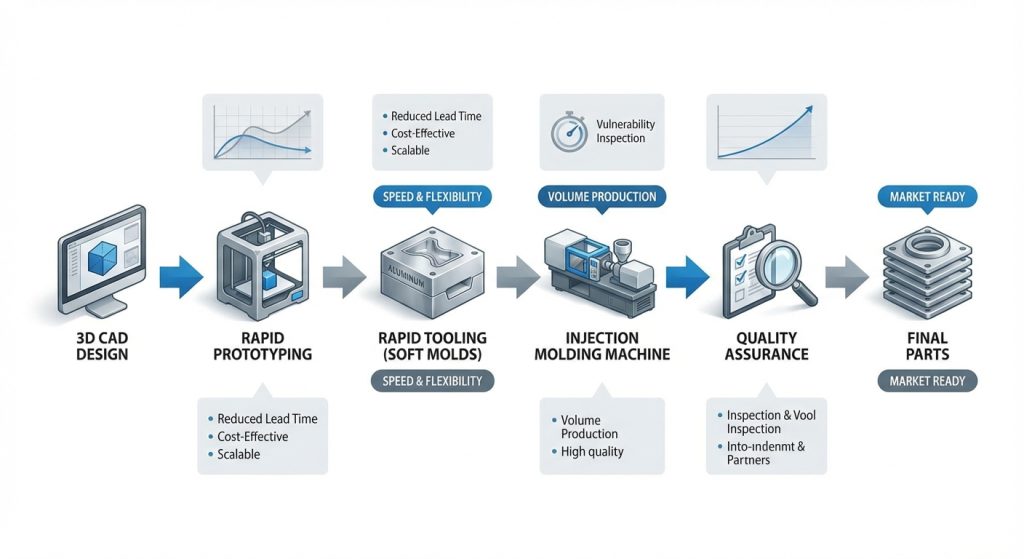
Rapid tooling is a specialized group of manufacturing techniques used to quickly and cost-effectively produce molds, dies, and patterns for traditional fabrication processes. Traditional manufacturing often forces you to endure months of lead time and thousands of dollars in upfront investment before a single part is made. These massive delays stifle your ability to innovate and allow competitors to reach the market first while your project is stuck in the queue. By implementing rapid tooling , you can secure a streamlined path to producing functional, production-grade parts in a fraction of the time.
What is rapid tooling?
Rapid tooling consists of agile fabrication methods like 3D printing and CNC machining used to create industrial tools for molding and casting. This approach is designed to bridge the gap between initial prototyping and full-scale mass production. You can use rapid tooling to validate designs using real production materials rather than surrogate plastics.
Defining the Core Concept
The core concept involves creating a physical mold or die from digital CAD data using automated machinery. This eliminates the manual labor and long setup times associated with conventional steel toolmaking.
Rapid vs Conventional Methods
Think about it: the primary difference lies in the speed of iteration and the total cost of ownership. Conventional tools are built for millions of cycles, whereas rapid versions prioritize speed for smaller batches.
- Lead Times: Days or weeks compared to several months.
- Costs: Lower initial investment for low-volume production runs.
- Material Choice: Options include aluminum, reinforced resins, or soft steels.
Key Takeaway: Using these methods allows you to obtain production-grade parts early in the development cycle to verify functional performance and market fit.
| Feature | Rapid Tooling | Conventional Tooling | |
|---|---|---|---|
| Initial Cost | Low to Moderate | High | |
| Setup Time | 24 – 48 Hours | 4 – 8 Weeks | |
| Iteration Cost | Minimal | Prohibitive |
The data indicates that rapid methods provide a massive advantage in early-stage setup speed and financial flexibility.
Why choose rapid tooling?
You should choose rapid tooling when your project requires the functional properties of injection-molded or cast parts but lacks the budget for permanent steel molds. It is the ideal solution for bridge tooling or testing market demand with high-quality components.
Speed to Market Advantages
Here is the bottom line: speed is the ultimate competitive advantage in modern global manufacturing. By bypassing the long lead times of traditional tool shops, you can launch products months ahead of your rivals.
Significant Cost Reductions
Eliminating the need for expensive, high-durability steel molds for short runs saves significant capital. You can redirect these funds toward marketing or further product refinements.
Key Takeaway: Choosing this path ensures your budget remains agile while still delivering parts that meet strict industrial standards.
| Factor | Rapid Approach | Traditional Approach | |
|---|---|---|---|
| Capital Risk | Lower | Very High | |
| Design Flexibility | Extreme | Limited | |
| Market Entry | Accelerated | Delayed |
Strategic selection of tooling grade allows you to balance performance with financial constraints effectively.
How does rapid tooling work?
The process of rapid tooling begins with a digital 3D model that is converted into a negative mold or positive pattern. Engineers then use additive or subtractive manufacturing to build the tool directly from these digital files.
The Digital Design Phase
Precise CAD data drives the accuracy of every modern mold and die produced today. Our team performs a DFM review to ensure your geometry is optimized for the selected tooling method.
Additive vs Subtractive Tech
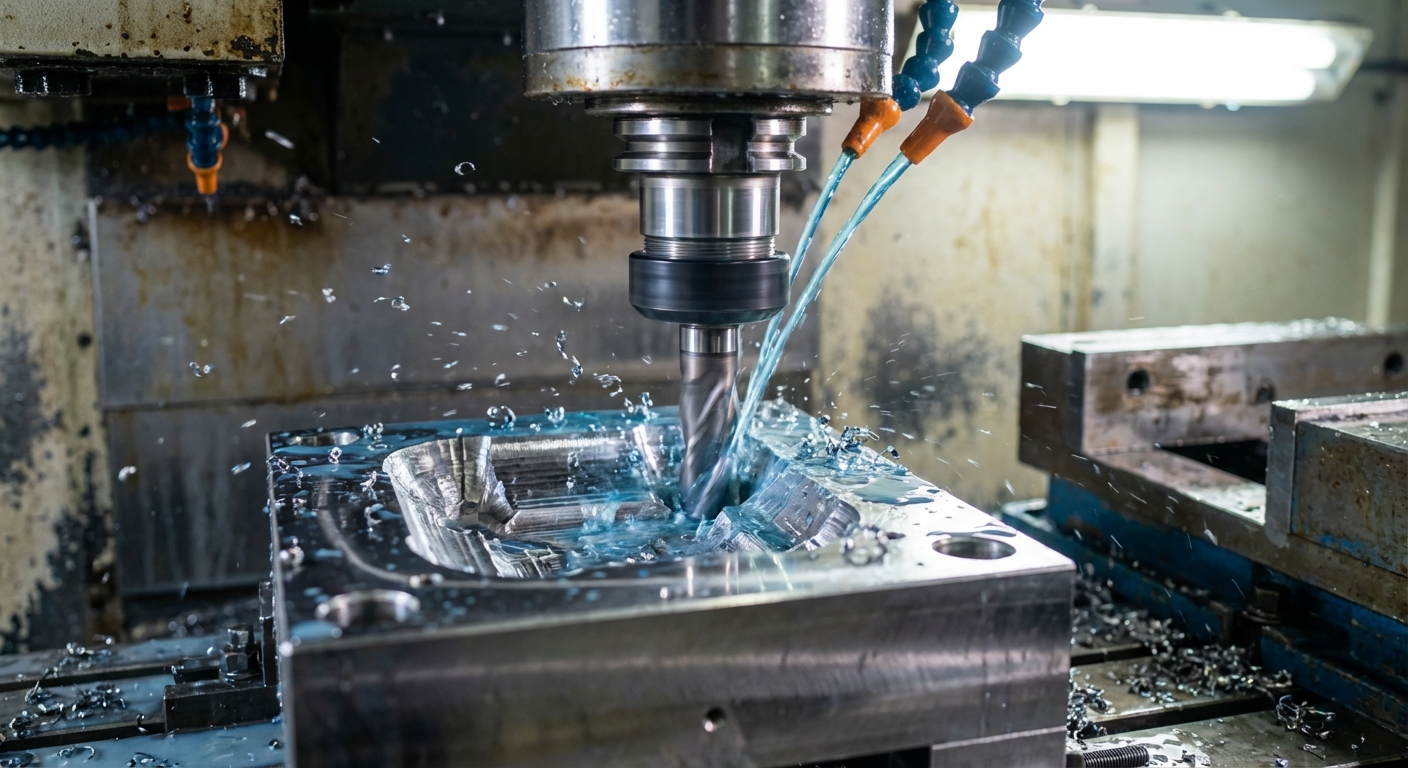
It gets even better: you can choose between 3D printing for complex internal channels or CNC machining for superior surface finishes. Hybrid approaches often combine both to maximize speed and precision.
Final Finishing Processes
- Polishing: Ensures parts release easily from the mold.
- Assembly: Integration of ejector pins and cooling lines.
- Validation: Verification of dimensional accuracy via CMM.
Key Takeaway: Understanding the technical workflow helps you select the right fabrication method for your specific part complexity and volume.
| Stage | Action | Expected Outcome | |
|---|---|---|---|
| Phase 1 | Digital CAD/DFM Review | Validated geometry | |
| Phase 2 | Rapid Fabrication | Physical mold/die | |
| Phase 3 | Integration & Casting | Finished end-use parts |
This structured workflow ensures that digital designs are translated into physical tools with minimal manual intervention.
Who uses rapid tooling now?
Rapid tooling is currently utilized by leading companies in the automotive, medical, and consumer electronics industries to accelerate innovation. Any organization facing short product life cycles or high customization needs will find value in these techniques.
Automotive Sector Integration
Tier 2 and Tier 3 suppliers use these methods to create interior components and engine housings. This allows for functional testing under extreme heat and vibration before committing to mass production.
Medical Device Development
But wait, there is more: medical companies rely on agile tooling to produce biocompatible prototypes. This is essential for surgical aids and patient-specific devices that require rigorous validation.
Consumer Electronics Brands
Electronics brands utilize quick housing iterations to keep up with fast-paced consumer trends. This prevents inventory waste while ensuring the latest designs reach the shelves quickly.
Key Takeaway: Cross-industry adoption proves that rapid techniques are a reliable standard for professional-grade manufacturing and testing.
| Industry | Primary Use Case | Critical Requirement | |
|---|---|---|---|
| Automotive | Functional Testing | Heat Resistance | |
| Medical | Patient-Specific Parts | Biocompatibility | |
| Electronics | Aesthetic Housings | Surface Finish |
The versatility of these applications demonstrates how rapid techniques meet diverse and demanding industrial requirements.
Where is rapid tooling used?
You will find rapid tooling most frequently used in development labs, bridge production facilities, and specialized low-volume manufacturing centers. It serves as the primary gateway for projects moving from the lab to the factory floor.
Prototype Mold Fabrication
Prototype molds are used to validate mechanical designs using the intended final production resins. This eliminates the risk of finding material compatibility issues too late in the process.
Low Volume Production Runs
Look at the facts: niche markets often require only a few hundred parts rather than millions. Rapid methods allow you to serve these markets profitably without high overhead.
- Market Testing: Validate demand with 100-1000 parts.
- Customization: Create parts tailored to specific client needs.
- On-Demand: Reduce warehouse costs by printing tools as needed.
Bridge Tooling Strategies
Bridge tooling maintains your production flow while you wait for permanent steel molds to be completed. This prevents costly “dead time” during the transition to full-scale manufacturing.
Key Takeaway: Strategic placement of rapid tools in your supply chain ensures continuity and reduces the risk of market entry delays.
| Application Type | Volume Range | Primary Goal | |
|---|---|---|---|
| Prototyping | 1 – 10 Parts | Design Validation | |
| Bridge Tooling | 100 – 2,000 Parts | Production Continuity | |
| End-Use | 500 – 5,000 Parts | Customization |
Mapping your production volume to the correct tooling type is the most effective way to optimize project ROI.
When is rapid tooling best?
Rapid tooling is the best choice when you have a complex design that must be tested in final materials within a tight deadline. It is also the superior option for products with life cycles shorter than the lead time of traditional tools.
Validating Complex Designs
When your design contains intricate geometries, traditional machining may be too difficult or slow. Rapid methods can handle undercuts and complex cooling channels with much greater ease.
Short Product Life Cycles
You might wonder: how do electronics brands update models so fast? They use modular tooling to swap inserts quickly, allowing for frequent aesthetic and functional updates.
Testing Market Demand Fast
Wait, there is more: launching a “beta” version of your hardware allows you to gather real-world user feedback. You can then iterate the design before spending six figures on mass production tooling.
Key Takeaway: Timing your tooling investment correctly prevents financial ruin by ensuring market demand exists before scaling up.
| Project Status | Recommended Method | Strategic Value | |
|---|---|---|---|
| Early Development | 3D Printed Patterns | High Flexibility | |
| Pre-Production | Aluminum Molds | Material Validation | |
| Market Launch | Composite Dies | Cost Efficiency |
Selecting the right method at the appropriate project stage maximizes flexibility and minimizes unnecessary capital expenditure.
Can rapid tooling save money?
Integrating rapid tooling into your budget can save thousands of dollars by reducing upfront capital expenditures. It allows you to pay for production capabilities as you grow rather than all at once.
Reducing Upfront Investments
Traditional steel molds can cost upwards of $50,000 before you ever see a finished part. Rapid alternatives allow you to start production with a fraction of that initial investment.
Minimizing Material Waste
- Precision: Additive methods only use the material needed for the tool.
- Localized: Producing tools in-house reduces expensive shipping and logistics costs.
- Efficiency: Aluminum tools dissipate heat faster, reducing cycle times and energy use.
Lowering Modification Costs
Here is the kicker: modifying a steel mold is expensive and time-consuming. Adjusting a digital file and re-fabricating a rapid tool is significantly more affordable for iterative designs.
Key Takeaway: The financial benefits extend beyond the initial quote, encompassing lower risk, cheaper changes, and faster revenue generation.
| Cost Driver | Conventional Tooling | Rapid Tooling | |
|---|---|---|---|
| Design Change | $5,000+ | 200−500 | |
| Material Scrap | Moderate | Low | |
| Storage/Logistics | High | Minimal |
Focusing on the total cost of ownership reveals that rapid methods are significantly more economical for modern product development.
Is rapid tooling very fast?
The speed of rapid tooling is its defining characteristic, often reducing production schedules from months to just a few days. This agility allows your engineering team to react to testing results in real-time.
Slashing Typical Lead Times
Traditional outsourcing can leave you waiting twelve weeks for a mold. By utilizing in-house agile methods, you can have a functional tool ready for the press in under 72 hours.
Rapid Iteration Capabilities
Consider this: a fast workflow means you can fail early and fix designs before they become expensive problems. The ability to refine CAD by noon and re-print by evening is revolutionary.
- Overnight Printing: Molds created while the team sleeps.
- Morning Testing: Functional parts pulled from the press by 9 AM.
- Afternoon Refinement: Design updates based on morning test data.
Meeting Strict Deadlines
Agile methods protect your project timelines from global supply chain disruptions. You are no longer dependent on overseas tool shops to keep your project moving forward.
Key Takeaway: Speed reduces the “time-to-market” window, which directly correlates to higher profitability and market share.
| Metric | Traditional | Rapid (CNC) | Rapid (3D) | |
|---|---|---|---|---|
| Lead Time | 6-12 Weeks | 1-2 Weeks | 24-72 Hours | |
| Iteration Speed | Very Slow | Moderate | Extreme |
The drastic reduction in lead times across all rapid tiers enables a level of agility impossible with traditional methods.
Which rapid tooling is right?
Selecting the right technology for rapid tooling depends on your volume requirements, part complexity, and material needs. You must evaluate whether a soft mold or a hard aluminum insert better suits your performance goals.
Soft vs Hard Tooling Choice
Soft tooling like silicone is perfect for very low volumes and flexible parts. Harder options like aluminum or high-temp resins are better for thousands of cycles and rigid thermoplastics.
Material Compatibility Factors
Now consider this: does your part need to be flame-retardant or medical-grade? Ensure your chosen tool material can withstand the heat and pressure required by your specific resin.
Evaluating Production Volume
- 1-50 Units: 3D printed molds provide the fastest turnaround.
- 50-500 Units: Machined aluminum offers the best balance of speed and durability.
- 500+ Units: Hybrid bridge tooling ensures production continuity until mass production.
Key Takeaway: Matching the tooling material to your expected batch size prevents over-engineering and keeps your costs under control.
| Volume | Complexity | Recommended Tooling | |
|---|---|---|---|
| 1-50 | High | 3D Printed Molds | |
| 50-500 | Medium | Aluminum Tooling | |
| 500+ | Low | Hybrid Bridge Tooling |
Using this selection matrix ensures you choose the most cost-effective technology for your specific project scale.
How to start rapid tooling?
The transition to rapid tooling begins with a clear understanding of your production goals and design requirements. You should start by preparing your CAD files for a professional manufacturing review to identify any potential issues early.
Requesting a DFM Review
A Design for Manufacturability (DFM) report is your first step toward success. This analysis identifies wall thickness issues or draft angle problems that could prevent your tool from functioning correctly.
Partnering with Experts
Choosing a partner with ISO 9001 and IATF 16949 certification ensures your parts meet automotive and medical standards. Professional guidance helps you avoid common pitfalls and maximizes the value of your tooling investment.
Key Takeaway: Taking the first step with a technical consultation reduces project risk and sets a clear timeline for your product launch.
| Step | Action | Strategic Benefit | |
|---|---|---|---|
| 1 | CAD Submission | Baseline for review | |
| 2 | DFM Analysis | Optimization for production | |
| 3 | Tool Fabrication | Physical asset creation |
Following this systematic approach guarantees that your entry into rapid manufacturing is efficient, predictable, and successful.

Frequently Asked Questions
- Can I use rapid tooling for mass production?No, it is best suited for low-to-mid volumes or as bridge tooling to maintain supply while permanent mass production molds are being fabricated.
- How do I know if my design is ready?The best way to know is by requesting a thorough DFM (Design for Manufacturability) analysis from your manufacturing partner to identify any geometry issues.
- Can rapid tooling handle complex geometries?Yes, it can. Methods like 3D printing excel at creating intricate internal cooling channels and undercuts that are often impossible for traditional machining to achieve.
- What materials are available for this process?The best method is to use production-grade materials. You can produce parts in almost any plastic resin, silicone, rubber, or even cast metals using rapid patterns.
- How do I know if I should use CNC or 3D printing?The best choice depends on your surface finish requirements. CNC is superior for tight tolerances and smooth finishes, while 3D printing is faster for highly complex shapes.
Conclusion
Rapid methods have evolved from simple prototyping tools into a vital component of a resilient, modern manufacturing strategy. By dramatically reducing costs and lead times, these techniques allow you to focus on innovation and market growth rather than logistics and long wait times. At CN Precision, we solve your most pressing manufacturing challenges—from unstable quality to production delays—through rigorous process controls and expert engineering support. We are committed to an industry vision where high-precision manufacturing is accessible, agile, and transparent for every global brand. Our IATF 16949-certified facilities stand ready to accelerate your next project from concept to mass production. Contact us today to discuss how our integrated molding and machining services can bring your product vision to life.