
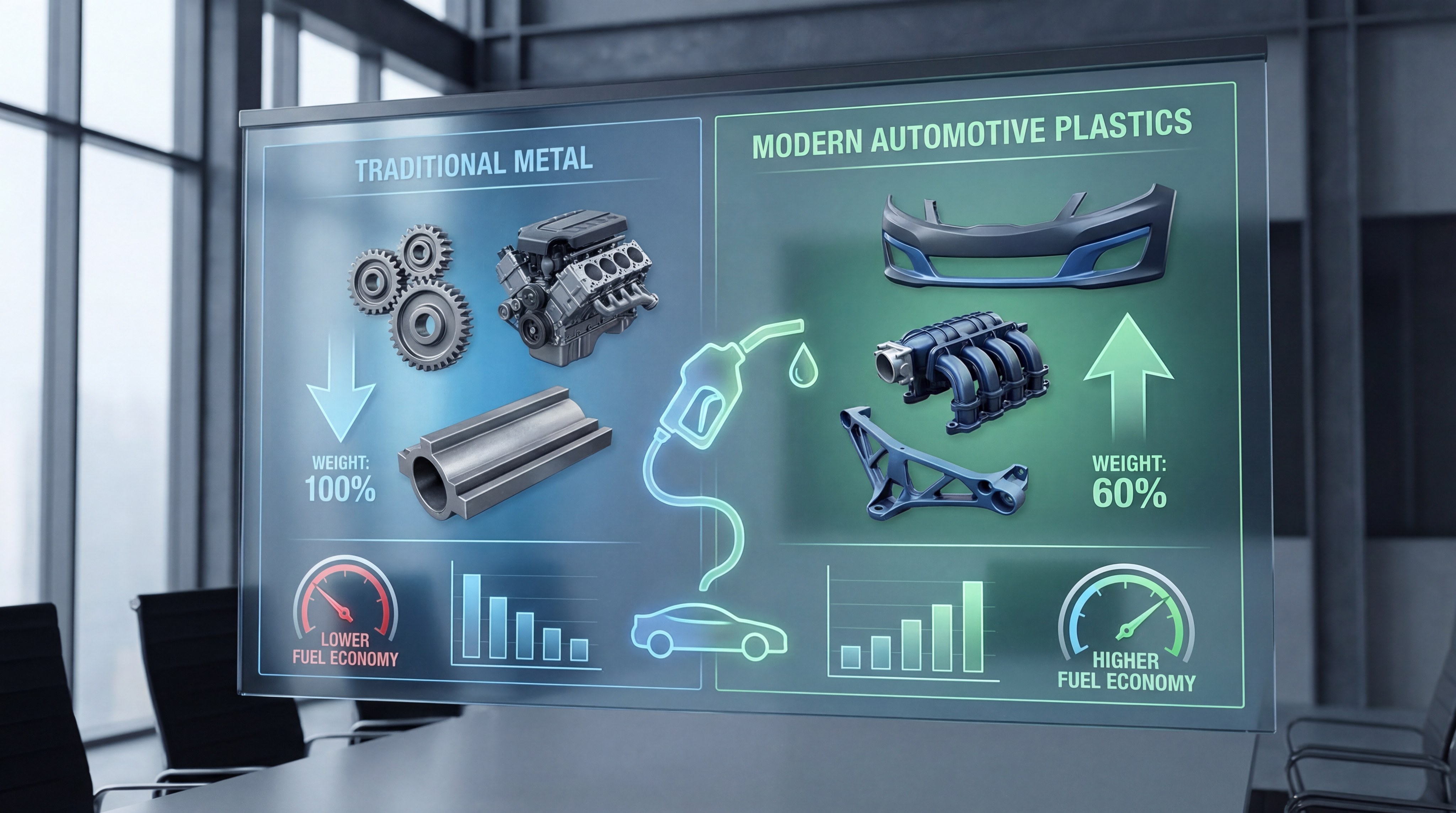
Polypropylene, polyurethane, and ABS are among the primary materials used in modern vehicles. Traditional car manufacturing relies heavily on metal, which often leads to excessive vehicle weight and poor fuel efficiency. You likely feel the pressure of rising fuel costs and strict emission standards that make heavy steel frames increasingly impractical. High-performance automotive plastic components provide the perfect solution by offering lightweight, durable, and cost-effective alternatives for the global market.
Why Are Automotive Plastic Components Critical Today?
Plastic components are critical because they significantly reduce vehicle weight while maintaining high standards for safety and structural integrity. Integrating automotive plastic components into your assembly line allows for more aerodynamic designs and improved energy management during collisions.
How do plastics save fuel?
Reducing the weight of a vehicle is the most direct way to enhance its fuel economy or battery range. For every 100 kilograms saved through polymer substitution, you can typically expect a significant reduction in CO2 emissions.
Here is the deal:
- Lightweighting extends the driving range of electric vehicles.
- Corrosion-resistant materials reduce long-term maintenance needs.
- Molded parts allow for complex, aerodynamic exterior shapes.
But there is more. High-performance polymers absorb energy during impacts more efficiently than many traditional metals.
Key Takeaway: Weight reduction through advanced plastics is the most effective strategy for meeting modern environmental and performance standards.
| Factor | Plastic Components | Metal Components | |
|---|---|---|---|
| Weight | Ultralight | Heavy | |
| Corrosion | Immune | Susceptible | |
| Design Freedom | High | Limited |
Analysis: The data confirms that plastics offer a superior strength-to-weight ratio that is essential for modern vehicle efficiency.
Which Plastics Dominate Automotive Plastic Components?
Polypropylene (PP) and Polyurethane (PUR) are the most widely used materials in the production of modern vehicle systems. When you source automotive plastic components , these polymers offer the best balance between cost, durability, and ease of manufacturing.
Why is Polypropylene the industry leader?
Polypropylene is favored for its exceptional chemical resistance and high melting point, making it ideal for under-the-hood applications. It is also highly moldable, which is perfect for creating intricate interior trims and dashboard elements.
Look at it this way:
- PP is used for bumper fascia and engine covers.
- PUR is essential for seats and soundproofing.
- Both materials are easily recyclable in modern facilities.
The best part? Polypropylene remains one of the most cost-effective resins available for high-volume injection molding projects.
Key Takeaway: PP and PUR form the backbone of the automotive industry due to their versatility and low production costs.
| Material | Primary Usage | Key Benefit | |
|---|---|---|---|
| Polypropylene | Dashboards, Bumpers | Chemical resistance | |
| Polyurethane | Seating, Insulation | Cushioning/Silence |
Analysis: These two polymers account for a massive percentage of total plastic weight in a standard passenger vehicle.
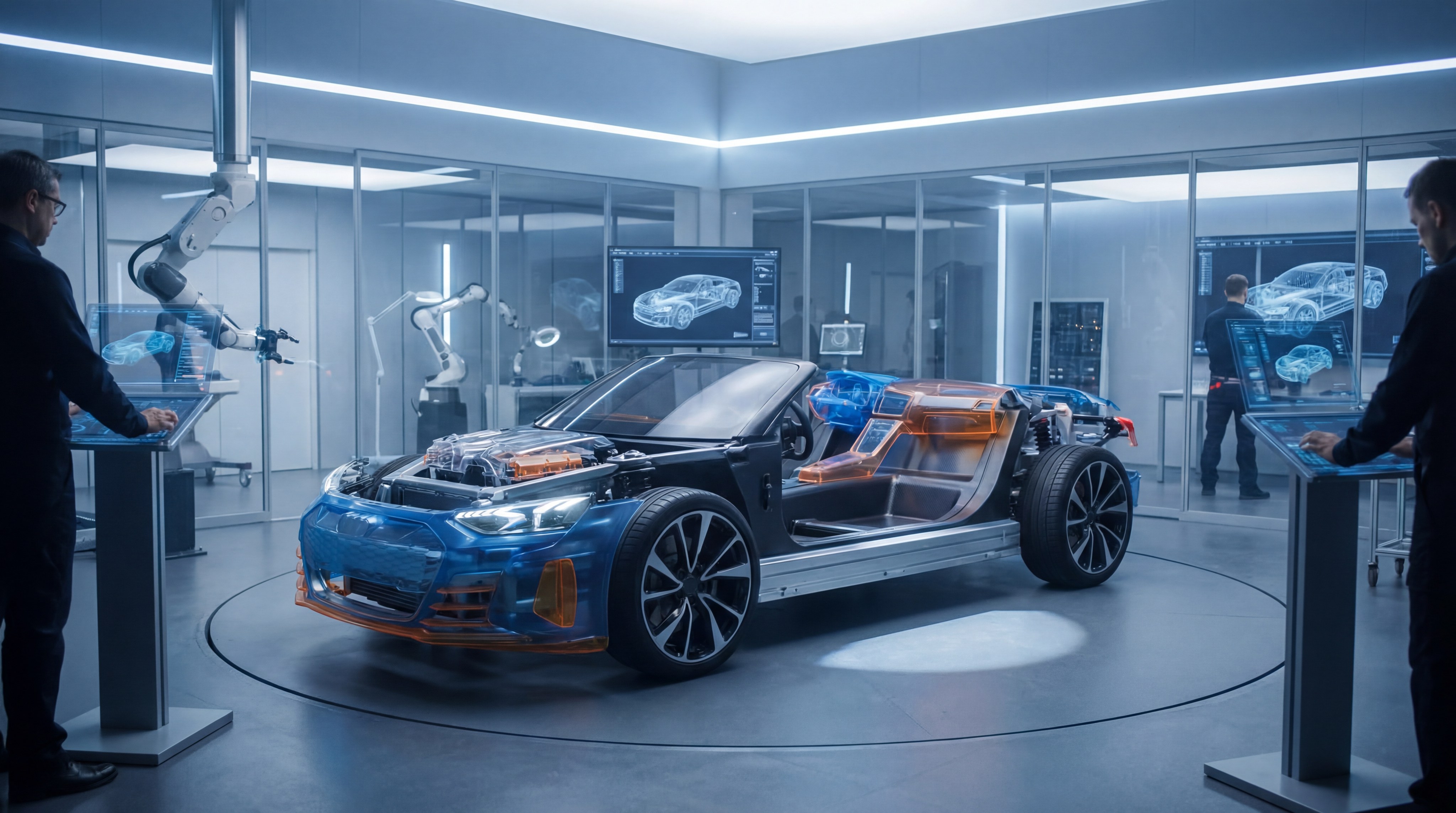
How Does Polypropylene Improve Car Interiors?
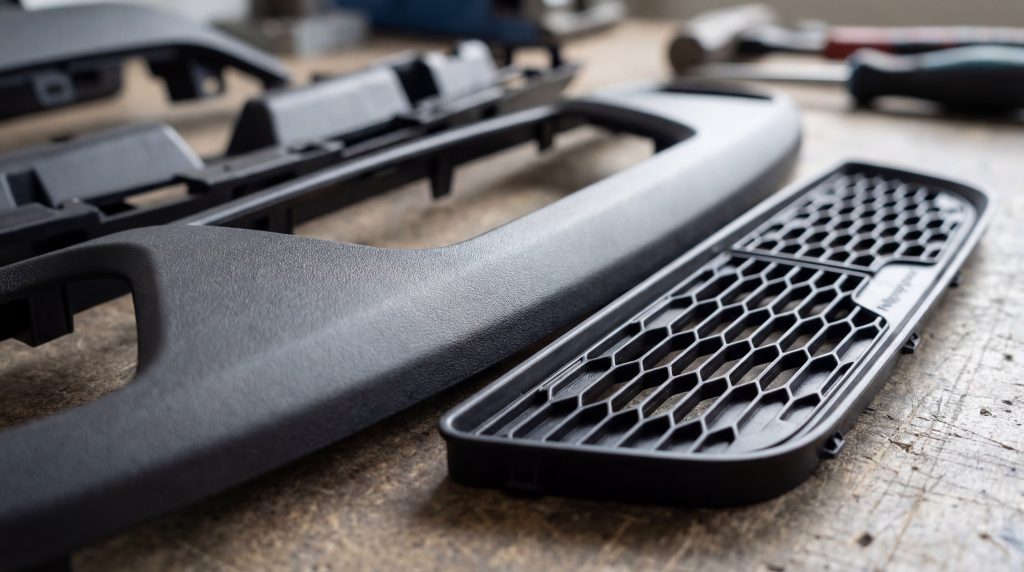
Polypropylene improves car interiors by providing a durable, heat-resistant, and aesthetically flexible material for dashboards and door panels. Utilizing automotive plastic components made from PP ensures that your cabin remains resilient against daily wear and thermal expansion.
Is PP durable enough for daily use?
PP is a semi-crystalline polymer that maintains its shape even when exposed to direct sunlight and high cabin temperatures. It resists scratches and chemicals, ensuring the interior stays looking new for years.
Think about this:
- It provides a soft-touch feel when combined with specific additives.
- Integrated hinges can be molded directly into the part.
- PP reduces the “squeak and rattle” often found in metal assemblies.
Here is the kicker: Polypropylene’s low density makes it one of the lightest materials you can choose for large interior surfaces.
Key Takeaway: PP is the ideal material for interior comfort because it combines thermal stability with lightweight durability.
| Interior Part | Material | Advantage | |
|---|---|---|---|
| Door Panels | Polypropylene | Impact resistance | |
| Cable Insulation | Polypropylene | Electrical safety | |
| Instrument Panels | Polypropylene | Dimensional stability |
Analysis: Polypropylene’s adaptability allows it to replace multiple different materials within a single interior assembly.
Why Is Polyurethane Essential for Seating and Comfort?
Polyurethane is essential because its foamed form provides the necessary cushioning and support required for long-distance driving comfort. High-quality automotive plastic components made from PU foam are found in every modern car seat, headrest, and armrest.
How does PU enhance the cabin experience?
PU foam can be manufactured in various densities to provide either soft cushioning or firm structural support. It also acts as an excellent acoustic insulator, blocking out engine noise and road vibrations.
But wait, there’s more:
- PU is used for flexible bumpers that absorb minor impacts.
- It provides the “memory foam” feel in premium vehicle interiors.
- Seals and gaskets made of PU prevent water and air leaks.
Believe it or not, the comfort of your ride is almost entirely dependent on how well these polymers are integrated into the chassis.
Key Takeaway: Without polyurethane, achieving the quiet and comfortable cabin environment expected by modern consumers would be impossible.
| Application | Material Type | Function | |
|---|---|---|---|
| Seat Foam | Flexible PUR | Passenger comfort | |
| Air Filters | PUR | Debris protection | |
| Soundproofing | PUR Foam | Noise reduction |
Analysis: Polyurethane’s ability to transition from soft foam to rigid plastic makes it a unique multi-tool for automotive engineers.
Can ABS Enhance Automotive Plastic Components’ Impact Safety?
ABS is exceptionally effective at enhancing safety because it offers high impact resistance and toughness even at low temperatures. When you utilize automotive plastic components made from ABS, you are investing in parts that can deform without shattering during a collision.
Why is ABS used for exterior parts?
ABS has a glossy surface that takes paint and plating extremely well, making it perfect for grilles, wheel covers, and mirror housings. Its rigidity ensures that these parts maintain their aerodynamic shape at high speeds.
Check this out:
- ABS is highly resistant to corrosive road salts.
- It provides excellent electrical insulation for housing components.
- The material is easily machined for precision prototypes.
But there is more. ABS is often blended with other plastics like Polycarbonate to create even stronger alloys for safety-critical areas.
Key Takeaway: ABS provides the “tough skin” and refined finish that defines the exterior aesthetics and safety of modern cars.
| Component | Material | Safety Feature | |
|---|---|---|---|
| Wheel Covers | ABS | High impact strength | |
| Dashboard Support | ABS | Energy absorption | |
| Body Parts | ABS | Dimensional rigidity |
Analysis: ABS remains the gold standard for components that require a balance of structural stiffness and aesthetic excellence.
Is Polycarbonate the Future of Headlamp Performance?
Polycarbonate is widely considered the future of headlamps because it offers glass-like transparency with vastly superior impact resistance. For advanced automotive plastic components , PC is the only material that can handle the heat of modern LEDs while resisting road debris.
Why not just use glass for headlamps?
Polycarbonate is significantly lighter than glass and virtually unbreakable, which reduces the risk of headlamp failure from flying stones. It can also be molded into complex, wrap-around shapes that glass simply cannot achieve.
The secret?
- PC has 250 times the impact strength of standard glass.
- UV coatings prevent the material from yellowing over time.
- It maintains optical clarity at extremely high operating temperatures.
You won’t believe this: Polycarbonate is so strong it is often used for bullet-proof vehicle glazing and high-security shields.
Key Takeaway: Polycarbonate’s unique combination of clarity and extreme toughness makes it indispensable for modern automotive lighting.
| Material | Transparency | Impact Resistance | Weight | |
|---|---|---|---|---|
| Polycarbonate | High | Very High | Low | |
| Standard Glass | High | Low | High |
Analysis: The shift from glass to polycarbonate has allowed designers to create the iconic “lighting signatures” seen on modern luxury vehicles.
How Do Polyamides Handle High Engine Temperatures?
Polyamides, commonly known as Nylon, handle high temperatures by maintaining their structural integrity and mechanical strength even near a hot engine block. These automotive plastic components are the preferred choice for replacing heavy metal engine parts like intake manifolds.
Can Nylon replace aluminum in engines?
Nylon 6 and Nylon 6/6 are frequently used to replace cast aluminum because they offer high heat deflection temperatures and oil resistance. This substitution can reduce the weight of an engine assembly by up to 50%.
Here is the deal:
- Nylon is used for gears and bushings due to its self-lubricating properties.
- It resists the corrosive effects of fuel and cooling fluids.
- Glass-fiber reinforcement can be added for extreme structural stiffness.
But wait, there’s more. Nylon components operate much more quietly than their metal counterparts, reducing overall engine noise.
Key Takeaway: Polyamides are the ultimate “metal replacement” polymers for the high-stress, high-heat environments found under the hood.
| Engine Part | Material | Key Property | |
|---|---|---|---|
| Intake Manifold | Nylon 6/6 | Heat resistance | |
| Fuel Caps | Nylon 6 | Chemical stability | |
| Timing Gears | Nylon | Wear resistance |
Analysis: Nylon’s ability to thrive in harsh environments has revolutionized the design of lightweight, efficient internal combustion engines.
Why Choose PVC for Durable Automotive Plastic Components?
PVC is chosen for its exceptional flame retardancy, chemical resistance, and flexibility in protective applications. Many automotive plastic components like wire harnesses and underbody protection rely on PVC to safeguard the vehicle’s electrical and structural health.
Is PVC effective for long-term protection?
PVC acts as a vital barrier against moisture, road salt, and heat, ensuring that a vehicle’s wiring stays functional for its entire lifespan. It is also used for interior “leather-look” upholstery that is both waterproof and easy to clean.
Think about it:
- PVC is used for dashboards and door panel skins.
- It provides a durable coating for the vehicle’s underbody.
- The material is one of the most affordable options for mass production.
Here is the kicker: PVC can be formulated to be either extremely rigid or as flexible as rubber, depending on the need.
Key Takeaway: PVC is the silent protector of the car, providing essential insulation and environmental resistance at a low cost.
| Application | Material | Benefit | |
|---|---|---|---|
| Cable Sheathing | PVC | Flame retardancy | |
| Underbody Sealant | PVC | Corrosion protection | |
| Door Trim | PVC | Durability |
Analysis: Despite newer materials entering the market, PVC remains a staple for protection and insulation due to its unique chemical properties.
What Role Does DFM Play in Successful Mold Making?
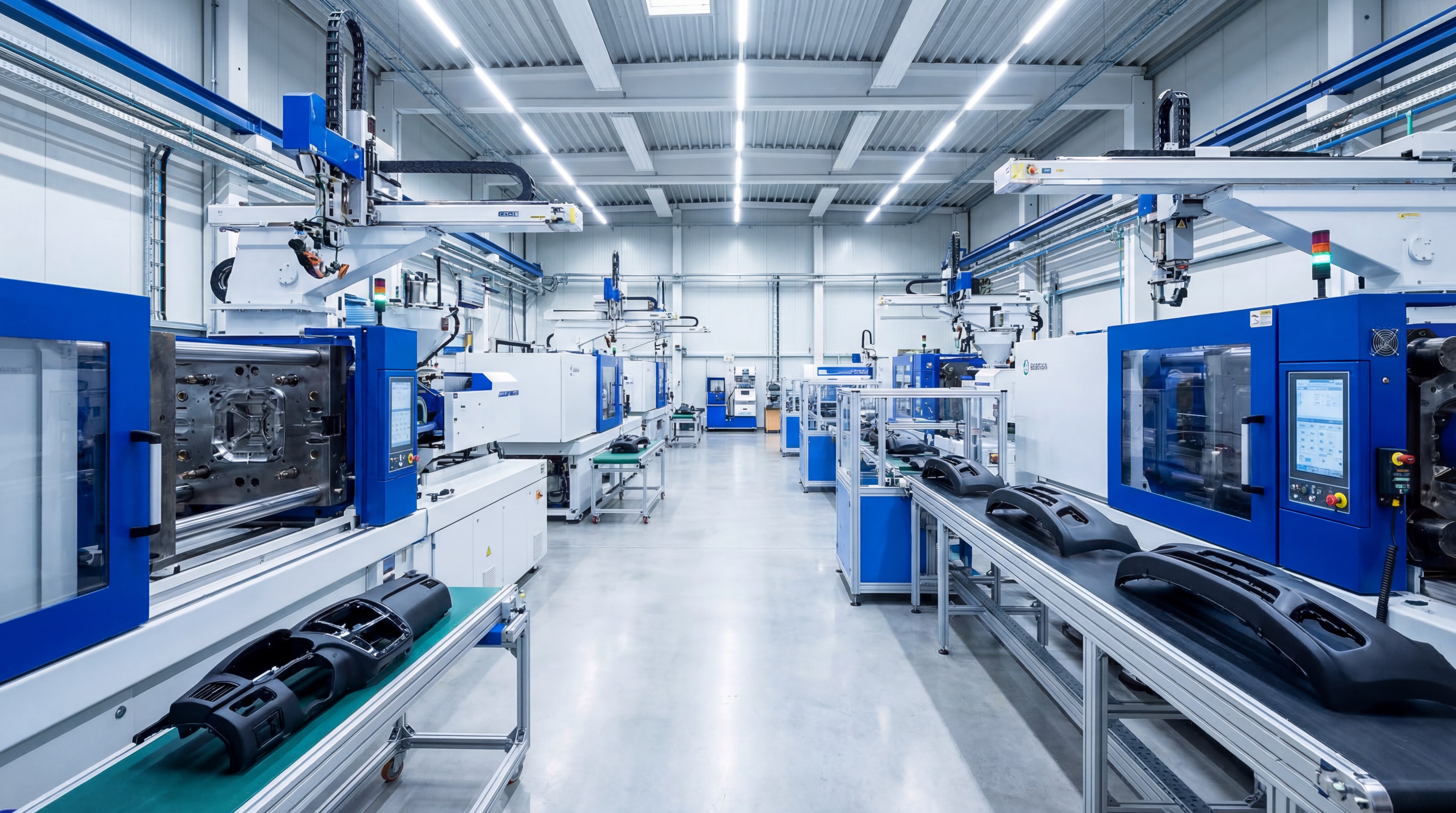
Design for Manufacturability (DFM) is the process of optimizing a part’s design to ensure it can be molded efficiently and without defects. High-quality automotive plastic components require rigorous DFM analysis to prevent issues like warping, sink marks, or structural weaknesses.
Can DFM save your production budget?
By identifying potential manufacturing hurdles before the steel mold is cut, DFM can save you thousands of dollars in re-tooling costs. It ensures that wall thicknesses are uniform and that draft angles are sufficient for easy part ejection.
Check this out:
- DFM optimizes gate placement for better material flow.
- It predicts cooling times to maximize production speed.
- Expert analysis ensures the part meets all safety certifications.
The bottom line: A professional DFM report is the bridge between a beautiful 3D concept and a perfect physical product.
Key Takeaway: Proper engineering review through DFM is the single most important step in high-precision automotive mold making.
| DFM Check | Purpose | Result | |
|---|---|---|---|
| Wall Thickness | Ensure uniform cooling | No warping | |
| Gate Location | Control resin flow | No cosmetic defects | |
| Draft Angles | Allow part release | Faster cycle times |
Analysis: Investing in DFM analysis upfront significantly reduces the “Time to Market” for complex automotive projects.
How to Select a Partner for Automotive Plastic Components?
Selecting the right partner requires finding an IATF 16949-certified manufacturer that understands the rigorous quality standards of the car industry. When you work with contact us experts, you gain access to decades of experience in creating safety-critical automotive plastic components.
What should you look for in a supplier?
A top-tier partner should offer a full suite of services, from initial DFM analysis to high-volume 2K injection molding. They must also have a proven track record of delivering parts to major automotive brands like VW, BMW, or Ford.
You need to know:
- IATF 16949 certification is non-negotiable for automotive quality.
- Look for manufacturers with advanced CMM inspection equipment.
- Global logistics support is essential for on-time delivery.
Here is the deal: A specialized partner acts as an extension of your own engineering team, solving problems before they reach the assembly line.
Key Takeaway: Choosing a certified, experienced partner is the only way to guarantee that your plastic parts meet global safety and performance standards.
| Provider Trait | Value to You | |
|---|---|---|
| IATF Certification | Consistent quality | |
| 2K Molding Capability | Integrated parts | |
| Professional English | Seamless communication |
Analysis: The complexity of the automotive supply chain means that technical expertise and certification are your best forms of risk management.
Conclusion
The shift from heavy metal to advanced automotive plastic components is no longer just a trend; it is the standard for the next generation of efficient vehicles. From the impact-resistant bumpers made of ABS to the heat-defying intake manifolds made of Nylon, polymers are what make modern driving safer and more sustainable. At CN Precision, we combine 15+ years of expertise with IATF 16949 certification to solve your toughest manufacturing challenges. Our vision is to be the global bridge that turns your complex designs into high-quality reality. If you are ready to optimize your production and reduce costs, please contact us today to start your next project with a free DFM review.
Frequently Asked Questions (FAQ)
Can I use recycled plastics for safety-critical car parts?
While recycled plastics are great for interior trims, safety-critical parts usually require virgin resins to ensure the precise mechanical properties mandated by IATF standards.
What’s the best plastic for under-the-hood heat resistance?
Nylon 6/6 (Polyamide) is widely considered the best choice due to its high melting point and resistance to engine fluids.
How do I choose between ABS and Polypropylene?
Choose ABS if you need high impact strength and a glossy finish; choose Polypropylene if you need chemical resistance and the lowest possible weight at a lower cost.
What is the lead time for a custom automotive injection mold?
For standard automotive parts, T1 samples are typically ready in 25-30 days, while complex 2K or multi-cavity molds may take up to 40 days.
Can I get a DFM report before I commit to tooling?
Yes, professional manufacturers like CN Precision provide a comprehensive DFM analysis within 48 hours of receiving your CAD files to ensure your design is production-ready.