Selecting the wrong material for your engineering project can lead to catastrophic part failure and wasted production budgets. When you are caught in the debate of nylon vs abs , the stakes are high because one material excels in friction while the other dominates in impact. This guide provides the clarity you need to make an informed decision for your next manufacturing cycle.
What are the primary differences between nylon and ABS?
Nylon provides superior strength and friction resistance, while ABS offers high impact resistance and rigidity. Understanding the nuances of nylon vs abs is essential for determining which thermoplastic will withstand the specific stresses of your application.
Mechanical Strength
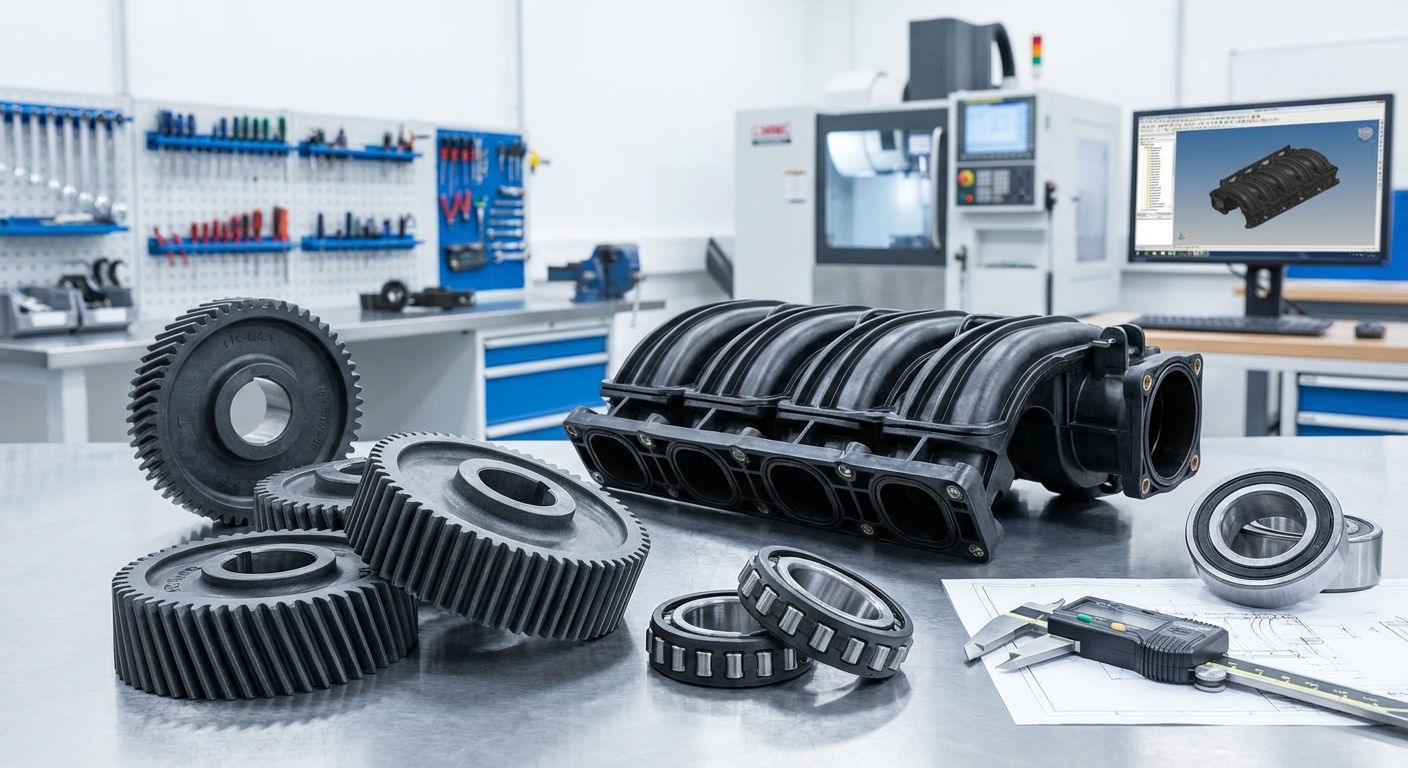
Nylon is an engineering plastic known for its high tensile strength and ability to endure significant weight without breaking. It is often the go-to choice for gears and bearings that require long-term durability.
Here is why:
- High load-bearing capacity
- Exceptional fatigue resistance
- Natural self-lubricating properties
But there is more. Nylon’s molecular structure allows it to bend slightly under pressure rather than snapping, which is a critical distinction in mechanical design.
Impact Resistance
ABS is characterized by its toughness and its ability to absorb energy during sudden impacts without shattering. This makes it ideal for protective housings and consumer electronics that might be dropped or bumped.
Consider this:
- High rigidity and stiffness
- Excellent energy absorption
- Dimensional stability under load
Key Takeaway: Nylon is for moving parts; ABS is for structural housings.
| Property | Nylon | ABS | |
|---|---|---|---|
| Tensile Strength | High | Moderate | |
| Flexibility | Flexible | Rigid | |
| Impact Resistance | Moderate | High |
Nylon prioritizes endurance and movement while ABS focuses on structural integrity.
Which material offers better heat resistance?
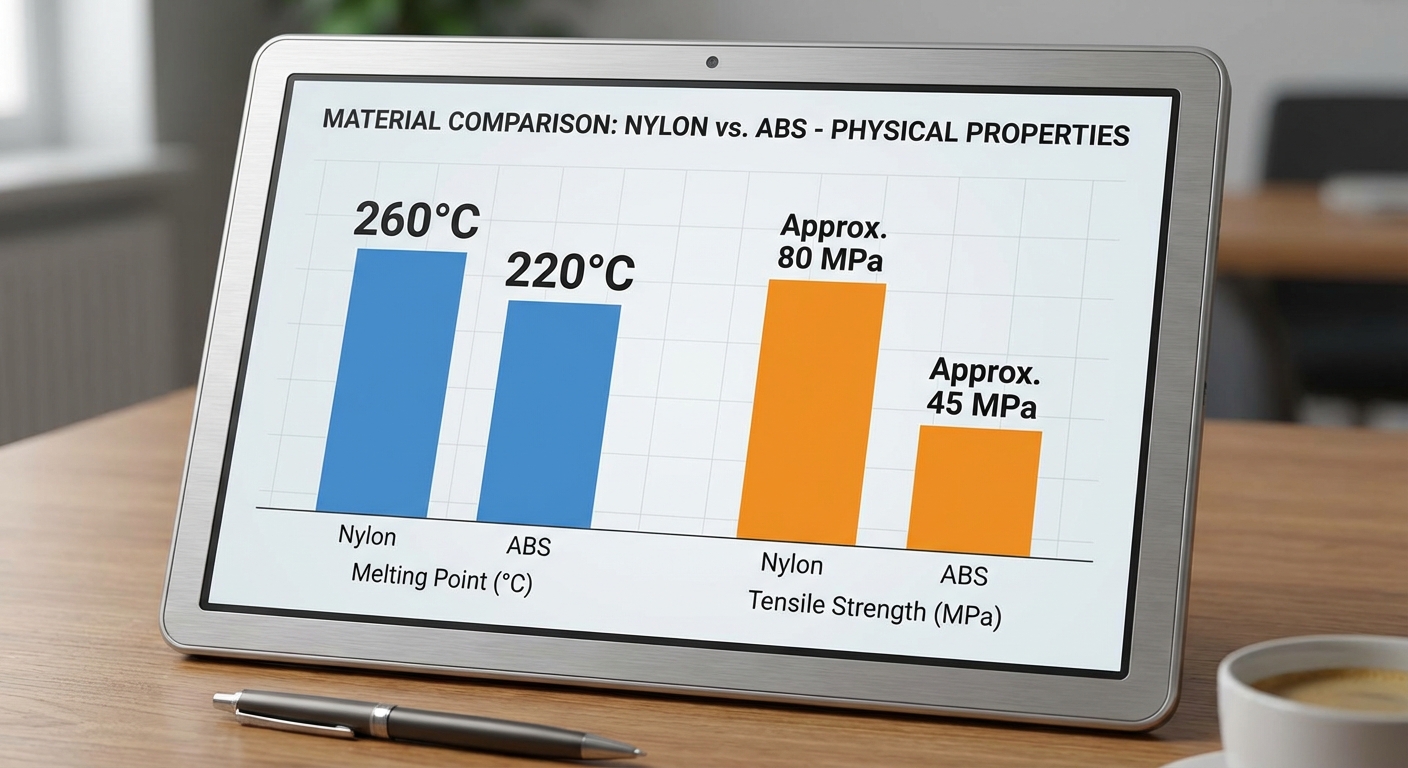
Nylon generally possesses a higher melting point and better thermal stability than ABS in high-temperature environments. When comparing nylon vs abs , nylon is the superior choice for components located near engines or heat-generating machinery.
Thermal Stability
Nylon can withstand continuous operating temperatures much higher than those of standard ABS grades. This property prevents the material from softening or losing its shape when exposed to heat over long periods.
Take a look:
- Higher melting point (approx. 260°C)
- Maintains strength at elevated temps
- Lower thermal expansion rate
But there is more. Some reinforced nylon grades can even replace metal in high-heat industrial applications.
Heat Deflection
ABS has a lower heat deflection temperature, meaning it will start to deform under load at around 90°C to 100°C. While suitable for many consumer goods, it often fails in intensive industrial heat settings.
Why does it matter?
- Easier to mold at lower temps
- Faster cooling times in production
- Susceptible to warping in high heat
Key Takeaway: Nylon survives extreme heat that would melt or deform ABS.
| Thermal Metric | Nylon | ABS | |
|---|---|---|---|
| Melting Point | ~220°C – 265°C | ~210°C – 240°C | |
| Max Service Temp | Up to 120°C | Up to 80°C | |
| Heat Deflection | Excellent | Moderate |
Thermal performance remains a deciding factor for automotive and industrial engineering teams.
How do nylon and ABS compare in chemical resistance?
Nylon is highly resistant to oils, fuels, and many organic solvents, whereas ABS is easily damaged by these substances. The choice between nylon vs abs often comes down to the specific chemicals the part will encounter during its lifespan.
Chemical Tolerance
Nylon’s semi-crystalline structure provides a natural barrier against hydrocarbons and common industrial fluids. This makes it the standard for fuel lines and oil-resistant gaskets.
The result?
- Resists gasoline and diesel
- Unaffected by motor oils
- Stands up to cleaning solvents
It gets better. Even when exposed to harsh industrial greases, nylon maintains its mechanical integrity without swelling or degrading.
Sensitivity to Acids
ABS is particularly vulnerable to esters, ketones, and strong acids, which can cause the plastic to dissolve or become brittle. It is best suited for environments where chemical exposure is limited to water and mild detergents.
Think about it:
- Soluble in acetone
- Degrades in heavy oils
- Safe for household cleaners
Key Takeaway: Nylon is chemically robust; ABS is chemically sensitive.
| Chemical Type | Nylon Resistance | ABS Resistance | |
|---|---|---|---|
| Oils & Fuels | Excellent | Poor | |
| Strong Acids | Poor | Poor | |
| Alcohols | Good | Moderate |
Chemical compatibility is non-negotiable for parts used in our case studies involving industrial machinery.
Is nylon or ABS easier to use in 3D printing?
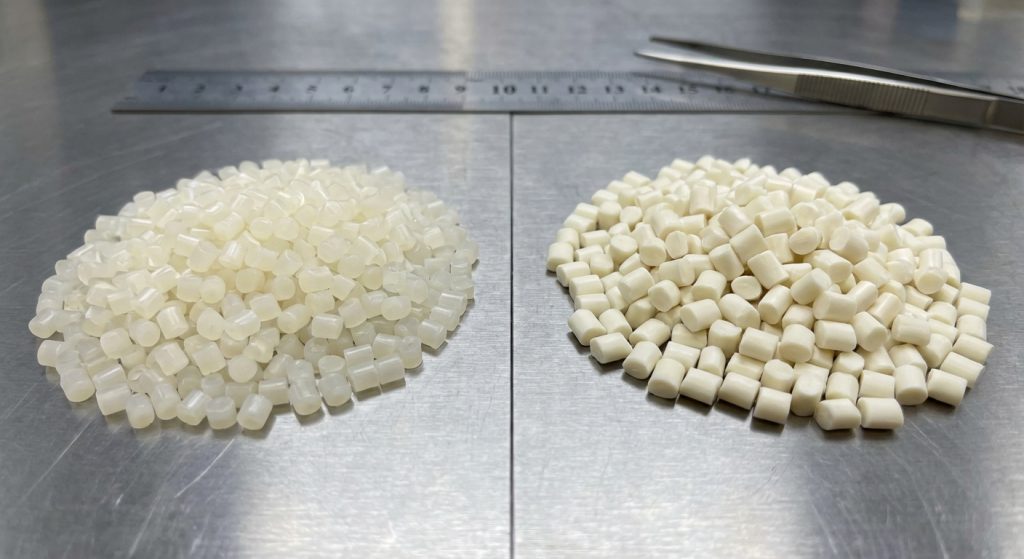
ABS is generally considered easier to 3D print because it has better bed adhesion and suffers from less moisture-related issues during the process. When analyzing nylon vs abs for rapid prototyping, beginners often find ABS more forgiving.
Printability and Warping
ABS requires a heated bed and an enclosure to prevent the edges from lifting or cracking during the cooling phase. Once these conditions are met, it prints with high reliability and consistent detail.
Here is why:
- Good interlayer bonding
- Predictable cooling behavior
- Wide range of color options
But there is more. ABS emits strong fumes during printing, requiring a well-ventilated space or filtration system.
Advanced Nylon Printing
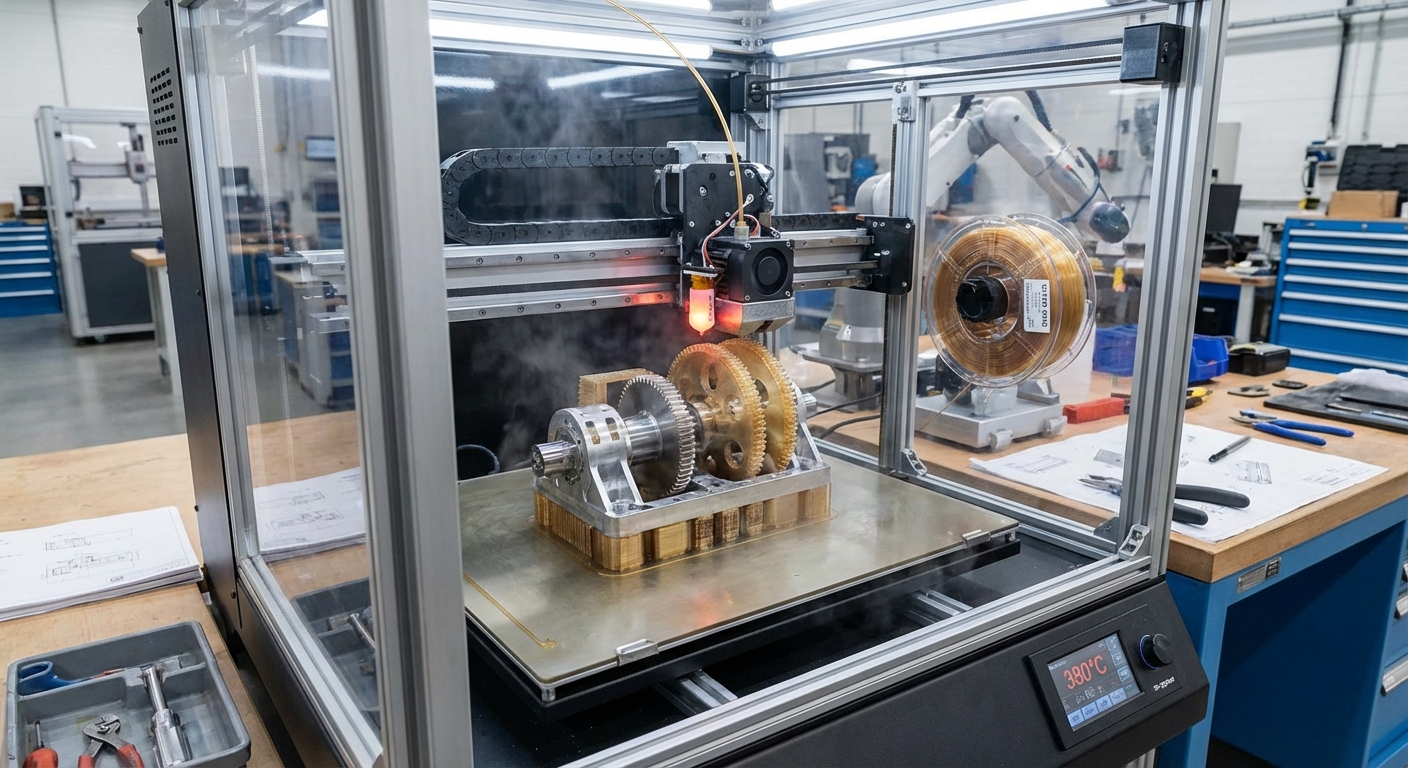
Nylon is notoriously difficult to print because it is hygroscopic and warps significantly without precise temperature control. However, the resulting parts are much stronger and more functional than those made from ABS.
What does this mean?
- Requires filament drying
- Needs high nozzle temperatures
- Higher risk of print failure
Key Takeaway: ABS is for rapid prototyping; Nylon is for functional parts.
| Printing Factor | Nylon | ABS | |
|---|---|---|---|
| Ease of Use | Difficult | Moderate | |
| Warping Risk | Very High | High | |
| Fume Emission | Low | Significant |
ABS wins for speed and ease, while nylon wins for the strength of the final prototype.
Which plastic is more durable for outdoor applications?
Neither material is naturally perfect for the outdoors, but ABS resists moisture better while nylon handles mechanical wear more effectively. In the nylon vs abs debate for outdoor gear, UV protection and humidity levels are the primary concerns.
UV Degradation
ABS will turn yellow and become brittle if exposed to direct sunlight for extended periods without UV stabilizers. This degradation compromises the structural integrity of the part over time.
Consider this:
- Color fades quickly in sun
- Surface becomes chalky
- Impact resistance drops
It gets better. You can add UV-resistant coatings or additives to ABS to significantly extend its outdoor lifespan.
Moisture and Wear
Nylon is highly durable against physical abrasion but absorbs moisture from the air, which can cause the part to expand. This dimensional change can be problematic for precision outdoor components.
The best part?
- High resistance to wind-blown sand
- Excellent tough-wear durability
- Can be stabilized for outdoor use
Key Takeaway: Both need additives for long-term outdoor success.
| Outdoor Factor | Nylon | ABS | |
|---|---|---|---|
| UV Resistance | Moderate | Low | |
| Humidity Resistance | Poor | High | |
| Abrasion Resistance | Excellent | Moderate |
Environmental factors determine whether your part will last a season or a decade.
How does moisture absorption affect nylon vs ABS?
Nylon is highly hygroscopic and absorbs water from its environment, whereas ABS is relatively moisture-stable. In the context of nylon vs abs , moisture can actually increase nylon’s flexibility but reduce its overall strength.
Hygroscopic Properties
When nylon absorbs water, it undergoes a plasticizing effect that makes the material tougher and less prone to snapping. However, this comes at the cost of dimensional accuracy as the part swells.
Why does it matter?
- Changes in part dimensions
- Reduced stiffness when wet
- Increased impact toughness
But there is more. Designers must calculate “wet” vs “dry” dimensions when using nylon in humid climates.
Dimensional Stability
ABS absorbs very little water, meaning its size and shape remain consistent regardless of the humidity levels. This makes it the preferred choice for interlocking parts or precision enclosures.
Take a look:
- Consistent fit and finish
- No need for pre-drying parts
- Reliable in high-humidity labs
Key Takeaway: Choose ABS for precision; choose Nylon for moisture-induced toughness.
| Moisture Impact | Nylon | ABS | |
|---|---|---|---|
| Absorption Rate | High (up to 8%) | Low (< 1%) | |
| Dimension Change | Significant | Negligible | |
| Property Change | Becomes more flexible | Minimal change |
Moisture management is a critical step in our kl-injection-molds design process.
What are the cost differences between nylon and ABS?
ABS is generally more cost-effective for high-volume production than nylon due to lower material and processing costs. Evaluating nylon vs abs from a financial perspective reveals that ABS is the budget-friendly workhorse of the plastic world.
Raw Material Pricing
ABS resins are produced in massive quantities for consumer goods, driving the price down significantly. Nylon is a more specialized engineering resin with higher manufacturing costs and smaller production scales.
Consider this:
- Lower cost per kilogram
- Widely available suppliers
- Consistent market pricing
But there is more. The specialized nature of different nylon grades can push the price even higher for niche applications.
Production Efficiency
Because ABS has a lower melting point and cools quickly, it allows for shorter cycle times in injection molding. This efficiency translates to lower labor and energy costs per part.
Here is why:
- Faster cooling in the mold
- Lower energy consumption
- Less wear on molding equipment
Key Takeaway: ABS is the most economical choice for mass-produced goods.
| Cost Category | Nylon | ABS | |
|---|---|---|---|
| Material Cost | High | Low | |
| Processing Cost | Moderate | Low | |
| Total Part Cost | Premium | Budget-friendly |
For many consumer products, the lower price point of ABS makes it the only viable option.
Which material provides a better surface finish?
ABS provides a superior, glossy surface finish that is much easier to paint or treat compared to nylon. When aesthetic appeal is a priority in the nylon vs abs decision, ABS almost always wins.
Aesthetics and Texture
ABS produces parts with a naturally smooth and vibrant surface that holds color exceptionally well. It is the material used for most high-end plastic toys and decorative electronics.
What does this mean?
- High-gloss finish possible
- Sharp, crisp details
- Excellent color depth
It gets better. ABS can be easily sanded and polished to a mirror-like shine with minimal effort.
Post-Processing Flexibility
Nylon is difficult to sand and does not take paint as easily as ABS due to its low surface energy and oily nature. Most nylon parts are left in their natural state or dyed rather than painted.
Think about it:
- Can be vapor smoothed with acetone
- Easy to glue or bond
- Accepts many coating types
Key Takeaway: ABS is for looks; Nylon is for function.
| Finish Property | Nylon | ABS | |
|---|---|---|---|
| Surface Gloss | Low/Matte | High/Glossy | |
| Paint Adhesion | Poor | Excellent | |
| Post-Processing | Difficult | Easy |
Designers focusing on user experience and visual brand identity should lean toward ABS.
In which industries is nylon preferred over ABS?
Nylon is the preferred material for the automotive, aerospace, and industrial machinery sectors where mechanical performance is paramount. Comparing nylon vs abs in these fields shows that nylon’s friction and heat properties are indispensable.
Engineering Applications
In the automotive sector, nylon is used for engine covers, manifolds, and fuel systems because it survives the harsh heat of the engine bay. Its durability ensures that safety-critical parts do not fail under vibration.
The result?
- Longer vehicle lifespan
- Weight reduction vs metal
- High reliability in motion
But there is more. Nylon’s self-lubricating properties make it ideal for internal gears in printers and medical devices.
Heavy-Duty Use Cases
While ABS is used for car dashboards and trim, nylon handles the heavy-duty tasks like zip ties, bushings, and high-pressure valves. It is the backbone of functional industrial components.
Why does it matter?
- High resistance to repetitive wear
- Low friction coefficient
- Superior fatigue strength
Key Takeaway: Nylon drives the machine; ABS covers the machine.
| Industry | Primary Use (Nylon) | Primary Use (ABS) | |
|---|---|---|---|
| Automotive | Engine components | Interior trim/dash | |
| Electronics | Connectors/gears | External housings | |
| Industrial | Bushings/Valves | Protective covers |
Our team at the about-us page highlights our expertise in these high-performance sectors.
How do you choose between nylon and ABS for your project?
Choose nylon for high-friction, high-heat, or high-strength applications, and choose ABS for rigid, impact-resistant, and cost-effective housings. The choice between nylon vs abs ultimately depends on the environment and the mechanical stress your part will face.
Decision Factors
If your part needs to slide against another part without wearing down, nylon is your only choice. However, if you need a stiff box that can survive being dropped on concrete, ABS is the better fit.
Consider this:
- Heat requirements
- Chemical exposure
- Budget constraints
It gets better. You can sometimes blend these materials or use glass-filled versions to get the best of both worlds.
Final Recommendation
Start by defining the “failure point” of your design. If the part fails due to heat or wear, use nylon; if it fails due to cost or aesthetic requirements, use ABS.
The best part?
- Expert consultation saves money
- Prototype in both to test
- Scale production with confidence
Key Takeaway: Functionality favors Nylon; Economy and Form favor ABS.
| Selection Criteria | Choose Nylon If… | Choose ABS If… | |
|---|---|---|---|
| Environment | Hot or oily | Standard indoor | |
| Mechanical | Moving/Friction | Static/Impact | |
| Priority | Performance | Cost/Finish |
Correct material selection is the foundation of a successful manufacturing journey.
Conclusion
Understanding the fundamental differences between nylon and ABS is the first step toward creating high-quality, durable products. While nylon offers unmatched strength and thermal resistance for engineering tasks, ABS remains the king of affordability and aesthetic versatility for consumer applications.
Our industry vision is to empower designers with the right material knowledge to innovate without limits. If you are ready to start your next project with precision and expertise, contact us today to get a quote and professional material guidance.
FAQ
Can I use ABS for outdoor furniture?Yes, but you must ensure the ABS resin contains UV stabilizers or is painted to prevent it from becoming brittle and yellowing in the sun.
What is the best plastic for 3D printed gears?Nylon is the best choice for gears because its self-lubricating properties and high wear resistance prevent the teeth from stripping under load.
Can I glue nylon parts together?Nylon is very difficult to glue due to its chemical resistance; it is better to use mechanical fasteners or specialized industrial adhesives.
What is the most affordable plastic for mass production?ABS is typically more affordable than nylon, making it the preferred choice for high-volume consumer goods like toys and electronics.
Is nylon stronger than ABS in cold temperatures?Nylon tends to maintain its toughness better in the cold, whereas ABS can become increasingly brittle as temperatures drop below freezing.