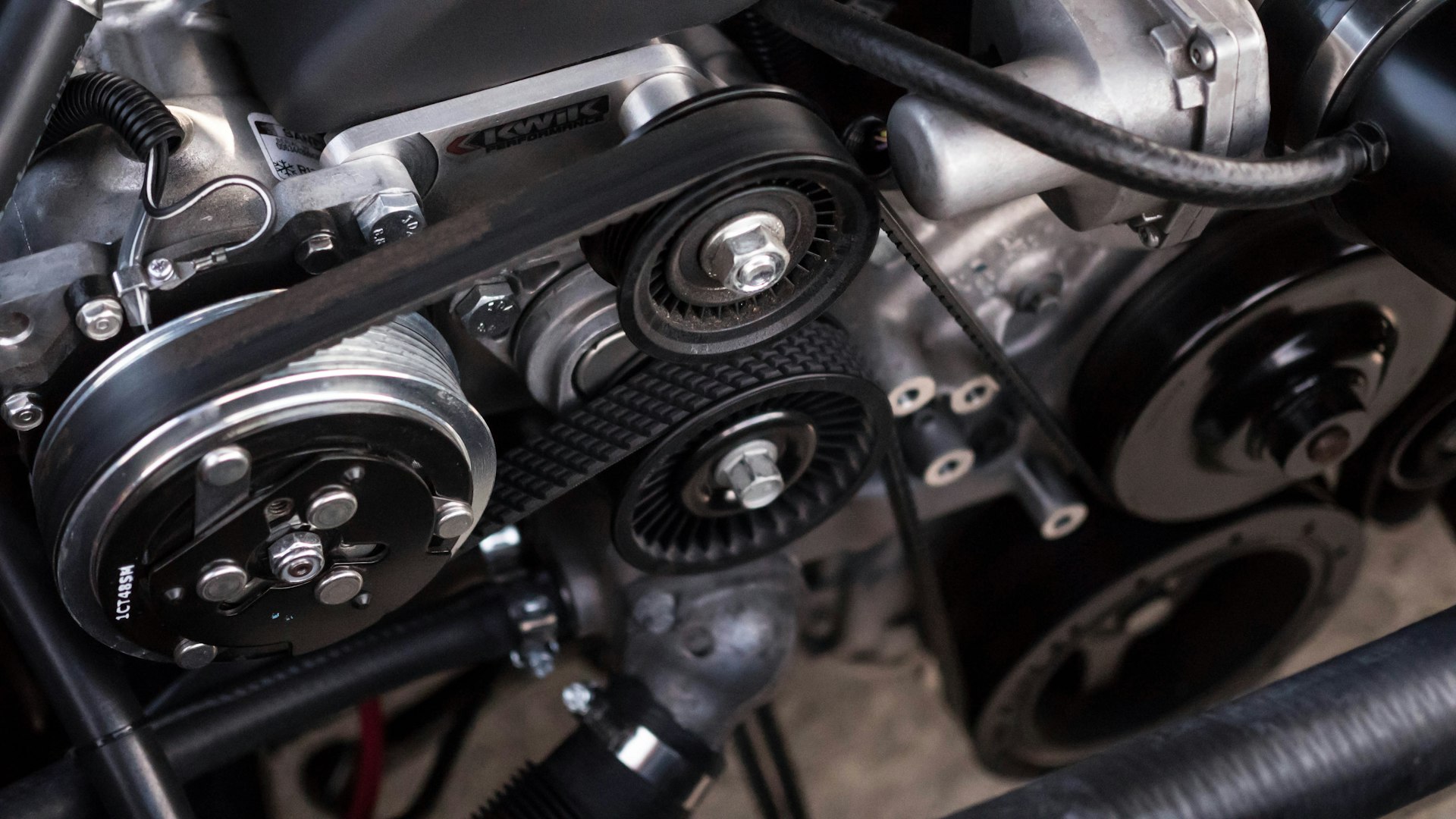
2K / Two-Shot Injection Molds for Automotive Applications
One mold. Two materials. Proven solutions for demanding automotive components.
Eliminate assembly steps, enhance structural integrity, and ensure superior appearance consistency with dual-material single-shot molding. Our 2K injection solutions have been validated in mass production across multiple automotive projects.
Discuss Your Project with Our Engineering TeamExplore 2K Injection Molding Solutions
What is 2K / Two-Shot Injection Molding
Why Automotive Projects Choose 2K
Typical Automotive Applications
Engineering Challenges
Our Technical Solutions
Proven Automotive Cases
Quality & Validation
FAQ
Contact Us
What is 2K / Two-Shot Injection Molding?
Advanced multi-material molding technology that combines different materials or colors in a single molding cycle, delivering superior bonding and performance for complex automotive components.
2K / Two-Shot Injection Molding is an advanced manufacturing process that combines two different materials or colors in a single mold through two sequential injection phases within one molding cycle. This technology enables the creation of complex, high-performance automotive components with integrated functionality.
- Hard-Soft Material Integration: Seamlessly bond rigid structural plastics with soft-touch TPE/TPU surfaces for enhanced ergonomics and premium feel
- Functional-Aesthetic Unification: Combine functional elements with aesthetic surfaces in one integrated component, eliminating secondary operations
- Multi-Color & Sealing Integration: Achieve precise color transitions, integrated sealing structures, and vibration dampening in a single production step
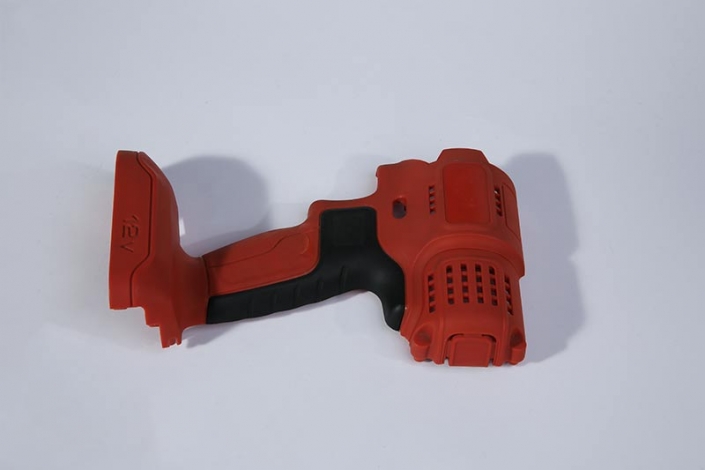
Superior to Traditional Assembly Methods
Compared to traditional "secondary overmolding" or "post-assembly" approaches, 2K injection molding delivers significantly enhanced structural stability, appearance consistency, and long-term reliability. The molecular bonding achieved during the molding process creates a permanent, inseparable bond that outperforms mechanical attachment or adhesive bonding methods.
Interested in learning how 2K technology can improve your automotive component design?
Request Technical ConsultationWhy Automotive Projects Choose 2K Injection Molding
In the automotive industry, components must meet rigorous appearance standards while delivering long-term stability and mass production repeatability. 2K injection molding provides strategic advantages that traditional assembly methods cannot match.
Reduced Assembly Steps
Eliminate secondary bonding, welding, or manual assembly operations that introduce variability and quality risks. One-piece molding means fewer process steps, lower labor costs, and dramatically reduced defect rates.
- No adhesive curing time or bonding failures
- Eliminate human error in assembly alignment
- Faster cycle times and increased throughput
Enhanced Interface Bond Strength
Materials bond at the molecular level during high-temperature injection, creating permanent adhesion that resists delamination and separation even under extreme automotive conditions.
- Chemical bonding superior to mechanical attachment
- Resistance to peeling under thermal cycling
- Long-term durability in harsh environments
Consistent Appearance & Functionality
Color transitions, surface textures, and sealing structures are formed in the mold stage, ensuring perfect consistency across production runs without manual intervention or adjustment.
- Precise color matching and sharp boundary lines
- Uniform soft-touch feel across all production batches
- Integrated sealing performance without gaskets
Optimized for Automation & Scale
Controlled cycle times and repeatable molding parameters make 2K technology ideal for high-volume automotive production with minimal operator intervention and consistent quality metrics.
- Predictable cycle times for production planning
- Compatible with robotic part removal systems
- Stable process windows for long production runs
Ready to reduce assembly costs and improve component reliability?
Discuss Your Automotive Project RequirementsTypical Automotive Applications
In automotive injection mold projects, 2K / Two-Shot technology is commonly applied to components that demand exceptional appearance quality, tactile performance, assembly precision, and long-term durability.
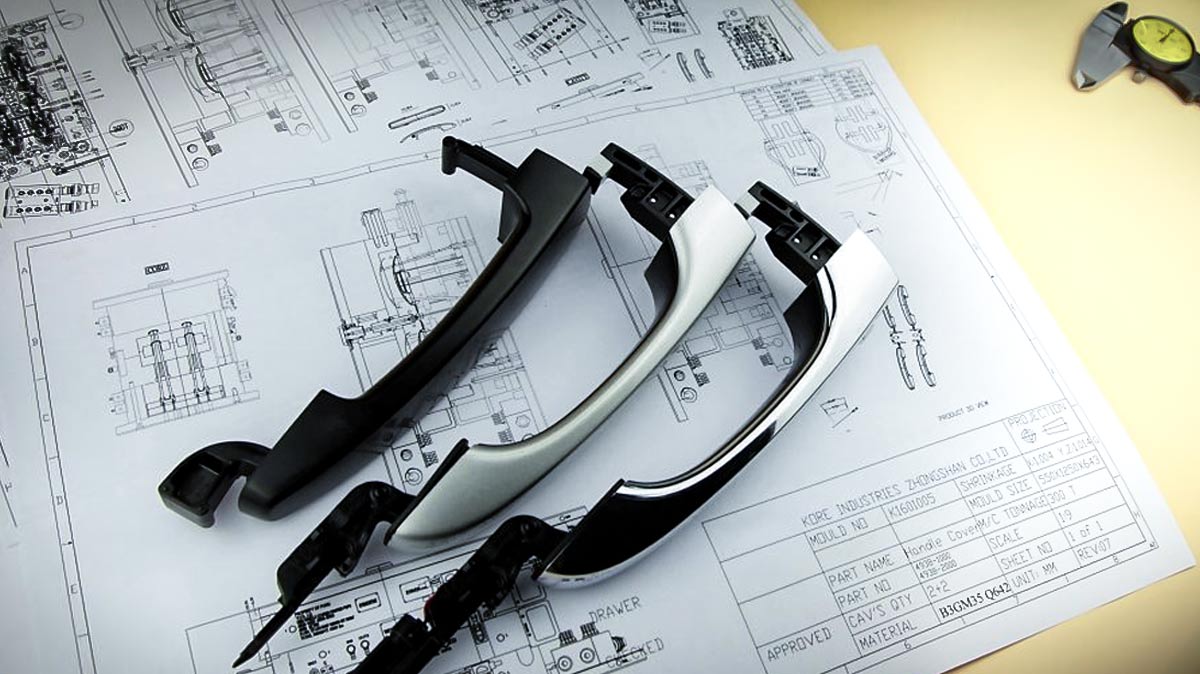 Interior
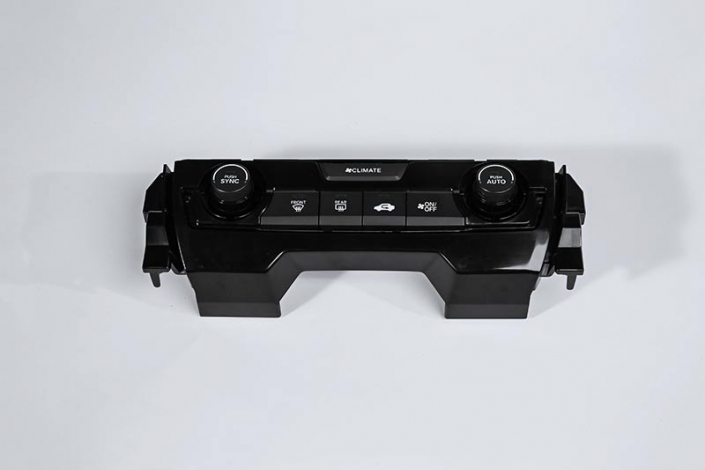
Soft-Touch Control Buttons & Switches
Combine rigid structural bases with soft-touch TPE surfaces for premium tactile feedback and enhanced user experience in cabin controls.
- Enhanced grip and comfort for frequent use
- Precise tactile response with integrated feel
- Excellent wear resistance over vehicle lifetime
 Decoration
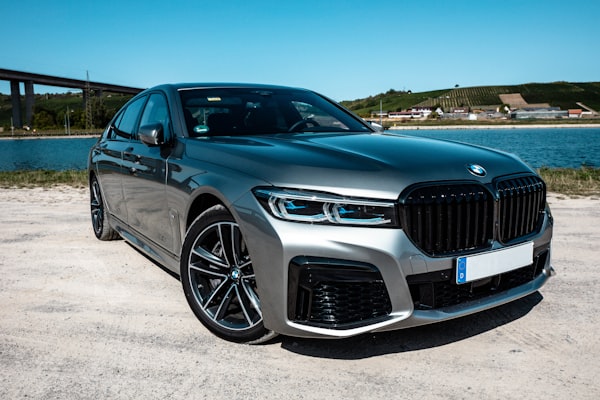
Dashboard & Center Console Trim
Create sophisticated multi-color designs with seamless transitions and integrated functional elements for modern automotive interiors.
- Sharp color boundaries without paint
- Complex geometric designs in single piece
- Consistent appearance across production batches
 Functional
Multi-Function Sealing Structures
Achieve integrated sealing, vibration dampening, and structural support in a single component without secondary gaskets or adhesives.
- Consistent seal compression across production
- Eliminate separate gasket inventory and assembly
- Long-term sealing performance without degradation
Have a specific automotive component that could benefit from 2K technology?
Send Your Technical Drawings for Engineering ReviewMaterial Selection & Design Engineering Fundamentals
In 2K injection molding projects, material compatibility and structural design directly determine project success. Strategic engineering decisions at the design phase prevent costly failures during production.
Successful 2K automotive components require careful consideration of material bonding chemistry, interface geometry, and thermal behavior. These critical factors must be thoroughly evaluated during the mold design phase, not reactively adjusted after trial molding failures.
Material Compatibility Analysis
Achieve permanent molecular bonding between dissimilar materials through strategic material pairing and process optimization.
- Molecular bonding capability between rigid engineering plastics and soft TPE/TPV materials
- Surface energy matching and chemical adhesion promotion testing
- Long-term bond strength validation under automotive thermal cycling
Interface Structure Design
Engineer optimal bonding geometries that maximize mechanical interlocking and prevent delamination under stress.
- Mechanical interlocking features and undercut geometries for enhanced adhesion
- Optimal flow channel direction relative to bond interface orientation
- Strategic bonding zone thickness design to minimize stress concentration
Thermal Shrinkage & Stress Control
Manage differential shrinkage between materials to prevent warpage, delamination, and dimensional instability in finished parts.
- Differential shrinkage rate analysis between paired materials
- Residual stress distribution modeling and mitigation strategies
- Long-term dimensional stability impact on assembly tolerance stackup
Critical Engineering Principle
These engineering considerations require comprehensive evaluation during the mold design phase, not reactive troubleshooting after tooling completion. Proactive design validation reduces project risk, shortens development timelines, and prevents costly mold modifications.
Need expert material selection guidance for your 2K automotive project?
Request Material Compatibility Assessment2K Mold Structure & Molding Process Overview
2K / Two-Shot molds feature significantly more complex mechanisms than single-material molds. Understanding these structural solutions is essential for achieving consistent mass production quality.
-
Rotating Core Structure
Core rotates 180° between first and second shot, presenting different cavity surfaces for sequential material injection while maintaining precise part registration.
-
Moving Platen / Turntable System
Platen or rotary table transfers the first-shot part between injection stations, enabling separate barrel temperature and pressure control for each material.
-
Multi-Injection Unit Coordination
Synchronized control of multiple injection barrels ensures optimal processing temperature, pressure profile, and shot size for each material type.
Critical Focus Areas for Automotive Production
Injection Sequence
Optimal timing and material flow direction for complete cavity filling
Core Positioning
Micron-level precision for consistent material interface alignment
Process Stability
Repeatable cycle performance across extended production runs
Production Impact: These design decisions directly influence production yield rates and tool longevity. Strategic mold engineering reduces maintenance downtime and ensures sustainable high-volume manufacturing capability.
Ready to explore 2K mold design options for your automotive components?
Schedule Mold Structure ConsultationCommon Technical Challenges in Automotive 2K Projects
Real-world 2K injection molding projects frequently encounter specific technical obstacles. Understanding these challenges upfront enables proactive mitigation strategies.
Poor Material Bonding
Insufficient adhesion between materials leads to delamination or peeling, especially under thermal cycling, physical stress, or long-term environmental exposure typical in automotive applications.
Risk: Product Failures & ReturnsPart Warpage & Dimensional Instability
Differential shrinkage between materials causes warping and distortion, resulting in assembly fitment issues, tolerance stack-up failures, and increased scrap rates during production.
Risk: Assembly RejectionAppearance Defects
Visible surface defects including color inconsistency, flow marks, weld lines, or material overlap issues compromise the premium appearance requirements of automotive interior components.
Risk: Brand Quality PerceptionNarrow Process Window
Limited acceptable parameter ranges for temperature, pressure, and timing make process control difficult, resulting in unstable production, high variation between batches, and quality inconsistency.
Risk: Production InstabilityComplex Mold Maintenance
Sophisticated mold mechanisms require specialized maintenance expertise and longer downtime for repairs, increasing total cost of ownership and reducing production equipment availability.
Risk: Higher Operating CostsLate-Stage Discovery Issues
Material compatibility problems or design limitations discovered after tooling completion force expensive mold modifications, project delays, and potential complete redesign requirements.
Risk: Budget & Timeline OverrunsCritical Risk Factor
Problems that remain unsolved during the development phase amplify exponentially during mass production. Systematic upfront engineering validation prevents these issues from becoming costly production crises that threaten project viability and customer relationships.
Facing technical challenges in your current 2K project?
Get Expert Problem-Solving SupportOur Engineering Solutions for Automotive 2K Projects
We address common 2K injection molding challenges through systematic engineering intervention at every project phase, from initial concept to stable mass production.
DFM & Manufacturability Assessment
Comprehensive design for manufacturing review conducted simultaneously with project kickoff, identifying potential issues before tooling investment.
- Part geometry optimization for moldability and material flow
- Interface design validation for structural integrity
- Early risk identification saves costly mold modifications
Material & Interface Bonding Validation
Physical testing of material combinations through sample trials and small-batch validation before full production commitment.
- Bond strength testing under automotive thermal cycling conditions
- Material compatibility verification through destructive testing
- Early detection of delamination risks prevents field failures
Mold Structure & Runner Optimization
Strategic mold design ensures stable transition between first and second shot injection with optimal material distribution.
- Flow simulation to predict filling patterns and optimize gates
- Core rotation mechanism design for precise shot-to-shot alignment
- Cooling channel optimization for warpage control
Process Parameter Window Development
Establish robust manufacturing parameters with adequate tolerance ranges for stable long-term production capability.
- DOE studies to identify optimal temperature, pressure, and timing
- Process capability analysis (Cpk) validation for automotive standards
- Wide process windows enable stable production with minimal adjustment
Our Engineering Philosophy
Our objective extends beyond simply producing parts—we focus on achieving stable, repeatable long-term production. Success means sustainable manufacturing capability that delivers consistent quality across months and years of production.
Need systematic engineering support for your 2K automotive project?
Start Technical Discussion with Our TeamAutomation & Mass Production Stability Assurance
Automotive projects demand sustained, stable, high-volume production capability. Our automation infrastructure and quality systems ensure consistent performance across extended production campaigns.
Automotive production typically means long-term, stable batch manufacturing. Our focus during the mass production phase ensures quality consistency, process repeatability, and production efficiency remain stable even as volume scales.
Two-Shot Machine Positioning Precision
Advanced servo-controlled rotation systems ensure micron-level repeatability between first and second shot, maintaining perfect material interface alignment across millions of cycles.
- Servo-driven core rotation with ±0.01mm position accuracy
- Real-time position feedback and automatic correction
- Long-term repeatability verified through statistical process control
Automated Part Handling & Cycle Consistency
Robotic part removal systems eliminate manual handling variability, ensuring consistent cycle times and preventing human-induced quality issues or production delays.
- Six-axis robotic arms for gentle, precise part extraction
- Integrated vision systems for part presence and orientation verification
- Automatic defect detection and segregation during handling
Real-Time Process Monitoring
Comprehensive molding parameter monitoring and automatic adjustment systems maintain process stability and enable early detection of quality drift before defects occur.
- Continuous monitoring of injection pressure, temperature, and timing
- Automated alerts for parameter deviation outside control limits
- Data logging and traceability for quality audits and root cause analysis
Batch-to-Batch Consistency Management
Rigorous quality control protocols and statistical analysis ensure every production batch meets identical specifications regardless of production timing or environmental conditions.
- First-article inspection protocol for every production run
- Periodic sampling and dimensional verification throughout production
- SPC charting to track long-term process trends and prevent drift
Comprehensive Quality Assurance Measures
Process Documentation
Complete parameter recording and change tracking
Visual Inspection
Appearance standards and defect classification systems
Dimensional Verification
CMM measurement and tolerance compliance reporting
Bond Strength Testing
Periodic destructive testing and adhesion validation
Ready to scale your 2K automotive components to mass production?
Discuss Production Capacity and Quality SystemsProven Automotive 2K Project Cases
Real-world examples demonstrating how our systematic engineering approach solves complex 2K challenges and delivers stable mass production results for automotive components.
Case Study 01
Automotive Interior Soft-Touch Button Assembly
Challenge
Premium appearance requirements with small bonding interface area between rigid PC substrate and soft TPE surface. Customer experienced delamination failures in previous supplier's production, requiring 100% reliability for long-term use.
Solution
Optimized interface geometry with mechanical interlocking features. Conducted extensive material compatibility testing to select TPE grade with superior adhesion to PC. Refined injection sequence and temperature profile to maximize molecular bonding.
Result
Achieved stable yield rate exceeding 98% with zero delamination failures across 18 months of production. Successfully met long-term durability requirements with consistent quality across 2.5 million parts produced.
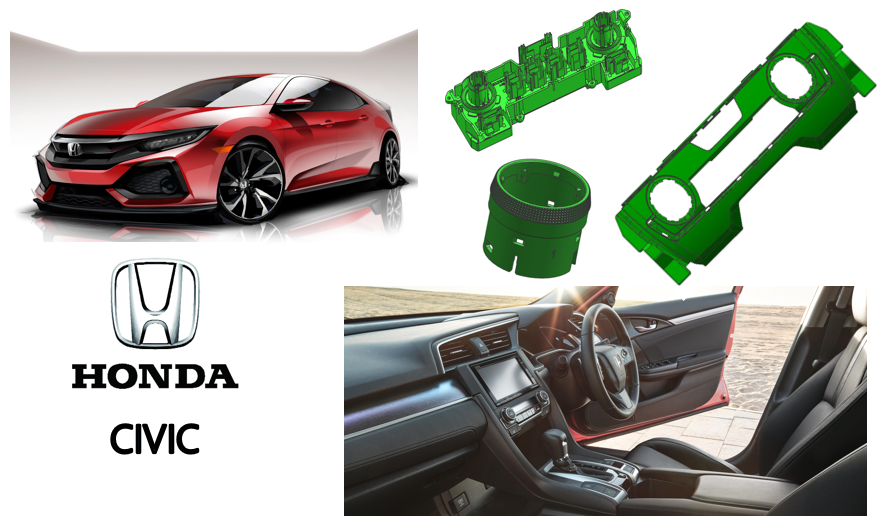 Case Study 02
Dual-Color Control Panel Structural Component
Challenge
Complex geometry with tight assembly tolerances demanded consistent color boundaries and zero color bleeding. Previous trials showed significant color inconsistency and warpage that prevented proper fitment in vehicle interior assembly.
Solution
Simultaneous optimization of mold runner system and material processing parameters. Used flow simulation to predict and eliminate warpage. Implemented strict color management protocols and material handling procedures to prevent cross-contamination.
Result
Dramatically improved appearance consistency with sharp, uniform color transitions. Reduced assembly rejection rate from 12% to under 1%. Warpage eliminated through optimized cooling, achieving consistent dimensional stability within ±0.05mm tolerance.
Have a challenging automotive 2K project that needs expert problem-solving?
Share Your Project Requirements for Technical Review2K Injection Molding vs Traditional Assembly Methods
A comprehensive comparison demonstrating why 2K injection molding delivers superior performance, consistency, and cost-effectiveness for demanding automotive applications.
| Comparison Factor | 2K Injection Molding | Traditional Assembly / Overmolding |
|---|---|---|
| Process Steps | Single integrated process | Multiple separate operations |
| Structural Stability | Molecular bonding, permanent adhesion | Vulnerable to manual errors and variations |
| Appearance Consistency | Perfect consistency across all units | Difficult to maintain uniformity |
| Mass Production Suitability | Fully automated, highly scalable | Labor-dependent, limited scalability |
| Long-Term Reliability | Superior durability, minimal field failures | Higher risk of separation and degradation |
| Initial Investment | Higher tooling cost, strategic investment | Lower initial cost, higher long-term expenses |
| Per-Unit Manufacturing Cost | Lower at scale, more predictable | Higher labor and assembly costs |
| Quality Control Complexity | Streamlined inspection process | Multiple checkpoints, higher defect risk |
Strategic Value for Long-Term Production
While 2K injection molding requires higher initial tooling investment, it delivers superior total cost of ownership through reduced labor, eliminated assembly errors, consistent quality, and minimized warranty claims. For automotive projects with multi-year production lifecycles, 2K technology provides compelling return on investment.
Want to evaluate whether 2K technology is right for your automotive project?
Request Cost-Benefit Analysis for Your ComponentQuality Control & Validation System
Comprehensive quality assurance protocols ensure every 2K automotive component meets stringent performance specifications with full traceability throughout the production lifecycle.
Interface Bond Strength Validation
Rigorous mechanical testing protocols verify permanent material adhesion under automotive service conditions including thermal cycling, mechanical stress, and environmental exposure.
- Tensile pull testing to quantify interfacial bond strength
- Peel testing at various angles and speeds
- Thermal cycling (-40°C to +85°C) endurance testing
- Destructive failure analysis to assess bond quality
Dimensional Stability Verification
Precision measurement systems ensure consistent dimensional accuracy critical for assembly fitment and long-term performance in vehicle installations.
- CMM (Coordinate Measuring Machine) inspection for critical dimensions
- Optical scanning for complex geometry verification
- Warpage measurement under controlled environmental conditions
- Statistical process control (SPC) charting for trend analysis
Appearance & Functionality Inspection
Systematic visual and functional assessment protocols ensure every component meets premium automotive interior quality standards for color, texture, and performance.
- Color matching verification using spectrophotometer
- Surface defect detection under controlled lighting conditions
- Tactile consistency assessment for soft-touch surfaces
- Functional testing of integrated features (sealing, damping, etc.)
Production Sampling & Documentation
Structured sampling protocols and comprehensive documentation provide full traceability and enable rapid root cause analysis if quality issues emerge.
- First article inspection (FAI) at production start
- Periodic in-process inspection at defined intervals
- Final inspection with documented acceptance criteria
- Complete quality records with batch traceability
Complete Production Traceability
All critical quality data points are systematically recorded and linked to specific production batches, enabling complete traceability from raw material receipt through final shipment. This comprehensive documentation supports automotive quality management systems (IATF 16949) and facilitates rapid response to any quality concerns that may arise during the product lifecycle.
Need detailed quality documentation for your automotive supplier approval process?
Request Quality Control Plan & Capability StudiesFrequently Asked Questions
Common questions about 2K injection molding for automotive applications. If you don't see your question answered here, please contact our engineering team.
Is 2K injection molding only suitable for large-volume projects?
While 2K technology benefits from economies of scale, it's not exclusively for massive volume projects. The technology is most economically attractive for projects with medium to long-term production plans, typically starting around 50,000-100,000 units annually. The key consideration is total cost of ownership over the product lifecycle rather than just initial tooling investment. Projects with demanding quality requirements, complex multi-material designs, or strict appearance standards often justify 2K technology even at moderate volumes.
Does 2K injection molding cost more than traditional methods?
Initial tooling investment for 2K molds is higher due to more complex mechanisms and precision requirements. However, per-unit manufacturing costs are typically lower once production is established. You eliminate secondary assembly operations, reduce labor costs, minimize quality-related scrap, and decrease warranty claims. For automotive projects with multi-year production runs, total cost of ownership is often more favorable with 2K technology despite higher upfront investment. We can provide detailed cost-benefit analysis for your specific project.
What information do you need from me to evaluate my project?
To provide meaningful engineering feedback, we need: (1) 3D CAD files (STEP, IGES, or native format) showing part geometry, (2) Material specifications or performance requirements for both materials, (3) Appearance and functional requirements including tolerances, (4) Expected annual volume and product lifecycle duration, (5) Any specific automotive OEM standards that must be met. With this information, we can provide comprehensive DFM analysis, material recommendations, and project feasibility assessment typically within 3-5 business days.
How long does it take to develop a 2K injection mold?
Typical 2K mold development timeline ranges from 10-16 weeks depending on part complexity, number of cavities, and specific technical requirements. This includes design, machining, assembly, and initial trial runs. Complex geometries with tight tolerances or challenging material combinations may require additional time for optimization. We provide detailed project schedules during the quotation phase with clear milestones for design approval, mold fabrication, T1 sampling, and production validation.
Can you handle projects that require IATF 16949 compliance?
Yes, we maintain IATF 16949 certification and have extensive experience supporting Tier 1 and Tier 2 automotive suppliers. Our quality management system includes all required documentation, PPAP (Production Part Approval Process) capability, APQP (Advanced Product Quality Planning) support, and comprehensive control plans. We understand automotive-specific requirements including MSA, FMEA, process capability studies (Cpk), and ongoing quality monitoring. Our team can work directly with your quality engineers to ensure all OEM-specific requirements are properly addressed.
What happens if we encounter quality issues during production?
We implement comprehensive preventive measures during development to minimize production issues, but if quality concerns arise, we have systematic problem-solving protocols. Our engineering team conducts rapid root cause analysis using production data and process monitoring records. We maintain detailed traceability that enables quick identification of when issues began. For critical automotive projects, we offer dedicated technical support with guaranteed response times. Our approach focuses on permanent corrective actions rather than short-term fixes, ensuring sustainable production quality.
Still have questions about 2K injection molding for your project?
Ask Our Engineering Team DirectlyStart Your Automotive 2K Project with Proven Expertise
Partner with experienced 2K injection molding specialists who understand automotive quality standards and deliver stable mass production results. Let's discuss how we can optimize your component design for manufacturing excellence.
24-48 Hour Response
Fast engineering feedback and detailed technical review of your project requirements
IATF 16949 Certified
Automotive-grade quality systems ensuring specification compliance
Comprehensive DFM Support
Professional technical guidance reduces project risks before tooling investment