
Polypropylene injection molding is a high-volume manufacturing process used to create durable, chemically resistant, and cost-effective plastic components across industries like automotive and consumer packaging. Developing high-quality plastic components that balance cost and performance is a significant challenge for modern manufacturers. Selecting a material that fails to withstand chemical exposure, environmental moisture, or repetitive mechanical stress can lead to catastrophic product failure and lost market trust. By leveraging specialized PP injection molding expertise, you can produce high-volume, precision parts that meet the most demanding technical specifications.
Why is Polypropylene ideal for manufacturing?
Polypropylene is ideal because it combines extreme chemical resistance with the lowest cost-per-gram for high-volume manufacturing. When you implement PP injection molding , you benefit from a material that is significantly lighter than other engineering resins. This density advantage allows you to produce more parts per pound of raw material, boosting your bottom line immediately.
Can You Benefit from Chemical Inertness?
You will find that PP remains stable even when exposed to harsh solvents, bases, and acids.
- Resists aggressive cleaning agents
- Inert in medical environments
- High environmental stress crack resistance
You see, this makes it perfect for industrial bins or medical trays.
| Feature | Advantage | |
|---|---|---|
| Low Density | Lower shipping costs and easier handling | |
| High Resistance | Longevity in corrosive environments |
This analysis confirms that PP offers a superior strength-to-weight ratio compared to most commodity plastics.
Key Takeaway: Using PP reduces overhead while ensuring part durability in corrosive settings.
What are the essential properties of PP resins?
The essential properties of PP include near-zero moisture absorption and incredible fatigue resistance, which is vital for moving parts. Success in PP injection molding depends on understanding how its semi-crystalline structure reacts under thermal stress. Because it does not absorb water, you can skip the expensive drying phases required for materials like Nylon or ABS.
Is Fatigue Resistance Important?
You can flex a polypropylene living hinge thousands of times without the material cracking or snapping.
- Exceptional hinge life
- High impact strength
- Dimensional stability in humid zones
Believe it or not, this property is unique among low-cost thermoplastics.
| Property | Value (Typical) | |
|---|---|---|
| Moisture Absorption | <0.01% | |
| Flexural Modulus | 150,000 – 210,000 psi |
The data indicates that PP remains the most reliable choice for components requiring repetitive mechanical movement.
Key Takeaway: Zero moisture absorption ensures your parts remain dimensionally stable regardless of environmental humidity.
How do you design PP parts for peak success?
Designing PP parts for peak success requires you to maintain uniform wall thickness and implement generous draft angles to account for high shrinkage. During PP injection molding , the material can shrink between 1.5% and 2.0%, which can lead to warpage if the design is not optimized. You must utilize ribs instead of thick sections to provide structural integrity without causing sink marks.
How Do You Manage Shrinkage?
You must apply a minimum draft angle of 1 to 2 degrees to ensure the part ejects cleanly from the mold.
- Uniform wall thickness
- Ribbing for strength
- Strategic gate placement
Here is the kicker: proper design saves you thousands in tooling modifications later.
| Design Element | Recommended Specification | |
|---|---|---|
| Draft Angle | 1.5° Minimum | |
| Wall Thickness | 0.040″ to 0.150″ |
Following these guidelines ensures a high-precision process that yields consistent results across millions of cycles.
Key Takeaway: Strategic DFM prevents common defects like sink marks, significantly reducing your scrap rates.
Which applications best suit molded PP parts?
Molded PP parts are best suited for automotive interiors, food packaging, and durable household goods due to their non-toxic nature. In PP injection molding, the material’s ability to be food-safe makes it the primary choice for reusable containers and caps. You will also find it in automotive battery cases where chemical resistance is non-negotiable.
Are Consumer Goods a Good Fit?
You can produce dishwasher-safe kitchenware that withstands high heat and repetitive washing cycles.
- Reusable food trays
- Child-safe toys
- Automotive door panels
Think about it: one material covers nearly every room in a modern home.
| Industry | Primary Use Case | |
|---|---|---|
| Automotive | Interior panels and battery housings | |
| Packaging | Living hinges and flip-top caps |
Our evaluation shows that PP’s versatility allows it to replace more expensive resins in 70% of consumer applications.
Key Takeaway: The versatility of PP allows you to consolidate material types across various product lines to save costs.
Is PP suitable for complex thin-wall molding?
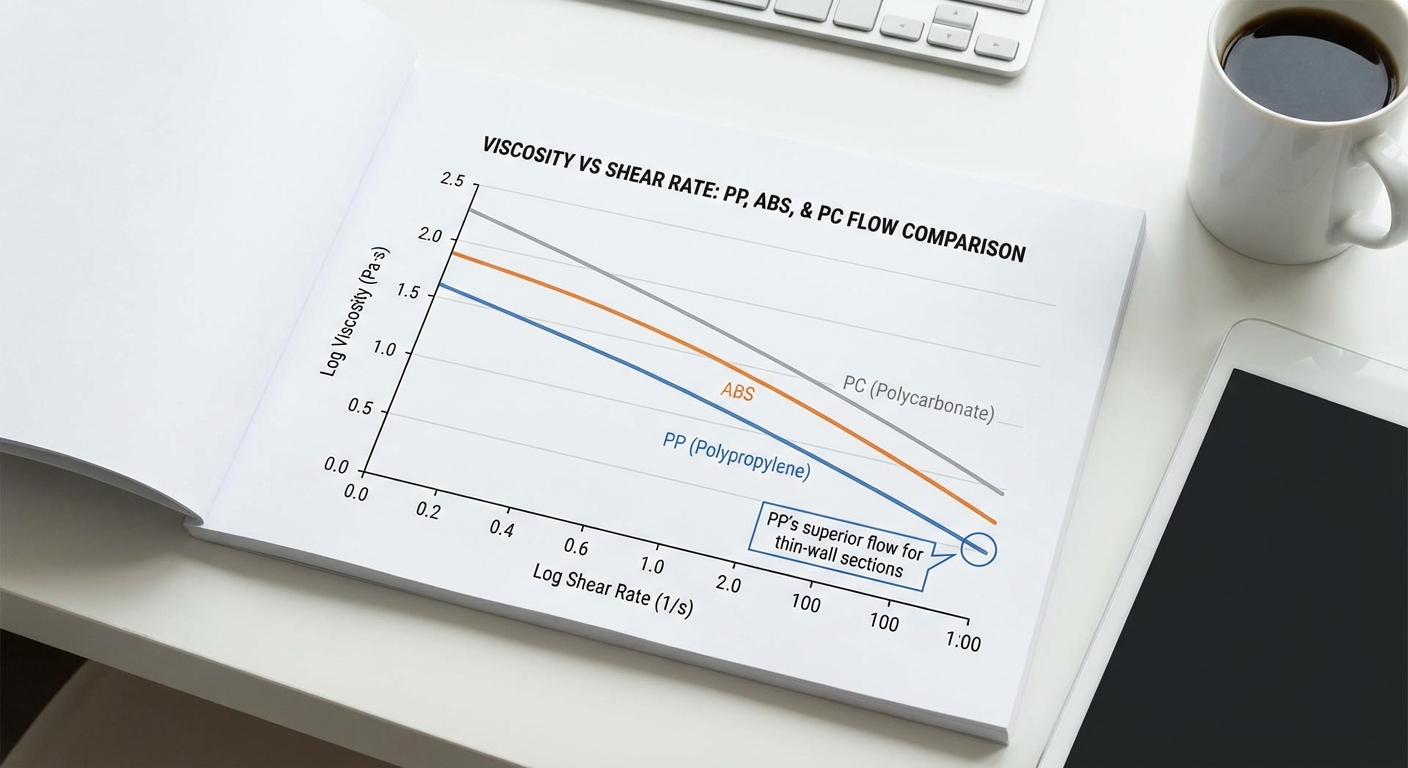
Polypropylene is highly suitable for complex thin-wall molding because its high Melt Flow Index (MFI) allows it to fill narrow cavities easily. When you use PP injection molding for thin sections, the material flows over long distances at lower pressures than polycarbonate. This capability is essential for creating thin-wall features like internal ribs or lightweight packaging.
Why Does Flow Matter?
You can achieve faster cycle times because the material fills the mold rapidly before the cooling phase begins.
- High MFI capability
- Reduced clamping force
- Lower energy consumption
Make no mistake, flow is the secret to high-speed production.
| Metric | PP Performance | |
|---|---|---|
| Melt Flow Index | 10 to 100+ g/10 min | |
| Cooling Speed | Rapid in thin sections |
This technical comparison proves that PP is the most efficient resin for high-speed, high-cavitation molding projects.
Key Takeaway: High flow rates enable you to design lighter parts, reducing both material usage and cycle times.
How does the thermal molding cycle operate?
The thermal molding cycle operates by heating PP pellets to a molten state before injecting them into a temperature-controlled mold. Consistent barrel temperatures in PP injection molding are vital to prevent thermal degradation while ensuring the plastic remains fluid. You must manage the “pack and hold” phase carefully to ensure the high-shrinkage material fully populates the mold cavity.
How Is Cooling Managed?
You need advanced water channels within the mold to remove heat quickly and prevent part deformation.
- Controlled melt temperature
- Precise injection pressure
- Optimized cooling time
The bottom line is that thermal control determines your final part quality.
| Cycle Phase | Focus Area | |
|---|---|---|
| Injection | High pressure for full filling | |
| Ejection | Temperature-monitored pin release |
Analysis of the thermal cycle shows that precise cooling reduces internal stresses that cause long-term warpage.
Key Takeaway: Mastering the thermal cycle ensures you receive parts with perfect dimensional accuracy every time.
What challenges occur during the molding process?
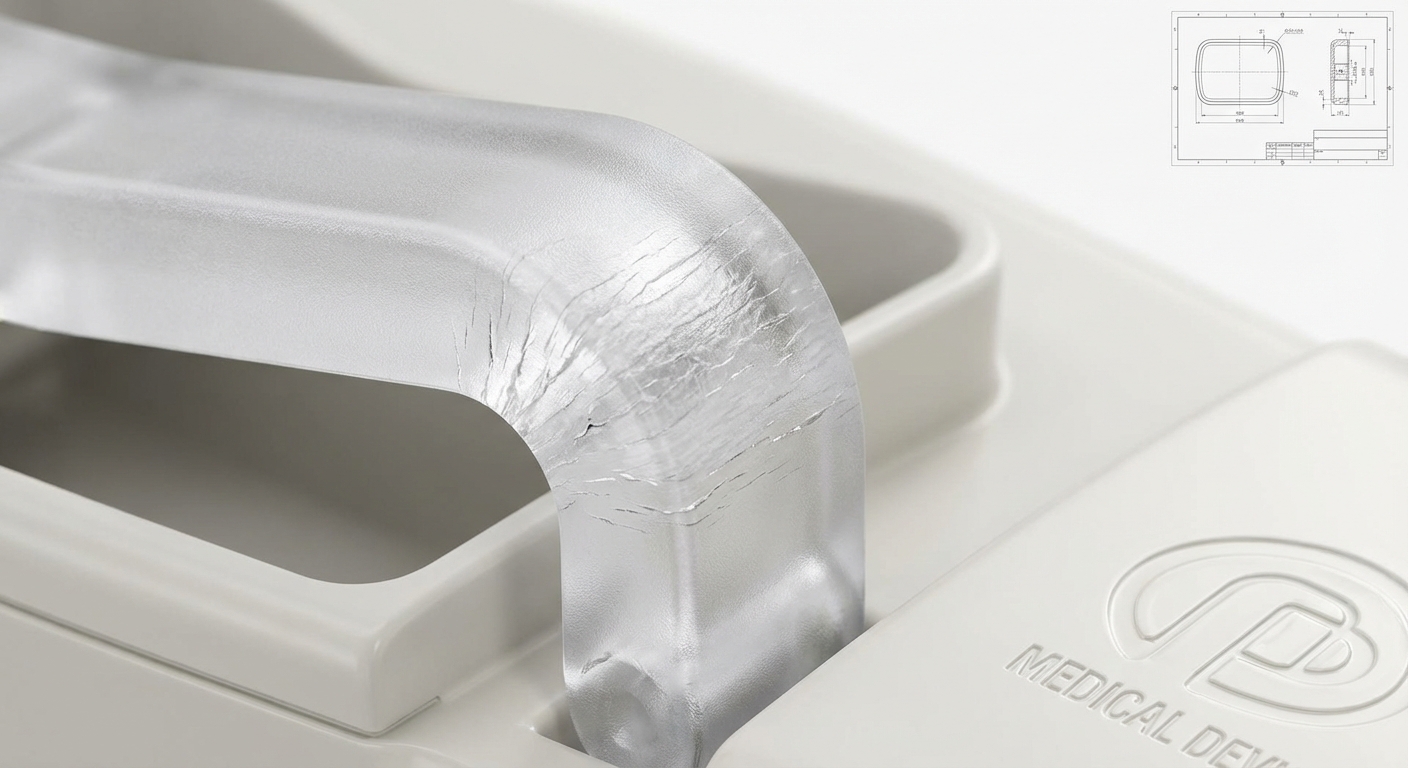
Challenges such as warpage, sink marks, and flash occur when the high shrinkage and low viscosity of the resin are not managed. During PP injection molding , the material’s ability to flow into tiny gaps can create “flash” if your mold lacks sufficient clamping force. You may also see “sink” in thick areas where the plastic pulls away from the wall as it cools.
Can You Prevent Warpage?
You can mitigate bowing and twisting by using mold temperature controllers to ensure even cooling across the part.
- Adjusted gate locations
- Increased pack pressure
- Accurate mold venting
The truth is, even the best material needs an expert operator.
| Challenge | Solution | |
|---|---|---|
| Flash | Increase clamping force and improve mold fit | |
| Sink Marks | Reduce wall thickness and adjust pressure |
These solutions demonstrate that technical expertise can overcome the inherent physical limitations of the resin.
Key Takeaway: Proactive troubleshooting during the sampling phase prevents costly production delays.
How does PP compare to other common resins?
PP compares favorably to resins like PE and ABS by offering a better balance of fatigue resistance, heat stability, and cost. In PP injection molding, the material provides a higher heat deflection temperature than polyethylene, making it better for microwaveable applications. While it may not be as rigid as ABS, you gain a level of durability and chemical resistance that ABS cannot match.
Is PP More Cost-Effective?
You will generally pay less per unit for PP because it is a commodity resin with high global availability.
- Better fatigue life than ABS
- Higher heat resistance than PE
- Lower cost than Polycarbonate
It’s a win-win for budget and performance.
| Resin Type | Fatigue Resistance | Chemical Resistance | |
|---|---|---|---|
| Polypropylene | Excellent | High | |
| ABS | Poor | Moderate |
The comparison highlights that PP is the most well-rounded choice for parts requiring both flexibility and chemical stability.
Key Takeaway: Choosing PP over engineering resins can reduce your material spend by up to 40% without sacrificing durability.
Why partner with professional molding experts?
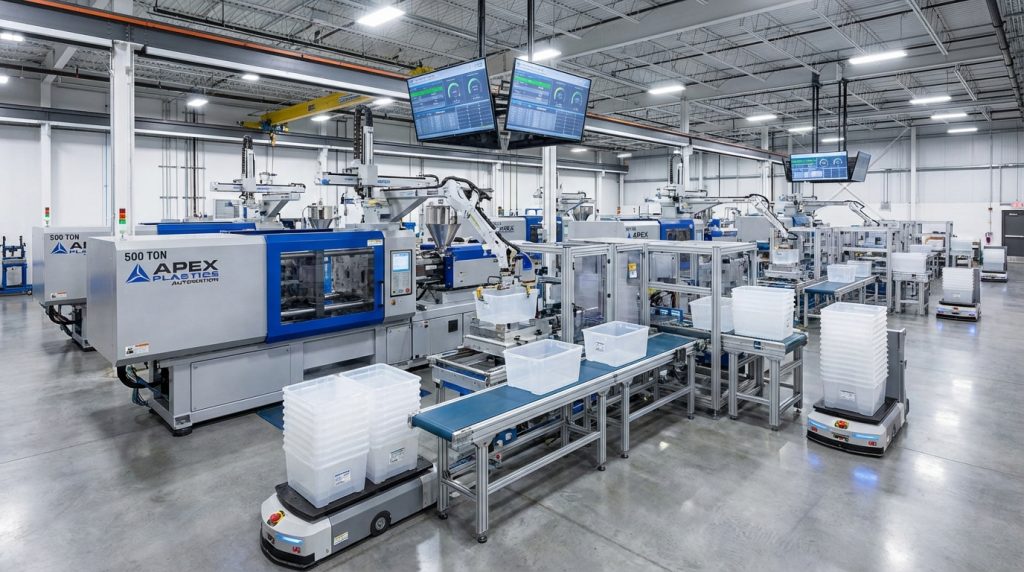
Partnering with professional experts ensures your projects benefit from IATF 16949 quality standards and optimized tool designs. High-volume PP injection molding requires machines ranging from 50T to 2000T to handle everything from small caps to massive automotive panels. You need a partner who offers precision mold making to ensure the tool accounts for the specific shrinkage rates of your chosen grade.
What Does Certification Mean?
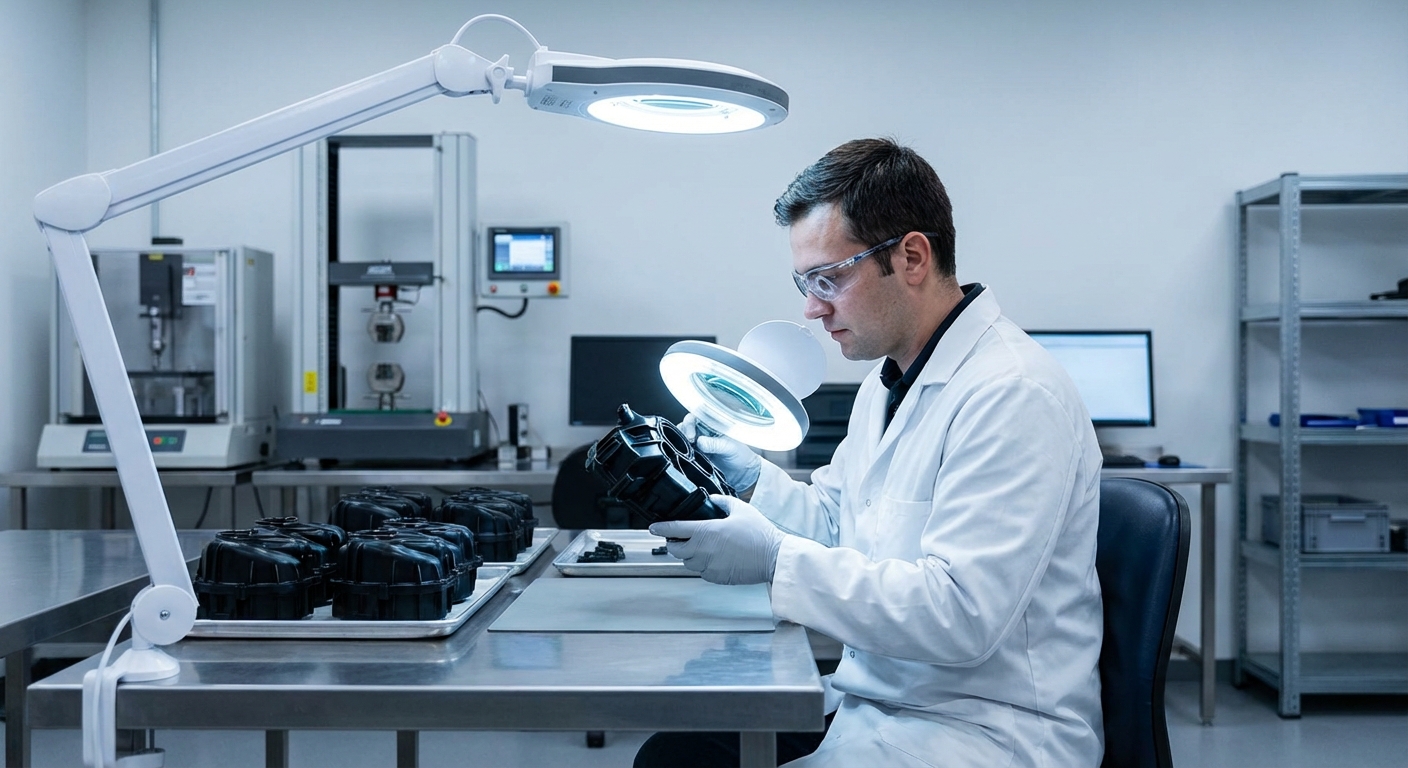
You gain peace of mind knowing that every part is inspected under rigorous quality control protocols.
- High-volume scalability
- Technical DFM support
- Multi-material expertise
Don’t leave it to chance; choose a certified manufacturer.
| Service Feature | Business Value | |
|---|---|---|
| DFM Simulation | Prevents tooling rework costs | |
| Quality Audits | Ensures 100% part compliance |
Working with a certified team guarantees that your production remains on schedule and within technical tolerances.
Key Takeaway: Professional oversight ensures your high-volume production is scalable, repeatable, and defect-free.
How do you maximize ROI on your PP projects?
You maximize ROI by using multi-cavity molds and selecting the appropriate material grade for your specific performance needs. While high-clarity PP is available for premium packaging, you can use general-purpose grades for hidden automotive components to lower costs. Integrating custom injection molding techniques like overmolding can also add value to your product without significantly increasing the assembly time.
Can Multi-Cavity Tooling Save Money?
You can produce dozens of parts in a single cycle, which drastically lowers the cost-per-unit for large orders.
- Optimized material grades
- Reduced secondary operations
- Automated quality inspection
The faster you produce, the sooner you can get to market.
| Strategy | ROI Impact | |
|---|---|---|
| Multi-Cavity Molds | Significant reduction in labor costs | |
| Grade Optimization | Lowered raw material expenses |
This strategic approach ensures that every dollar spent on tooling translates into long-term manufacturing efficiency.
Key Takeaway: Strategic planning during the design and tooling phases is the most effective way to drive down long-term costs.
Conclusion
Navigating the complexities of material selection and part design shouldn’t be a barrier to your product’s success. We have explored how polypropylene solves the common problems of high material costs, chemical degradation, and mechanical fatigue. By utilizing precise thermal cycles and DFM-optimized designs, you can transform this versatile resin into high-performance components that build brand trust.
At CN Precision, we specialize in helping you scale from prototype to high-volume production with ease. Whether you need complex automotive housings or thin-wall containers, we provide the technical expertise and certified quality control your project deserves. Contact us today to turn your vision into a precision-molded reality. Precision in every cycle, excellence in every part.
FAQ
Can I use Polypropylene for parts that require high transparency?Yes, you can use specialized high-clarity grades of PP that offer excellent transparency for consumer packaging. These grades are specifically formulated to reduce the crystalline haze usually found in standard polypropylene.
What’s the best way to prevent warpage in large PP parts?The best way is to maintain uniform wall thickness and use advanced mold cooling systems to ensure even thermal contraction. Because PP has a high shrink rate, uneven cooling is the primary cause of dimensional distortion.
How do I know if PP is better than Polyethylene for my project?You should choose PP if your part requires a living hinge or needs to withstand higher temperatures, such as in a dishwasher. PP is generally stiffer and has a higher melting point than PE, making it more suitable for structural or heat-exposed applications.
Can I overmold Polypropylene onto other materials?Yes, you can overmold PP, but it requires careful material matching to ensure a strong mechanical or chemical bond. It is often used in two-shot molding to add soft-touch grips or colored accents to a rigid base.