Estimating injection molding costs requires a comprehensive calculation of tooling investments, material selection, and per-unit production cycles. You likely face the daunting challenge of unpredictable quotes and hidden fees that threaten to derail your manufacturing budget. By mastering the variables that influence pricing, you can transform a complex financial puzzle into a predictable strategic advantage for your business. Regular mold inspection remains a vital component of this process to ensure long-term cost efficiency and part quality.
What are the primary injection mold cost factors?
Tooling, materials, and labor serve as the three pillars of your total manufacturing expenditure. These injection mold cost factors determine whether your project remains within its financial boundaries or experiences significant budget creep. You must prioritize high-quality steel for long-term production to avoid the recurring costs of mold repairs. Careful planning during the initial phase prevents expensive modifications once the metal is cut.
Tooling vs. Variable Production Costs?
Tooling represents a fixed, upfront capital investment, whereas variable costs fluctuate based on the number of units you produce. You need to distinguish between these to understand your long-term break-even point in the production lifecycle. High-quality molds reduce the variable cost per part by increasing efficiency and decreasing scrap rates.
Consider this:
- Steel molds provide higher longevity but require significant initial capital.
- Variable costs include resin prices, machine time, and energy consumption.
- Setup fees are often bundled into the variable rate for smaller batches.
The truth is, focusing only on the tooling price can lead to higher total costs if the mold is prone to frequent downtime.
Initial Equipment and Setup Expenses?
The cost to start a new production run involves more than just the mold itself. You will encounter machine setup charges, which cover the labor and time required to mount the mold and calibrate the injection parameters. These expenses are typically amortized over the total number of parts, making them more significant for short runs.
Make no mistake:
- Setup labor includes purging old material and adjusting clamping pressure.
- Energy costs during machine warm-up are a hidden factor in setup fees.
- Auxiliary equipment like chillers or dryers may add to the initial bill.
The kicker is that complex setups can take several hours, significantly impacting the “price-per-part” for low-volume orders.
How do start-up costs impact your budget?
Start-up costs can consume a massive portion of your initial liquidity, especially if you require multiple iterations of the mold. You must account for pilot runs and testing to ensure the final parts meet your exact specifications before full-scale manufacturing begins. This initial phase is where many projects fail due to poor cash flow management.
Think about it:
- Pilot runs identify potential shrinkage or warping issues early.
- Testing resin behavior helps in refining the cooling cycle.
- Validation costs are essential for regulated industries like medical or aerospace.
The real secret is that investing more in start-up validation usually prevents catastrophic failures during high-volume production.
Key Takeaway: Balancing fixed tooling investments with variable production rates is the only way to achieve a sustainable ROI in plastic manufacturing.
| Cost Component | Type | Impact Level | |
|---|---|---|---|
| Steel Tooling | Fixed | Extremely High | |
| Resin Material | Variable | Moderate to High | |
| Machine Setup | Semi-Fixed | Moderate | |
| Labor/QC | Variable | Low to Moderate |
This distribution illustrates why the initial capital phase remains the most critical hurdle for new product development.
How does volume affect injection mold cost factors?
Total production volume is the single most influential driver of your injection mold cost factors over the life of a product. You will find that increasing the number of parts produced allows you to spread the expensive tooling costs across a larger base. This relationship is fundamental to achieving a competitive market price for plastic components. Without a clear volume forecast, your financial projections will likely be inaccurate.
Low-Volume vs. High-Volume Production?
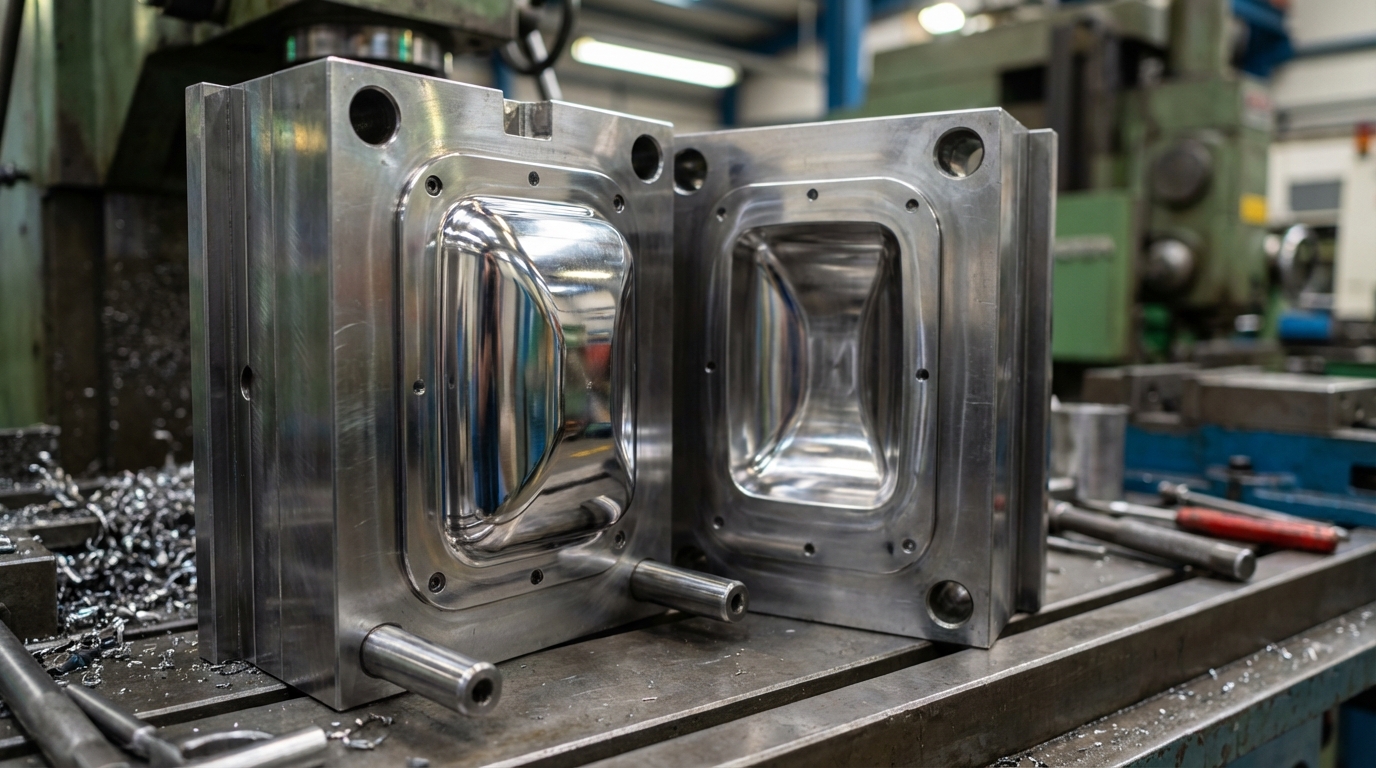
Low-volume production often utilizes softer mold materials like aluminum to keep the initial barrier to entry low. You might choose this path for prototyping or niche market products where speed to market is more critical than the lowest per-part cost. Conversely, high-volume production demands hardened steel to withstand the mechanical stress of millions of cycles.
Here is the kicker:
- Low-volume molds can be produced in weeks rather than months.
- High-volume tooling requires internal cooling channels for faster cycles.
- Aluminum molds are easier to modify but wear out much faster than steel.
The bottom line is that your choice between these two strategies will dictate your entire manufacturing infrastructure.
Economies of Scale in Plastic Manufacturing?
The principle of economies of scale means that your cost per unit drops as your production volume increases. You benefit from bulk resin purchasing and the optimization of machine cycles, which reduces the labor required per part. As the machine runs continuously, the efficiency of the heater bands and hydraulic systems also improves.
Consider this:
- Bulk material discounts can reduce resin costs by 20% or more.
- Continuous runs eliminate the repetitive costs of daily machine setups.
- Automated packaging systems become more viable at higher volumes.
Believe it or not, the difference in price between 10,000 parts and 100,000 parts can be as much as 50% per unit.
Is high-volume molding cheaper per part?
High-volume molding is significantly cheaper on a per-part basis, though it requires a much higher total investment. You must ensure your sales projections support the high tooling cost before committing to a multi-cavity hardened steel mold. If the volume never materializes, you will be left with an expensive asset that hasn’t paid for itself.
The truth is:
- Multi-cavity molds produce several parts in a single cycle.
- Automation reduces the need for manual labor in high-volume settings.
- Cycle time optimization is the primary goal for high-volume efficiency.
It gets better: once the initial tooling is amortized, your profit margins on high-volume parts can become incredibly lucrative.
Key Takeaway: High volume is the key to unlocking the lowest possible unit price, provided you can afford the substantial upfront tooling investment.
| Volume Category | Typical Part Count | Tooling Material | Cost Per Part | |
|---|---|---|---|---|
| Prototyping | 1 – 500 | 3D Printed/Soft Metal | Very High | |
| Low Volume | 500 – 10,000 | Aluminum | High to Medium | |
| Mid Volume | 10,000 – 100,000 | P20 Steel | Medium to Low | |
| High Volume | 100,000+ | Hardened Steel | Very Low |
The inverse relationship between production volume and unit price is the fundamental law of injection molding economics.
Do materials impact your injection mold cost factors?
Material selection directly dictates the variable portion of your injection mold cost factors and influences tool wear. You must select a resin that meets your functional requirements without over-specifying and inflating your budget. Different plastics have varied melting points, shrink rates, and flow characteristics that affect the complexity of the mold design. Selecting the wrong material can lead to higher scrap rates and expensive production delays.
Thermoplastic Resin Pricing Comparison?
Commodity resins like Polypropylene (PP) and Polyethylene (PE) are generally the most affordable options for general-purpose parts. You should compare these prices frequently, as the global petrochemical market can cause fluctuations in the price per pound. Engineering resins like ABS or Nylon offer better mechanical properties but come with a higher price tag.
Consider this:
- Polypropylene is favored for its low cost and chemical resistance.
- ABS provides excellent impact resistance but costs more than PP.
- Nylon offers high strength but absorbs moisture, requiring specialized drying.
The real secret is that material costs can account for up to 45% of the total production cost for high-volume items.
How much do specialty polymers cost?
Specialty polymers like PEEK or Ultem are designed for extreme environments but can cost ten times more than standard resins. You only use these materials when your application requires exceptional heat resistance or medical-grade biocompatibility. Because these resins are so expensive, your mold design must be incredibly efficient to minimize any possible waste.
Think about it:
- Specialty materials often require higher mold temperatures and specialized heaters.
- High-performance resins may be abrasive, requiring treated steel molds.
- Minimum order quantities for specialty resins can be a significant budget hurdle.
The kicker is that even a small amount of waste with specialty polymers can result in thousands of dollars in lost revenue.
Material Waste and Runner System Impacts?
The design of your runner system—the channels that lead the plastic into the mold cavity—affects how much material is wasted. You can choose between cold runners, which create scrap that might be reground, or hot runners, which keep the plastic molten and eliminate waste. While hot runners are more expensive initially, they often pay for themselves through material savings in high-volume production.
Make no mistake:
- Cold runners are cheaper to build but increase the total cycle time.
- Hot runner systems reduce waste but add complexity and maintenance costs.
- Regrinding material can save money but may affect the part’s structural integrity.
The bottom line is that for expensive materials, a hot runner system is almost always the more cost-effective choice long-term.
Key Takeaway: Resin choice is a permanent variable cost; optimizing material usage through smart runner design is essential for profitability.
| Material Type | Example | Relative Cost | Best Use Case | |
|---|---|---|---|---|
| Commodity | Polypropylene (PP) | $ | Packaging, Household Goods | |
| Engineering | ABS / Polycarbonate | $$ | Electronics, Automotive Parts | |
| Specialty | PEEK / Ultem | $$$$ | Aerospace, Medical Implants | |
| Elastomers | TPU / Silicone | $$$ | Seals, Gaskets, Grips |
Understanding the tiered pricing of resins prevents you from over-spending on material properties your part doesn’t actually need.
How does design change injection mold cost factors?
Part complexity is the hidden engine that drives up your injection mold cost factors during the development phase. You will find that every undercut, thin wall, or intricate texture adds hours of CNC machining and EDM work to the mold fabrication process. Simplifying your design before the mold is built is the most effective way to reduce your total investment. Design decisions made in a vacuum often result in astronomical quotes from manufacturers.
Geometry Complexity and Undercuts?
Complex geometries that require undercuts necessitate the use of slides or lifters, which are moving parts within the mold. You should try to eliminate these features through design changes to keep the mold as a simple “open and shut” tool. Every moving component increases the risk of mechanical failure and adds significantly to the initial mold price.
Here is the kicker:
- Undercuts require complex side-action mechanisms to release the part.
- Complex textures may require expensive chemical etching or laser engraving.
- Internal threads usually require rotating cores, which are very costly.
Consider this: a simple design change can often achieve the same function without the need for a $10,000 mold modification.
How do part size and cavities affect cost?
Larger parts require larger mold bases and more material, which naturally increases the price of the tool. You also need to consider the number of cavities; while a multi-cavity mold is more expensive to build, it lowers the per-part cost by producing more units per cycle. However, larger molds also require larger injection machines with higher hourly rates.
Think about it:
- Mold base size is a significant portion of the raw material cost.
- More cavities mean more machining time and more complex cooling.
- Imbalanced cavities can lead to quality issues and uneven part weights.
The real secret is finding the “sweet spot” between the number of cavities and your total production machine requirements.
Side Actions and Intricate Mold Components?
Side actions are necessary when a part has features that are not aligned with the direction of the mold’s opening. You must account for the additional space these mechanisms take up within the mold base, which may force you into a larger machine. Intricate components also require more frequent maintenance to ensure they continue to function smoothly over time.
Make no mistake:
- Hydraulic or mechanical slides add complexity to the mold’s operation.
- Small, delicate pins are prone to breaking and require easy replacement.
- Tight tolerances on moving parts increase the initial fabrication cost.
The truth is, for every side action you add, you are essentially adding a mini-machine inside your main mold tool.
Key Takeaway: Simplification is your best friend; every feature you remove from the part design translates directly into dollars saved on the mold.
| Design Feature | Impact on Mold | Cost Increase | Recommended Action | |
|---|---|---|---|---|
| Simple Open/Shut | Minimal | Baseline | Standard Practice | |
| Simple Undercut | Moderate | +15-25% | Use Slides/Lifters | |
| Internal Threads | High | +40-60% | Use Unscrewing Cores | |
| High Precision | Moderate | +10-20% | Tighten Tolerances Only where Needed |
Reducing design complexity is the most effective way to lower the barrier to entry for any new injection molding project.
Can DFM optimize your injection mold cost factors?
Design for Manufacturing (DFM) is your primary tool for controlling and reducing your injection mold cost factors before production begins. You can avoid “impossible” geometries that require expensive manufacturing workarounds by engaging in DFM early in the design cycle. This process ensures that your part is not only functional but also optimized for the fastest possible cycle times. Ignoring DFM often leads to a cycle of expensive redesigns and mold modifications later.
Reducing Costs with Early Technical Reviews?
Early technical reviews involve your engineering team and the mold maker collaborating to identify potential manufacturing bottlenecks. You can catch issues like uneven wall thicknesses or poor gate placement before the mold design is finalized. These reviews save money by preventing the need for costly “re-cuts” of the steel once the initial samples are produced.
The kicker is:
- DFM reviews identify areas where the mold can be simplified.
- Early collaboration prevents disagreements over part quality later.
- Simulation software can predict filling issues before any metal is cut.
Consider this: a one-hour DFM meeting can often save two weeks of mold modification time in the future.
Why is draft angle optimization critical?
Draft angles are the slight tapers on the vertical walls of your part that allow it to release from the mold easily. You must include sufficient draft (typically 1 to 3 degrees) to prevent the part from sticking or being damaged during the ejection process. Without proper draft, the machine must work harder, cycle times increase, and the scrap rate will soar.
Think about it:
- Zero draft leads to drag marks and aesthetic defects on the part.
- Heavily textured surfaces require even more draft (up to 5 degrees).
- Correct draft reduces the wear and tear on the ejection pins.
The real secret is that adding just half a degree of draft can sometimes be the difference between a successful run and a total failure.
Minimizing Tooling Modifications via DFM?
Tooling modifications are notoriously expensive because they often require welding or expensive EDM work on hardened steel. You can minimize these risks by using DFM to ensure the part design is “mold-ready” from day one. By simulating the injection process, you can identify where gas traps or sink marks might occur and fix them in the digital model first.
Make no mistake:
- Adding metal is much easier than removing it once a mold is built.
- “Steel-safe” designs allow for fine-tuning after the first samples.
- DFM helps you decide where to place gates to minimize visible marks.
The bottom line is that DFM acts as insurance against the most expensive types of manufacturing errors.
Key Takeaway: Proactive DFM analysis is the most cost-effective investment you can make, preventing thousands of dollars in unnecessary tooling revisions.
| DFM Action | Primary Benefit | Cost Savings | Effort Level | |
|---|---|---|---|---|
| Draft Analysis | Easy Part Release | High | Low | |
| Wall Thickness | Uniform Cooling | Moderate | Medium | |
| Gate Optimization | Aesthetic Quality | High | Medium | |
| Flow Simulation | Prevents Defects | Extremely High | High |
Implementing DFM early turns the manufacturing process from a series of “guesses” into a predictable, engineered workflow.
Which tooling types shift injection mold cost factors?
The material and method used to create your tool will radically shift your injection mold cost factors from the start. You must choose between speed, durability, and cost-per-part when selecting a tooling type. While a cheap tool might save you money today, it could become a liability if it fails halfway through your production run. Understanding the lifespans of different mold types is critical for long-term project planning.
3D Printed Molds for Rapid Prototyping?
3D printed molds are an excellent choice for producing a small handful of parts in the final production material. You can get these tools in a matter of days, allowing you to test functional prototypes before committing to metal tooling. However, these molds are fragile and can typically only withstand a few dozen cycles before they begin to degrade.
Here is the kicker:
- 3D printed molds eliminate the need for CNC machining.
- They are perfect for validating a design’s fit and function.
- Thermal conductivity is poor, leading to very long cycle times.
Think about it: if you only need 50 parts for a trade show, a 3D printed mold is your fastest and cheapest option.
Aluminum vs. Steel Mold Durability?
Aluminum molds offer a middle ground, providing faster machining times and better heat dissipation than steel. You might choose aluminum for runs up to 10,000 units, as it is much easier to modify if the design changes. Hardened steel, while much more expensive and difficult to machine, is the only choice for millions of cycles and high-precision tolerances.
The bottom line is:
- Aluminum dissipates heat faster, potentially shortening cycle times.
- Steel molds are resistant to abrasive resins and high-pressure injection.
- Repairing a steel mold is often easier than repairing a soft aluminum one.
The truth is, the “cheaper” aluminum tool often ends up being more expensive if you outgrow its production capacity.
Which mold material fits your production run?
Selecting the right mold material requires an honest assessment of your total expected volume and the resin’s abrasiveness. If you are using glass-filled nylon, a soft mold will be destroyed in a matter of days. You must also consider the surface finish requirements; steel can be polished to a mirror finish that aluminum simply cannot sustain over time.
Consider this:
- P20 steel is a “pre-hardened” option that offers a balance of cost and life.
- H13 steel is for high-volume, high-temperature, and abrasive materials.
- Stainless steel molds are required for corrosive resins or medical cleanrooms.
It gets better: selecting the correct grade of steel upfront can extend your tool’s life from 100,000 cycles to over a million.
Key Takeaway: Never sacrifice mold durability for a lower initial price if your production volume exceeds the tool’s rated lifespan.
| Tooling Type | Material | Estimated Cycles | Relative Cost | |
|---|---|---|---|---|
| Prototype | Photopolymer/Resin | 10 – 100 | $ | |
| Bridge Tooling | Aluminum / P20 | 1,000 – 10,000 | $$ | |
| Production | Hardened Steel | 100,000 – 1M+ | $$$ | |
| High Precision | Stainless Steel | 1M+ | $$$$ |
The durability of your mold is the foundation upon which your entire unit-cost strategy is built.
Are labor rates key injection mold cost factors?
Labor represents a significant but often overlooked portion of your injection mold cost factors, particularly during setup and quality control. You must consider that the “machine hour” rate provided by a manufacturer includes the labor of the operator, the setup technician, and the overhead of the facility. Higher labor rates in certain geographic regions can be offset by higher levels of automation and technical expertise. Understanding how labor is allocated helps you identify where you can squeeze out more efficiency.
Machine Configuration and Setup Labor?
Every time you change a mold or a material, a highly skilled technician must perform a machine setup. You pay for this time, which includes heating the barrel, mounting the heavy tool, and dialing in the specific pressures and temperatures. If your production runs are short, these setup labor costs will represent a large percentage of your per-part price.
Make no mistake:
- Setup labor is a fixed cost per batch, regardless of batch size.
- Inexperienced technicians can take twice as long to “find” the right settings.
- The first few dozen parts are often scrap as the process stabilizes.
The kicker is that an efficient setup process can save you thousands of dollars over the course of a year.
Monitoring and Quality Control Inspections?
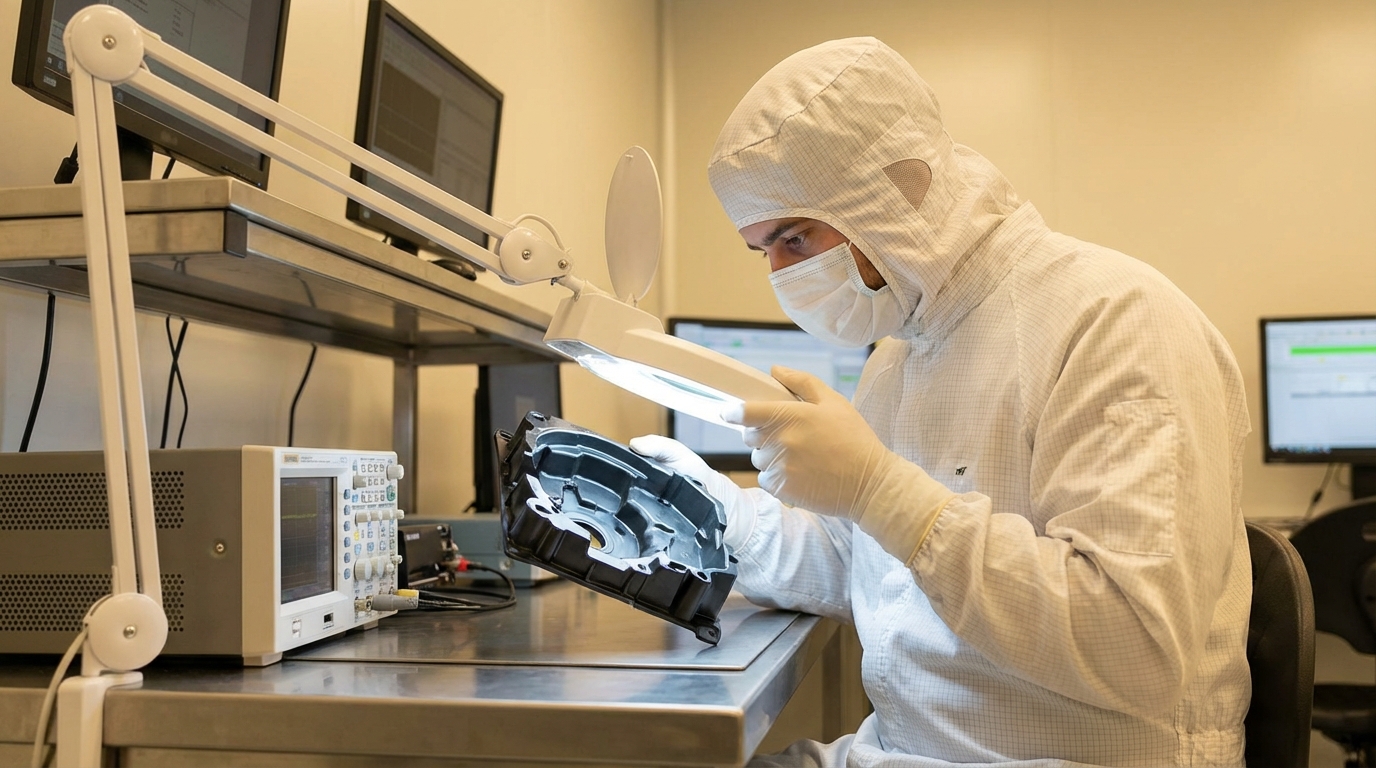
Quality control (QC) labor involves checking the parts against your specifications using tools like calipers, gauges, or CMM machines. You must decide how frequent these inspections need to be; checking every part is expensive, while checking every thousandth part carries more risk. Higher complexity or tighter tolerances naturally require more intensive and expensive QC labor.
Here is the kicker:
- Automated inspection systems can reduce long-term labor costs.
- Cleanroom environments require specialized labor and higher hourly rates.
- Documenting every inspection (traceability) adds significant administrative labor.
Consider this: skimping on QC labor usually results in much higher costs later when defective parts are returned.
Outsourcing vs. In-house Service Costs?
You must weigh the benefits of local production against the lower labor rates found in overseas manufacturing hubs. While overseas labor is cheaper, the added costs of logistics, communication barriers, and quality oversight can erode those savings. Local suppliers offer faster response times and easier mold inspection visits, which can prevent costly misunderstandings.
Think about it:
- Domestic labor is more expensive but often comes with better IP protection.
- Overseas suppliers may require larger minimum orders to justify the shipping.
- Managing an overseas vendor requires its own internal management labor.
The real secret is that “total landed cost” is a much more important metric than just the hourly labor rate.
Key Takeaway: Labor costs are manageable through automation and batch size optimization, but quality oversight should never be sacrificed.
| Labor Category | Frequency | Skill Level | Budget Impact | |
|---|---|---|---|---|
| Machine Operator | Per Hour | Medium | High (Variable) | |
| Setup Technician | Per Batch | Very High | High (Fixed) | |
| QC Inspector | Per Lot | High | Moderate | |
| Maintenance | Periodic | High | Low (Preventative) |
Efficient labor management is what separates a profitable manufacturing operation from one that is bleeding cash.
How do 2K parts alter injection mold cost factors?
Two-shot or 2K molding introduces a massive jump in your injection mold cost factors due to the complexity of the machines and tools. You use this process to combine two different materials or colors into a single part without the need for manual assembly. While the upfront investment is significantly higher, the reduction in labor and the improvement in part quality can justify the expense for high-volume consumer goods. It is a high-risk, high-reward strategy for sophisticated product designs.
Multi-Material and Overmolding Complexity?
2K molding requires a specialized mold that can rotate or have internal gates that open and close to allow a second material to flow. You are essentially building two molds in one, which doubles the design time and the machining complexity. The two materials must be chemically compatible to bond correctly, or the part will delaminate and fail.
Here is the kicker:
- Two-shot molds require a much larger mold base to house the rotation.
- Material compatibility testing is essential before building the tool.
- The “overmolding” process is an alternative that uses two separate, simpler tools.
The bottom line is that 2K molding is a master-class in engineering that demands a high level of expertise from your supplier.
Does 2K molding reduce total assembly cost?
While the 2K mold is more expensive, it can save you money by eliminating the need for secondary assembly labor or adhesives. You get a finished part straight from the machine, which reduces the number of SKUs you need to manage and lowers the risk of human error during assembly. For complex items like toothbrushes or automotive buttons, the assembly savings are massive.
Consider this:
- Eliminating assembly reduces the floor space needed for production.
- Fewer parts mean less inventory and simplified supply chain logistics.
- The bond created in 2K molding is often stronger than any adhesive.
Believe it or not, the “expensive” 2K route is often the cheapest way to make a high-quality multi-material part.
Specialized Machines for Dual-Injection?
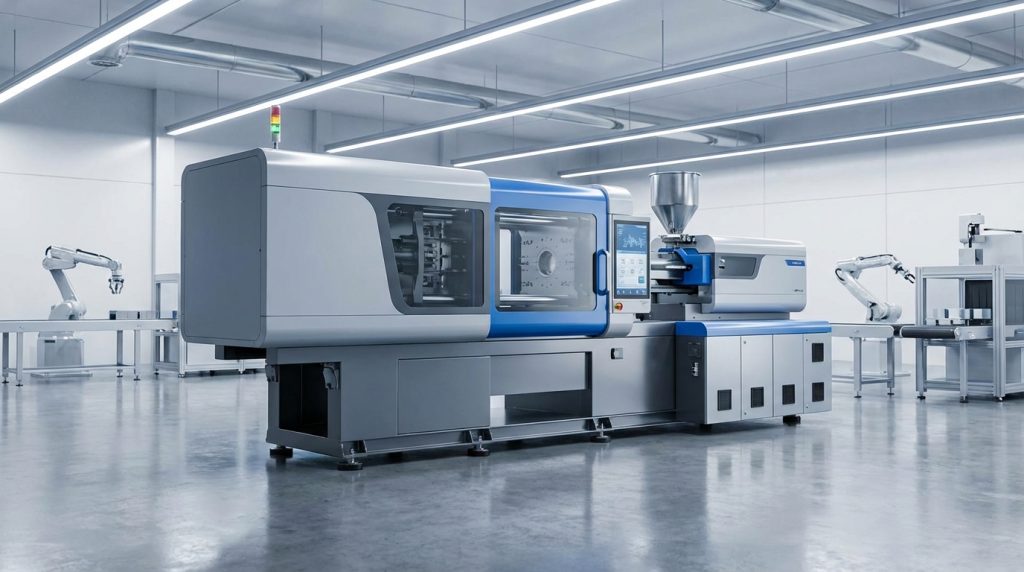
You cannot run a 2K mold on a standard injection molding machine; you need a press with two injection units and a rotating platen. These machines are much more expensive to purchase and operate, which increases the hourly rate you will be charged. If your supplier doesn’t have these machines in-house, they may have to outsource the work, adding another layer of cost.
Think about it:
- Dual-injection machines require complex programming and synchronized timing.
- Energy consumption is higher because two barrels must be kept at temperature.
- Downtime on a 2K machine is twice as expensive as on a standard press.
The real secret is that the rarity of these machines allows suppliers to charge a premium for their “specialized” capacity.
Key Takeaway: 2K molding is an investment in quality and assembly efficiency that pays off through lower total-product labor costs.
| Process Type | Tooling Cost | Assembly Cost | Part Complexity | |
|---|---|---|---|---|
| Single Shot | Low | High | Simple | |
| Overmolding | Medium | Medium | Moderate | |
| 2K (Two-Shot) | Very High | Zero | Very High |
2K molding represents the pinnacle of injection efficiency for products that require diverse material properties in a single unit.
Do certifications impact injection mold cost factors?
Certifications and quality standards add a layer of administrative and procedural overhead to your injection mold cost factors. You must decide if your market requires certifications like ISO 9001 or IATF 16949, as maintaining these standards increases the supplier’s operating costs. In industries like medical or automotive, these certifications are not optional and are built into the price of every part. While they add cost, they also provide a high level of risk mitigation.
IATF 16949 and ISO Quality Standards?
ISO 9001 is a general quality management system, while IATF 16949 is a much more rigorous standard specifically for the automotive supply chain. You pay for the extensive documentation, internal auditing, and process controls that these certifications require. Suppliers who hold these certifications have proven they can maintain consistent quality over millions of parts.
Here is the kicker:
- Certified suppliers must document the source of every batch of resin.
- Regular audits ensure that the machines are calibrated and maintained.
- Corrective action reports (CARs) are required for every quality failure.
The bottom line is that these standards prevent the “wild west” of manufacturing where quality is hit-or-miss.
The Cost of Medical and Automotive Traceability?
Traceability means being able to track a specific part back to the exact machine, operator, and material lot that produced it. You will find that this level of detail is expensive to maintain, requiring specialized software and administrative staff. In the event of a product recall, traceability is the only thing that can save a company from total financial ruin.
Think about it:
- Medical parts often require “cleanroom” molding with strict environmental controls.
- Labeling and packaging requirements are more stringent for certified parts.
- Retaining samples from every lot for several years is a hidden storage cost.
The real secret is that the cost of traceability is actually a form of legal and financial insurance for your brand.
Does certified quality prevent costly defects?
While certified quality systems cost more upfront, they significantly reduce the cost of poor quality, such as scrap, rework, and customer returns. You are paying for a “system” that identifies problems before the parts even leave the factory floor. In the long run, working with a certified supplier is often cheaper than dealing with the fallout of a massive quality failure.
Make no mistake:
- Certified suppliers have lower internal scrap rates on average.
- Standardized processes make it easier to transfer a mold between machines.
- Consistent quality builds customer trust and reduces warranty claims.
It gets better: many large OEMs will not even look at your quote unless you can prove your supplier meets their certification requirements.
Key Takeaway: Quality certifications are a necessary investment for any product where failure could lead to high liability or safety risks.
| Standard | Industry Focus | Cost Impact | Benefit | |
|---|---|---|---|---|
| ISO 9001 | General | Low to Moderate | Basic Quality Assurance | |
| IATF 16949 | Automotive | High | Strict Process Control | |
| ISO 13485 | Medical | Very High | Regulatory Compliance | |
| AS9100 | Aerospace | Extremely High | Ultimate Reliability |
Choosing the right level of certification ensures you aren’t paying for “over-compliance” while still meeting your industry’s safety needs.
How to calculate total injection mold cost factors?
Calculating your final injection mold cost factors requires a holistic view that combines tooling, material, labor, and logistics. You cannot simply look at the mold quote and assume that is your total cost; you must factor in the “landed cost” of the part at your warehouse. Using modern estimation tools and working closely with your manufacturing partner will yield the most accurate results. A thorough calculation prevents the “sticker shock” that often happens at the end of a project.

Using Online Cost Estimators and Quotes?
Online cost estimators provide a “ballpark” figure by using algorithms to analyze your CAD files, but they often miss the nuances of your specific project. You should use these for early-stage budgeting but rely on a formal quote from an experienced engineer for final decisions. Formal quotes should include a breakdown of tooling costs, material prices, and machine rates.
Consider this:
- Estimators are great for “what-if” scenarios during the design phase.
- Human-reviewed quotes account for factors like gate location and cooling needs.
- Always ask for “DDP” (Delivered Duty Paid) quotes to see the true cost.
The truth is, if a quote seems too good to be true, it likely leaves out several critical cost factors.
Analyzing Lead Times and Logistics Expenses?
Lead time is a cost factor because a delayed launch can result in lost market share and missed revenue opportunities. You must also account for shipping costs, import duties, and the potential need for “safety stock” inventory. If you are manufacturing overseas, the cost of ocean freight and the risk of port delays must be baked into your per-part estimate.
Think about it:
- Airfreight is fast but can easily triple your per-part shipping cost.
- Inventory carrying costs can add 15-25% to your total annual spend.
- Long lead times make it difficult to respond to sudden market changes.
The kicker is that a “cheaper” overseas part can become more expensive than a local one if you have to rush-ship it by air.
What is your final cost-per-part estimate?
Your final cost-per-part is the sum of the amortized tooling cost, the material cost, the machine time, and the logistics fee. You should always include a “buffer” for unexpected issues like mold repairs or material price spikes. This number is what you will use to set your retail price and determine your ultimate business profitability.
Make no mistake:
- Amortize tooling over the first year’s volume for a conservative estimate.
- Review your costs every quarter to account for resin market shifts.
- Total Cost of Ownership (TCO) is the only metric that truly matters.
It gets better: once you have a clear TCO, you can focus on the specific levers that will increase your margins over time.
Key Takeaway: A comprehensive cost-per-part calculation is the only way to ensure your product remains competitive and profitable in the long run.
| Cost Component | Calculation Method | Variable or Fixed | |
|---|---|---|---|
| Tooling | Total Cost / Planned Units | Fixed | |
| Material | Price per LB * Part Weight | Variable | |
| Machine Time | Hourly Rate / Parts per Hour | Variable | |
| Logistics | Shipping + Duties / Total Units | Variable |
The final price-per-part is the ultimate scorecard for how well you have managed the various injection molding variables.
Conclusion
Estimating injection molding costs doesn’t have to be a guessing game of high quotes and unexpected delays. By focusing on volume optimization, material selection, and rigorous DFM, you can control the levers that drive your production budget. Our team specializes in navigating these complexities to deliver high-precision parts that fit your financial reality. If you are ready to move from estimation to production, contact us today for a detailed consultation and quote. We believe that precision in manufacturing starts with precision in budgeting.
Frequently Asked Questions
Can I use a 3D printed mold for production?No, it depends on your definition of production. While 3D printed molds are excellent for 10-50 prototypes to test a design, they lack the thermal conductivity and physical strength to survive a commercial production run of thousands of parts.
What is the best way to reduce my tooling cost?The best way is to simplify your part design. By removing undercuts, optimizing wall thickness, and ensuring generous draft angles, you can often eliminate the need for expensive moving parts in the mold, saving thousands of dollars.
Is it always cheaper to manufacture in China?No, absolutely not. While the unit price may be lower, you must account for shipping, import duties, longer lead times, and the risk of quality issues; for many low-to-mid volume projects, domestic manufacturing offers a lower “total landed cost.”
How many cavities should my mold have?It depends on your total volume and required delivery speed. A single-cavity mold is cheaper to build, but a multi-cavity mold lowers the cost per part by producing more units in each cycle, making it better for high-volume orders.
Does material choice affect mold life?Yes, significantly. Abrasive materials like glass-filled resins will wear down a mold much faster than standard polypropylene, meaning you must invest in hardened or treated steel to maintain part quality over the life of the tool.