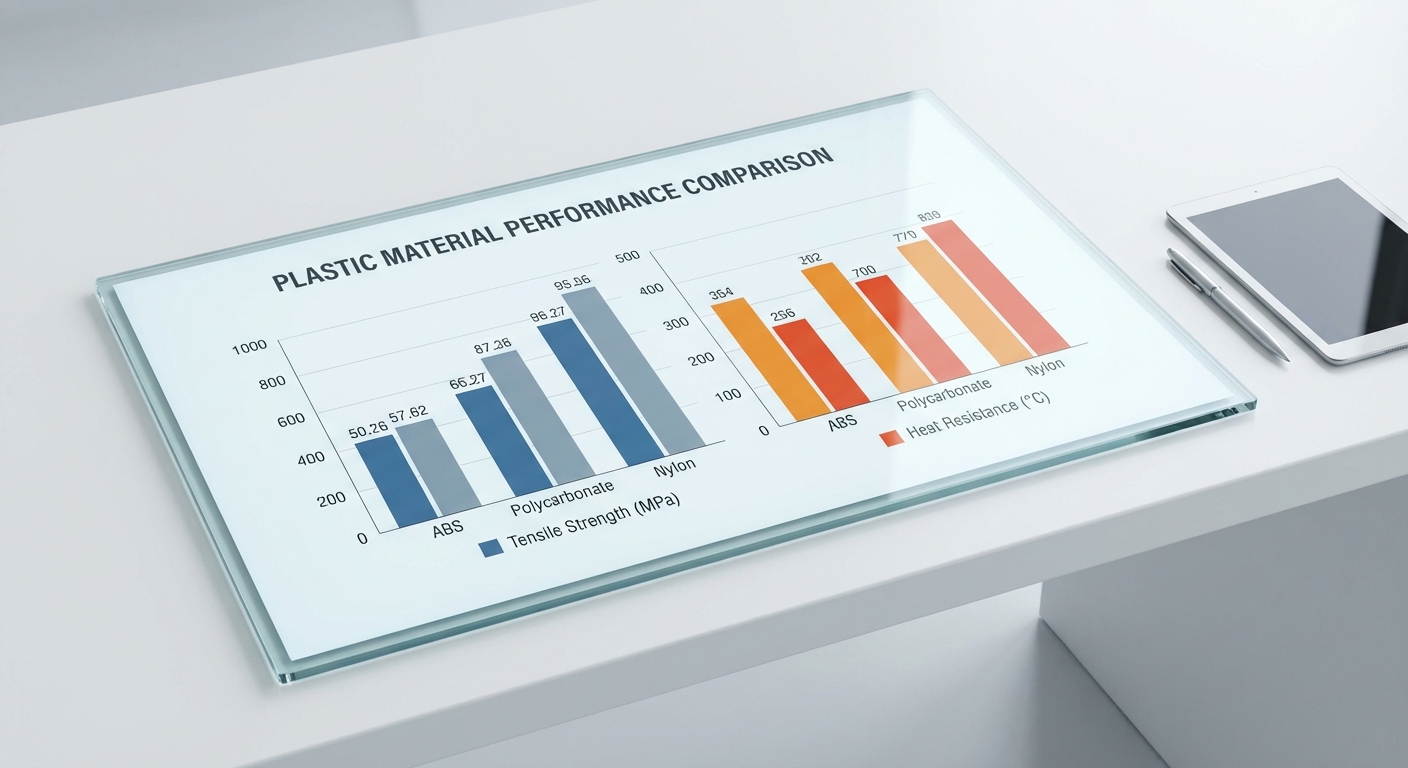
The most common plastic materials for injection molding include Acrylonitrile Butadiene Styrene (ABS), Polycarbonate (PC), Nylon (PA), Polypropylene (PP), and Polyethylene (PE).
You spend weeks perfecting a complex part design, only to watch it fail in the testing phase because the chosen resin couldn’t withstand the operating temperature. This mismatch often leads to expensive mold re-tooling, missed deadlines, and significant financial waste for your production line. Navigating the vast landscape of injection molding plastic material options requires a strategic understanding of polymer properties to ensure your project is both high-performing and cost-effective.
Why is ABS a top injection molding plastic material?
ABS is a top choice because it offers a rare combination of high impact resistance, dimensional stability, and excellent surface aesthetics at a competitive price point. This specific injection molding plastic material is exceptionally easy to process due to its relatively low melting point, making it suitable for complex geometries.
What are the core properties of ABS?
The mechanical strength of ABS is derived from its three main components: Acrylonitrile, Butadiene, and Styrene. Believe it or not: this chemical mix allows for a shiny, attractive finish while maintaining structural integrity.
- Impact Resistance: Withstands significant physical force without fracturing.
- Colorability: Supports a wide range of colorants and surface textures.
- Processability: Flows easily into molds, reducing cycle times.
Where is ABS typically applied?
You will find ABS in everything from automotive wheel covers to high-end consumer electronics housings. It is the gold standard for parts that need to look good while performing in rugged environments.
| Feature | ABS Specification | |
|---|---|---|
| Melting Point | Approx. 200°C – 240°C | |
| Impact Strength | High | |
| Common Use | Toys, Automotive, Electronics |
ABS remains the most versatile entry-point resin for manufacturers seeking a balance of aesthetics and toughness.
Key Takeaway: Choosing ABS provides you with a reliable, easy-to-mold solution that ensures your consumer-facing products look professional and resist daily wear and tear.
When to use Polycarbonate as an injection molding plastic material?
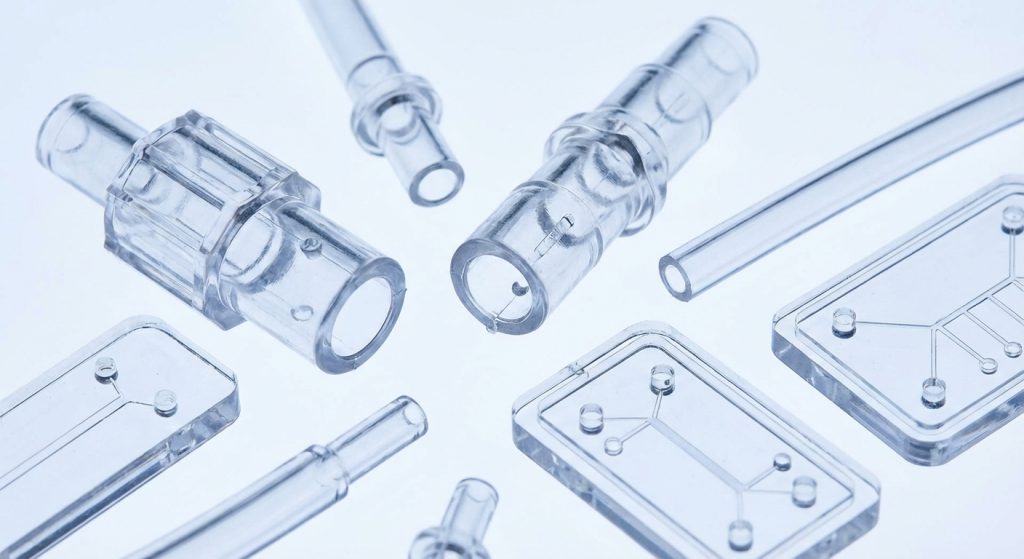
You should use Polycarbonate when your application requires glass-like transparency combined with extreme durability and high thermal resistance. Selecting this injection molding plastic material ensures your components can survive high-impact environments where standard plastics would shatter.
How does its impact resistance compare?
Polycarbonate is significantly stronger than glass and many other clear thermoplastics, acting as an almost unbreakable barrier. The best part? It maintains these physical properties over a wide temperature range, preventing deformities.
- Durable: Resists cracking even under extreme mechanical loads.
- Heat Stability: Retains its shape in high-temperature operating environments.
- Uniform Shrinkage: Allows for precise dimensional control for tight-tolerance parts.
Is transparency a key benefit for PC?
For optical applications, Polycarbonate provides excellent light transmission that rivals traditional glass. It is often the primary choice for light pipes and diffusers where clarity is non-negotiable.
| Feature | Polycarbonate Specification | |
|---|---|---|
| Optical Clarity | High (90% light transmission) | |
| Heat Resistance | Up to 135°C | |
| Durability | Extreme Impact Resistance |
Polycarbonate’s ability to maintain clarity under heat makes it indispensable for lighting and medical sectors.
Key Takeaway: Using Polycarbonate allows you to replace heavy, fragile glass components with lightweight, shatter-proof parts that enhance user safety and product lifespan.
Is Nylon a versatile injection molding plastic material?
Nylon is considered an incredibly versatile resin because it combines high wear resistance and mechanical strength with excellent fatigue performance for moving parts. As a high-performance injection molding plastic material , it is frequently selected for industrial components that face constant friction.
What are the different grades of Nylon?
Nylon comes in various grades, such as Nylon 6 and Nylon 6/6, each tailored for specific engineering needs. Here’s the deal: you can add glass-fiber fillers to these grades to drastically increase their mechanical stiffness and load-bearing capacity.
- Nylon 6/6: Known for high melting points and chemical resistance.
- Nylon 12: Features the lowest water absorption among polyamides.
- Filled Grades: Glass-filled versions offer superior structural rigidity.
Does it provide high heat resistance?
Nylon thrives in high-heat environments, particularly in automotive under-the-hood applications where thermal stability is critical. It manages to dampen noise and vibration, making it a favorite for mechanical assemblies.
| Grade | Primary Benefit | |
|---|---|---|
| PA 6 | Toughness and ductility | |
| PA 6/6 | Highest temperature resistance | |
| PA 12 | Dimensional stability |
The diversity of Nylon grades allows for precise material matching in demanding mechanical engineering projects.
Key Takeaway: By selecting Nylon, you ensure that your mechanical parts, like gears and bearings, operate quietly and resist wearing out over thousands of cycles.
What makes Polypropylene a popular injection molding plastic material?
Polypropylene’s popularity is rooted in its exceptional chemical resistance, high elasticity, and the lowest density of any common injection molding plastic material. It is a staple for products that require a “living hinge” or must interact with aggressive chemicals without degrading.
Why is chemical resistance important for PP?
You might be wondering: why is PP used so frequently in medical and food packaging? It is because this resin does not react with diluted bases and acids, ensuring the contents remain uncontaminated.
- Chemical Shield: Resists most solvents and household cleaners.
- Moisture Barrier: Does not absorb water, preventing swelling or rot.
- Elasticity: Can be bent repeatedly without breaking.
Is this material easy to recycle?
Polypropylene is widely recyclable, which helps your brand meet sustainability goals without sacrificing performance. Its high melting point compared to other commodity plastics makes it microwave-safe in food applications.
| Feature | Polypropylene Specification | |
|---|---|---|
| Density | Low (approx. 0.90 g/cm³) | |
| Fatigue Resistance | High (Living Hinge capable) | |
| Recyclability | Code 5 |
PP provides a cost-efficient and chemically inert solution for high-volume consumer goods and medical containers.
Key Takeaway: Choosing Polypropylene gives you the flexibility to design integrated hinges and chemically-resistant housings while keeping your production costs and part weight low.
How does Polyethylene serve as an injection molding plastic material?
Polyethylene serves as a versatile resin that can be customized based on its density to provide either extreme flexibility or structural rigidity. Using this injection molding plastic material provides you with a moisture-resistant and food-safe option for high-volume manufacturing.
What is the difference between HDPE and LDPE?
High-Density Polyethylene (HDPE) is rigid and tough, whereas Low-Density Polyethylene (LDPE) is significantly softer and more pliable. But wait, there’s more: both versions share the same fundamental chemical resistance, allowing you to choose the stiffness that fits your specific part.
- HDPE: Best for heavy-duty containers, crates, and toys.
- LDPE: Ideal for flexible caps, lids, and squeeze bottles.
- Moisture Proof: Excellent at keeping liquids in and humidity out.
Does it offer good moisture resistance?
Polyethylene is inherently hydrophobic, meaning it will not absorb water or suffer from dimensional changes in humid environments. This makes it the go-to choice for outdoor equipment and liquid storage components.
| Type | Rigidity Level | Common Application | |
|---|---|---|---|
| HDPE | Rigid | Industrial Pallets | |
| LDPE | Flexible | Snap-on Caps | |
| LLDPE | Very Flexible | Tubing/Film |
The ability to tune the density of Polyethylene makes it one of the most adaptable resins in the manufacturing world.
Key Takeaway: Leveraging Polyethylene ensures your product remains stable in wet environments and provides a safe, non-toxic material for consumer-facing goods.
Is Acrylic the best clear injection molding plastic material?
Acrylic is often the best clear resin choice when your project prioritizes optical clarity and long-term UV resistance over mechanical impact strength. Designers choose this injection molding plastic material for outdoor signage and lighting because it maintains its “crystal clear” look for years.
How does it differ from standard glass?
Acrylic is roughly half the weight of glass while offering superior shatter resistance and better light transmission. What’s the catch? While it is clearer than Polycarbonate, it is more brittle and can crack if dropped from a significant height.
- Optical Clarity: High percentage of light passes through without distortion.
- Weatherability: Does not yellow or degrade when exposed to sunlight.
- Scratch Resistance: Better surface hardness than most other clear plastics.
Are there specific UV resistant benefits?
Unlike many other polymers that require expensive additives, Acrylic is naturally resistant to ultraviolet light. It is the perfect material for greenhouses, skylights, and automotive taillight lenses.
| Feature | Acrylic (PMMA) Specification | |
|---|---|---|
| Visual Appearance | Glass-like / Transparent | |
| UV Resistance | Naturally High | |
| Scratch Resistance | Moderate to High |
Acrylic provides an unmatched aesthetic finish for high-end displays and transparent structural elements.
Key Takeaway: By choosing Acrylic, you guarantee that your transparent parts will stay clear and bright for years, even in the harshest outdoor sunlight.
Why choose POM as your injection molding plastic material?
You should choose POM, also known as Acetal, when your engineering project requires high stiffness, low friction, and exceptional dimensional stability. Selecting POM as your injection molding plastic material ensures that precision parts, like gears, maintain their exact shape under constant load.
What are its mechanical friction properties?
POM is famous for its “lubricity,” which allows it to slide against other surfaces with very little wear. Here is the kicker: this low coefficient of friction means you can often design mechanical assemblies that don’t require external lubrication.
- High Stiffness: Resists bending and deformation under pressure.
- Creep Resistance: Maintains its dimensions over long periods of time.
- Low Friction: Ideal for moving parts and slide mechanisms.
Is dimensional stability a major factor?
For high-precision applications, POM’s low water absorption is a critical benefit. It does not swell in humid environments, which prevents gears from binding or fasteners from loosening.
| Property | POM (Acetal) Value | |
|---|---|---|
| Tensile Strength | High | |
| Water Absorption | Very Low | |
| Friction Coeff. | Very Low |
POM is the industry standard for precision mechanical components that require “metal-like” rigidity in a plastic resin.
Key Takeaway: Choosing POM allows you to create high-precision, self-lubricating mechanical systems that reduce maintenance costs and improve long-term reliability.
Can Polystyrene be an effective injection molding plastic material?
Polystyrene is an effective choice for rigid, low-cost components that require excellent clarity or high chemical stability in medical environments. This injection molding plastic material is frequently used for disposable items where cost-per-part must be kept at an absolute minimum.
What makes HIPS different from GPPS?
General-Purpose Polystyrene (GPPS) is clear and brittle, while High-Impact Polystyrene (HIPS) is opaque and much tougher. Think about this: by choosing between these two variants, you can either have a glass-like container or a rugged equipment housing from the same polymer family.
- GPPS: Best for clear plastic trays, cases, and toys.
- HIPS: Preferred for appliance liners and durable housings.
- Sterilization: Resists gamma radiation, making it ideal for medical tools.
Is it suitable for medical devices?
Polystyrene is a staple in the medical industry because it can be easily sterilized and does not support bacterial growth. You will see it used in petri dishes, test tubes, and diagnostic components.
| Type | Transparency | Impact Strength | |
|---|---|---|---|
| GPPS | Crystal Clear | Low | |
| HIPS | Opaque | High |
Polystyrene offers a predictable, low-shrinkage molding experience that is perfect for mass-produced medical disposables.
Key Takeaway: Utilizing Polystyrene allows you to scale production of medical and optical parts rapidly while maintaining the lowest possible material expenditure.
When are TPE and TPU the right injection molding plastic material?
TPE and TPU are the right choice when your part design requires rubber-like flexibility, soft-touch surfaces, or extreme abrasion resistance. These elastomers function as a specialized injection molding plastic material that bridges the gap between rigid plastics and traditional rubbers.
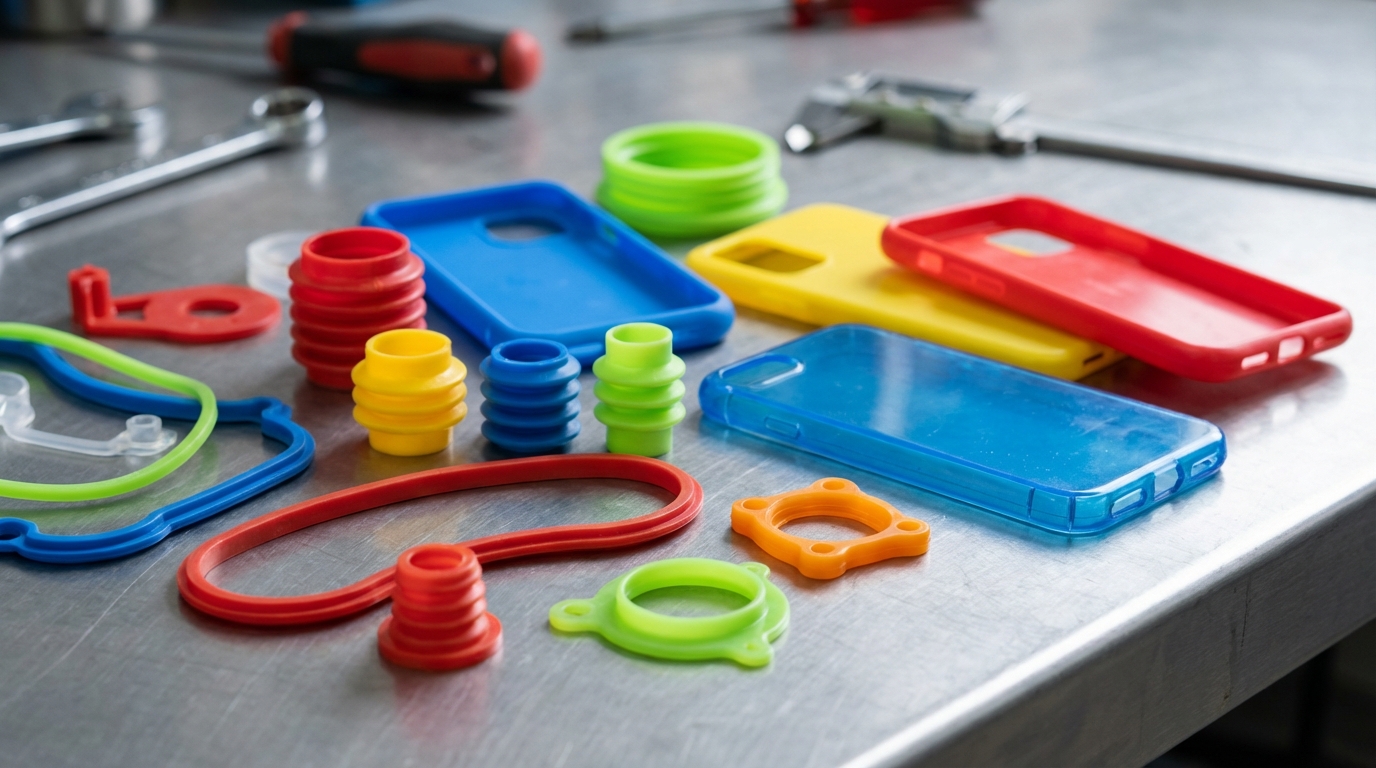
What defines the flexibility of TPE?
TPE (Thermoplastic Elastomer) is defined by its ability to stretch and then return to its original shape once the stress is removed. Now, consider this: it can be overmolded onto rigid plastics to create ergonomic, non-slip grips for tools and electronics.
- Soft Touch: Provides a high-end, comfortable feel for hand-held devices.
- Elastic Recovery: Returns to its molded shape after repeated stretching.
- Recyclable: Unlike traditional thermoset rubber, TPE can be re-melted and reused.
Why is TPU preferred for high durability?
TPU (Thermoplastic Polyurethane) is a tougher version of TPE that excels in environments where oil, grease, and abrasion are common. It is the go-to resin for caster wheels, gaskets, and heavy-duty protective cases.
| Material | Key Strength | Typical Use | |
|---|---|---|---|
| TPE | Softness/Grip | Toothbrush handles | |
| TPU | Abrasion Resistance | Gaskets and Seals |
Flexible elastomers enable the creation of complex, multi-material parts that combine structural support with soft-touch comfort.
Key Takeaway: Incorporating TPE or TPU into your design enhances user comfort and product durability, ensuring your parts feel premium while surviving rough handling.
How do you choose the right injection molding plastic material?
Choosing the right resin involves a rigorous evaluation of your part’s mechanical requirements, environmental exposure, and total production budget. Your final injection molding plastic material selection will ultimately dictate whether your product succeeds in the field or fails under stress.
Should you consider environmental factors?
You must evaluate whether the part will be exposed to UV light, harsh chemicals, or high moisture during its life cycle. Bottom line: a material like ABS is great for indoor use but will degrade rapidly if left in the sun, where Acrylic would thrive.
- Temperature: Ensure the resin’s melting point is well above the operating temp.
- Chemical Exposure: Match the polymer’s inertness to the surrounding environment.
- Cosmetic Needs: Determine if you need high-gloss, transparency, or texture.
Is cost a primary selection driver?
While engineering resins like POM or TPU offer superior properties, commodity plastics like PP or PE are significantly cheaper for high-volume runs. You must find the “sweet spot” where material performance meets your financial constraints.
| Selection Factor | Priority | Recommended Material | |
|---|---|---|---|
| Transparency | High | Polycarbonate / Acrylic | |
| Durability | High | Nylon / POM | |
| Cost Saving | High | PP / PE / PS |
Successful material selection requires a holistic view of the part’s entire journey from the factory floor to the end user.
Key Takeaway: By carefully weighing these engineering trade-offs, you ensure that your investment in tooling results in a high-quality product that meets all safety and performance standards.
Choosing the right resin solves the critical problems of part failure, high production costs, and poor aesthetic finishes. We provide the technical expertise and high-precision manufacturing needed to turn these material selections into high-performing reality. Our vision is to empower global B2B clients with IATF 16949-certified solutions that push the boundaries of precision molding. If you are ready to optimize your next production run, contact us today for a comprehensive DFM review.
Frequently Asked Questions
Can I use the same mold for different plastic materials?Generally, no, because different resins have unique shrinkage rates. If you switch materials without modifying the mold, the final part dimensions will likely fall outside of your required tolerances.
What’s the best material for outdoor plastic parts?Acrylic or UV-stabilized Nylon are the best choices for outdoor use. These materials are naturally resistant to ultraviolet degradation and will not yellow or become brittle as quickly as ABS or PP.
How do I know if a material is food-safe?You should look for FDA-compliant grades of Polypropylene or Polyethylene. These specific polymers are chemically inert and do not leach harmful substances into food or liquids.
Is it possible to make a plastic part feel like rubber?Yes, by using TPE or TPU as your primary resin or overmolding it onto a rigid substrate. This allows you to achieve a soft-touch, high-grip surface that mimics the feel of vulcanized rubber.
What is the cheapest material for high-volume molding?Polypropylene is typically the most cost-effective resin for high-volume production. Its low density and high availability keep material costs low while its ease of processing reduces cycle times.